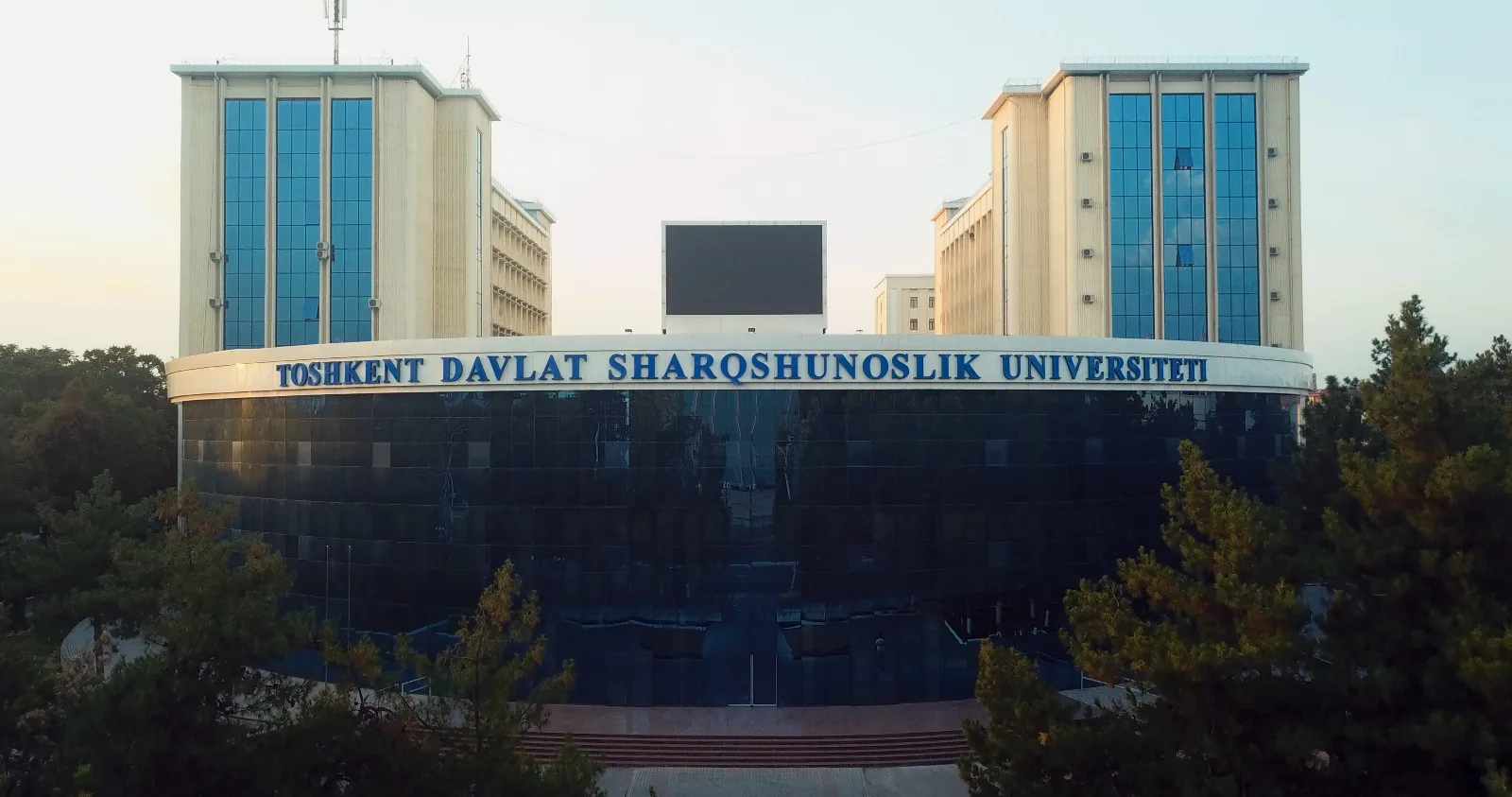
Tashkent state university of oriental studies
5,388
Students
277
International students
252
Teaching staff
4
Faculties
17
Departments
1918
Founded
Video and photos
About the university
A BRIEF HISTORY OF THE UNIVERSITY
In November 1918, the Turkestan Institute of Oriental Studies was established in Tashkent. This institute became the first higher education institution of Oriental studies in the history of Central Asia, and it began to train qualified specialists in various fields of Oriental studies for both local and neighboring countries. In this educational institution, subjects such as the history, ethnography, geography, local lore of Turkestan and its neighboring foreign Eastern countries, Islamic history, and Muslim jurisprudence, as well as the languages and literatures of Eastern peoples, were taught. In that year, 234 students were admitted to the first-year course. The institute established the teaching of Eastern languages, including Arabic, Persian, Chinese, Pashto, Urdu, and Turkish; local languages, including Uzbek, Tajik, Kyrgyz, Turkmen, and Tatar; and European languages, including English, German, and French. Additionally, the geography of Afghanistan, India, Iran, Eastern and Western Turkestan, and Bukhara; the ethnography of the Uzbek, Kyrgyz, Persian, Tajik, Kazakh, Afghan, and Karakalpak peoples; the history of Central Asia, Iran, Afghanistan, India, and the ancient world, Islamic history, and Sharia laws began to be taught.
Starting from the third year, students were taught by dividing into specializations. The education was distributed among the following specializations: Turkic languages, Iranian philology, Arabic studies, and Islamic studies. Concurrently, mother tongue and history teachers were also trained for local schools. According to official data, 210 students studied at the Turkestan Institute of Oriental Studies in the 1922–1923 academic year. Only 16 percent of them were children of the local population. The educational and upbringing work at the institute was conducted by 5 professors, 21 teachers, and several lecturers and practitioners. By 1922, there were 5,300 volumes of books and more than 200 manuscript works in the institute's library.
In 1924, the Turkestan Institute of Oriental Studies was incorporated into the Central Asian State University as a faculty. A. E. Schmidt was appointed as its first dean. The faculty’s activity did not last long. By 1930, it was transformed into a faculty of pedagogy, and in 1931, its operations were completely terminated.
Although the education in Oriental studies did not last long, within this short period, well-known linguists such as A. K. Borovkov, V. V. Reshetov, K. Yudakhin, I. A. Kissen, and R. L. Nemenova; famous historians and ethnographers such as P. P. Ivanov, M. R. Ivanova, M. Masson, V. A. Shishkin, and O. A. Sukhareva; outstanding writers such as Mukhtar Auezov and Sotim Ulugzoda; and the Oriental scholar D. G. Voronovsky emerged from this scientific institution.
In 1944, the Faculty of Oriental Studies was re-established under the Central Asian State University (currently the National University of Uzbekistan). The historian and Oriental scholar Abdurakhmon Hamroev was appointed as its dean. According to the curriculum, the history, economy, language, and literature of the peoples of the Near and Middle East began to be taught at the faculty. In 1947, a postgraduate program (aspirantura) was established under the faculty. Many young specialists studied in postgraduate programs in central cities such as Moscow and Leningrad and returned with the scientific degree of Candidate of Sciences. They replaced the Russian Oriental scholars who had left for their homeland and began to teach in various fields of Oriental studies. Between 1944 and 1947, there were 4 departments within the faculty. These were: the Department of Iranian Philology (since 1955, Iranian-Afghan Philology); the Department of North Indian Philology (later Indian, and currently South Asian Languages Philology); the Department of Eastern Turkestan Philology; and the Department of the History of Near and Middle Eastern Countries.
In 1949, the first students of the faculty graduated and received their path into life. The first graduates consisted of 41 people, and today, many of them have taken their places among the famous scholars recognized in the Republic. The faculty expanded and improved day by day. Along with Arabic, Persian, Pashto, Hindi, Urdu, Chinese, Uyghur, and Turkish languages, great importance was attached to the study of English, Russian, and Uzbek languages. In order to provide students with deep knowledge of the classical and contemporary literature of Eastern peoples, a special Department of Literature of Eastern Countries was established in 1965. A short time later, the Department of Western European Languages was organized, ensuring the process of teaching European languages across the faculty. To improve the learning of Eastern languages and to develop students' speech skills, teachers from Iran, Afghanistan, India, and Arab countries began to be invited. They taught students for 1–2 years, providing great help in forming practical skills. This enabled students to master the language thoroughly from both theoretical and practical perspectives. In the period between 1960 and 1970 alone, 10 specialists from foreign Eastern countries were invited to teach. In turn, teachers and students of the faculty also visited foreign Eastern countries, studied at institutes and universities, and returned after improving their qualifications.
In 1990, the University’s Institute of Oriental Studies was established on the basis of the Faculty of Oriental Studies of Tashkent State University. Not long after, on July 15, 1991, this institute was transformed into the Tashkent State Institute of Oriental Studies by the decree of the President of the Republic of Uzbekistan, Islam Karimov.
Taking into account our republic's need for orientalist cadres, the scope of various specializations and directions in the field of Oriental studies was further expanded at the institute. While specialists were trained only in the fields of philology, history, and economics during the period when the institute was a faculty, education began to be provided in twelve specializations in this educational institution. Previously, 7 departments operated within the faculty, whereas 28 departments began to operate in the Institute of Oriental Studies. Following the establishment of the institute, Japanese, Korean, and Turkish language and literature began to be taught along with Arabic, Persian, Dari, Indian, Urdu, Chinese, Pashto, and Uyghur languages.
In order to form students' skills in deep study of manuscripts and scientific research of written sources, the Department of Source Studies and Textual Criticism was established at the institute. In addition, to study the economic relations of foreign countries more deeply, the Departments of International Economic Relations, as well as International Relations and Political Science, were formed. Departments for the specializations of the economy of Central Asian countries and foreign Eastern countries, the history of Central Asian peoples, marketing, and management were also established.
Within a short period, leading specialists for various sectors of the national economy, cadres for research institutes, educators for schools and lyceums, translators for working abroad, and diplomatic staff were trained. We are rightfully proud of the figures of science, state dignitaries, and diplomats who studied at our educational institution. Academician of the Crimean Academy of Sciences Aydar Memetov, Honored Scientist of the Republic of Tajikistan, the famous writer, translator, and scholar Rasul Khodizoda, and the Extraordinary and Plenipotentiary Ambassador of the Republic of Georgia to the Islamic Republic of Iran J. Sh. Giunashvili were our students.
Our graduates, as Extraordinary and Plenipotentiary Ambassadors of Uzbekistan, have carried out and are carrying out their activities in a number of large and prestigious countries of the world, including the USA, Great Britain, Germany, Japan, Turkey, Belgium, Israel, India, Pakistan, Saudi Arabia, and Egypt.
The activity of the Institute of Oriental Studies is also directly connected with the development and improvement of Oriental science in Uzbekistan. Over the past period, the institute has trained more than 400 Candidates of Sciences and more than 80 Doctors of Sciences. Eight of our scholars have been elected as academicians of the Academy of Sciences of the Republic of Uzbekistan. Fourteen Oriental scholars are Honored Scientists of the Republic of Uzbekistan, 12 are laureates of the Beruni and Hamza state prizes, and 7 are laureates of international prizes named after Firdousi, Ahmad Yasavi, Mahmud Kashgari, Jawaharlal Nehru, and Imam al-Bukhari. In addition, a number of our Oriental scholars hold the honorary titles of "Honored Culture Worker of the Republic of Uzbekistan" and "Honored Youth Mentor of the Republic of Uzbekistan", and 8 Oriental scholars are holders of the orders of "El-yurt Hurmati", "Buyuk Xizmatlari Uchun", and "Mehnat Shuhrati".
If we look at the history of the Institute of Oriental Studies, we will witness that the institute has passed through a majestic and glorious path of development. During this period, the institute became the only major educational and scientific center in Central Asia. Being almost a peer of the Republic of Uzbekistan, the Tashkent State Institute of Oriental Studies honorably fulfilled the tasks it undertook as an independent higher education institution during the period up to the 2020s.
In accordance with the development and progress strategies of New Uzbekistan, wide-ranging reforms began to be implemented in the higher education system; among other things, new horizons for Oriental science and education were defined. In accordance with the Resolution of the President of the Republic of Uzbekistan dated April 16, 2020, No. PP-4680 "On measures to radically improve the system of personnel training and increase scientific potential in the field of Oriental studies," the Tashkent State University of Oriental Studies was established on the basis of the Tashkent State Institute of Oriental Studies.
For international students
Visa Application Procedure
Foreign nationals and stateless persons must submit the following documents to the diplomatic missions and consular offices of the Republic of Uzbekistan abroad to obtain a visa:
-
a passport or a stateless person’s document (the validity of these documents must exceed the visa validity period by at least 3 months);
-
2 copies of a fully completed visa application form;
-
2 color photographs (passport size — 35x45 mm).
Citizens of countries and stateless persons in countries where there is no diplomatic mission or consular office of the Republic of Uzbekistan may obtain a visa upon arrival in Uzbekistan at the Visa Support Unit of the Ministry of Foreign Affairs at Tashkent International Airport. For this, the inviting individual or legal entity in Uzbekistan must apply in advance to the Ministry of Foreign Affairs of the Republic of Uzbekistan, obtain the necessary confirmation (stamp) from the Visa Support Department of the Consular and Legal Department, and send it to the invited person. This confirmation must be presented by the invited person when purchasing the airline ticket and during passport control in their home country, and based on this document, a visa will be issued at the Visa Support Unit of the Ministry of Foreign Affairs at Tashkent International Airport.
STD VISA
Student entry visa (based on inter-university exchange — for temporary study period)
Issued to foreign students studying for a short term (based on inter-university exchange programs or within the framework of inter-university cooperation on a temporary basis) at higher education institutions located in the Republic of Uzbekistan for up to 1 year; processed upon requests from educational institutions, ministries, agencies, and organizations of the Republic of Uzbekistan that have educational institutions under their jurisdiction.
A-1 VISA
Student entry visa (on a permanent basis — for the duration of study)
Issued to foreign students studying at educational institutions located in the Republic of Uzbekistan for up to 1 year; processed upon requests from educational institutions, ministries, agencies, and organizations of the Republic of Uzbekistan that have educational institutions under their jurisdiction.
UNIVERSITY ADMISSION PROCEDURE
Foreign citizens willing to study at bachelor’s degree of TSUOS are interviewed by the Selection commission members in their chosen field of education. The interview will be held in the first or second half of August in the Russian or Uzbek languages online.
Foreign citizens willing to study at the TSUOS magistracy are interviewed by the Selection committee in their chosen specialty. The interview will be held in the second half of August in Russian or Uzbek languages online.
ACCOMMODATIONS
The International Department provides support to foreign students in obtaining documents for a visa / registration, if necessary, placement in a TSUOS dormitory or in finding another place of residence. The cost of living in a hostel is preferential, as of June 20, 2023 is 300,000 soums per month.
STIPEND
Scholarship for foreign students is not offered.
International partnerships
INTERNATIONAL PARTNERS OF TASHKENT STATE UNIVERSITY OF ORIENTAL STUDIES
Today, international cooperation has become one of the strategic priorities of higher education institutions. Tashkent State University of Oriental Studies, following this principle, actively develops strong partnership relations in the fields of education, science, and culture with leading foreign universities and research centers.
At present, the University has signed more than 150 bilateral cooperation agreements with foreign organizations, universities, and research institutions. The geography of partnerships covers a wide range of countries—from Turkey to Europe and the countries of Southeast Asia—which demonstrates the high international reputation of TSUOS

Within the framework of international cooperation, joint educational programs (double degree), exchanges of professors and students, professional development, participation in scientific conferences, internships, joint research projects, cultural exchanges, and many other initiatives are implemented. It should be especially noted that, thanks to joint programs with foreign universities, students have the opportunity to gain international academic experience.
Every year, TSUOS hosts hundreds of foreign guests, including ambassadors, delegations, professors, and representatives of the academic community. These visits contribute to strengthening international ties and implementing new mutually beneficial projects.

In addition, the University pays special attention to the development of cultural relations with its international partners. Various international festivals, events, and academic meetings are regularly organized. These initiatives are aimed not only at improving students’ knowledge and potential but also at promoting a positive image of our country in the international arena.
Language courses
Information About Language Courses:
1. Admission Periods:
The Center for Language Education and Consulting at Tashkent State University of Oriental Studies offers training courses for foreigners. Admissions are open from August 1 to September 1.
2. Languages Taught:
The Center organizes training courses in the following languages:
Chinese;
Uzbek;
Russian;
Japanese;
Persian;
Dari;
Turkish.
3. Required Documents:
The following documents are required from the attendees:
Copy of passport;
Copy of visa;
Attendee's resume (CV);
1 photo (size 3x4);
Certificate of temporary residence;
Copy of the bilateral agreement concluded between the university rector and the attendee.
4. Tuition Fees:
Course fee rates:
Monthly tuition fee for one attendee — $300 (for a group);
Monthly tuition fee for one attendee — $420 (individual).
5. Accommodation:
Dormitory accommodation is available for attendees in the student housing (on a paid basis).
6. Number of People per Group:
The number of attendees per group ranges from 5 to 10 people.
7. Language of Instruction:
Classes are conducted in the following languages:
Uzbek;
Russian;
English.
8. Days and Hours per Week:
Classes are organized 3 days a week on even or odd days, depending on the attendee's request. The duration of each class is 2 hours.
9. Average Duration of Courses:
Course durations are as follows:
3-month;
6-month;
9-month;
12-month.
For application: https://forms.gle/Hc6YGGczut8o6jus8
Opportunities for students
{}ВЫВЫ
Faculties
 |
Khodjayeva Nilufar Bekmuratovna | |
| Academic degree and title: | Doctor of Philosophy (PhD) in Philological Sciences, Associate Professor | |
| Position: | Director of the Institute | |
| Reception hours: | Everyday (11:00-13:00) | |
| Tel: | (+99871) 233 34 24 | |
| E-mail: | nilufar_xodjayeva@tsuos.uz | |
HISTORY OF THE INSTITUE
The Institute of Oriental Languages and Literature was established in 1944 and until 2024 operated as the Faculty of Oriental Philology (under various names). For many years, the Institute of Oriental Languages and Literature has been teaching philological sciences, one of the main branches of oriental studies. Over many years, the institute has developed a tradition of teaching Eastern languages and literature and a unique school of practice in this field. Throughout its history, the institute has produced graduates who meet modern standards, are proficient in both Eastern and Western languages, A comprehensive system has been established for the training of highly qualified orientalists, who possess a deep knowledge of Eastern literature and culture and are capable of conducting fundamental scientific research in various aspects of Oriental philology. Since the institute's foundation, it has produced over 90 doctors of science and nearly 400 candidates of science.
Among the graduates of the Department of Oriental Languages and Literature are the academics A. Rustamov, U. Karimov, A. Qayumov, and the honoured scholars I. Abdullaev, Sh. Shomuhammad, A. Qayumov, and A. Khayitmetov, U. Karimov, State Prize laureates I. Abdullaev, S. G'aniyeva, A. Khayitmetov, P. Qodirov, international prize laureates K. Mahmudov, Sh. Shomuhammad, E. Rustamov, N. Ibragimov, O. Shamatov, T. Khalmirzaev, A. Ibragimov, and Extraordinary and Plenipotentiary Envoys S. Mirqosimov, F. Teshaboyev, A. Shaykhov, S. Inog'amov, I. Erg'ashev, and A. Usmonov.
8 higher schools are operating at the Institute of Oriental Languages and Literature:
- School of Arab Studies
- School of Iranian and Afghan Studies
- School of Turkic Studies
- School of South Asian Languages and Literature
- School of Japanese Studies
- School of Chinese Studies
- School of Korean Studies
- School of Translation, Linguistics and International Journalism
SCIENTIFIC WORK
The institute's scientific activities include the following areas:
- Comparative study of modern Eastern languages.
- The language of written monuments composed in Eastern languages; linguistic research of written monuments.
- History of Eastern languages: problems of origin and development of the written language.
- Source studies and textology: textual, paleographic, and semantic analysis of original texts; principles of compiling scholarly and critical editions.
- Formation and historical development of the text-creation tradition in the history of Eastern languages.
- Emergence of literary language styles and issues of their development.
- Lexicography, history of terminology in Eastern languages, study of its scholarly foundations, examination of traditions in the history of terminology, and development of a unified terminological system.
- Literature of Eastern peoples; scholarly study of the characteristics of literary texts significant to literary criticism.
- Study of key aspects of literary relations between the Uzbek people and the peoples of the East.
- Study of the most important aspects of translation studies; translation of literary texts from Uzbek into Eastern languages and vice versa.
- Theoretical problems of general linguistics and comparative typology.
- Computational Linguistics
- Journalism
It is noteworthy that the majority of the faculty members of the institute are young scholars. Comprehensive and effective work is being carried out at the institute to engage them in research activities and to provide academic supervision for students and young researchers. Both senior and junior faculty members, in addition to their teaching duties, are actively engaged in scholarly work.
SPIRITUAL AND EDUCATIONAL WORK
Systematic and effective spiritual and educational activities are carried out at the institute with the aim of elevating the moral worldview of students and young people, and nurturing them in a spirit of respect for national and universal values. Celebratory events, enlightening meetings, and creative evenings are regularly organized on the occasions of the birthdays of great artists, renowned writers and poets, statesmen, and distinguished military leaders who have left a bright mark in the history of the Uzbek people.
In addition, roundtable discussions, open dialogues, artistic evenings, and spiritual-educational events are held on the occasion of significant dates and anniversaries that hold an important place in the history of our country, in which students participate actively. Students of the institute have been taking part in competitions, festivals, and contests at various levels — university, district, city, national, and international — demonstrating their knowledge and talents and consistently achieving honorable placements.
With the aim of ensuring the physical development of students and young people and promoting a healthy lifestyle, the faculty members and students of the institute actively participate as members of the faculty team in the annually held university-wide traditional sports competitions — in particular, the "Rector's Cup" and the "Dean's Cup" — achieving outstanding results.
At the institute, "roundtable discussions," meetings, and masterclasses are regularly organized with the participation of prominent Uzbek poets, writers, artists, statesmen, painters, and athletes, all of which serve to enrich the life experience of young people and to strengthen their sense of patriotism and civic responsibility.
A series of spiritual and educational events have been and continue to be held at the stage of the Ogahiy monument in the Writers' Avenue, with the participation of faculty members and students.
Furthermore, visits are organized for students to historical monuments and sacred sites, notable landmarks in cities, museums and theaters, military units, orphanages, and charitable institutions, thereby further strengthening their historical memory, social engagement, and humanitarian values.
Partner Organizations and Institutions of the Institute:
- Institute of Oriental Studies named after Abu Rayhan Beruni, Academy of Sciences of the Republic of Uzbekistan
- Union of Writers of Uzbekistan
- Literature Museum named after Alisher Navoi, Academy of Sciences of the Republic of Uzbekistan
- Institute of Uzbek Language, Literature and Folklore, Academy of Sciences of the Republic of Uzbekistan
- Institute of History, Academy of Sciences of the Republic of Uzbekistan
- Representative Office of the Japanese Company "Mitsubishi" in Tashkent
- Academy of Armed Forces of the Republic of Uzbekistan
- National Library of Uzbekistan named after Alisher Navoi
- State Museum of Timurid History
- Yunusabad Academic Lyceum under TSULOS
- Chirchiq Higher Tank Command and Engineering School
- "Sharq Yulduzi" (Star of the East) Journal
- "Jahon Adabiyoti" (World Literature) Journal
- "Oltin Qalam" Newspaper of the Muhammad Yusuf Foundation
- School No. 22, Olmazor District, Tashkent City
- School No. 119, Olmazor District, Tashkent City
- Specialized Secondary School No. 24 in Hindi Language named after L.B. Shastri
- "Travel Asia" Company
- "MAR" Arabic Language Training Center at Cairo University
- State Committee for Tourism Development of the Republic of Uzbekistan
- Committee on Religious Affairs of the Republic of Uzbekistan
- Imam Bukhari International Foundation
- Ministry of Public Education of the Republic of Uzbekistan
- Ministry of Higher and Secondary Special Education of the Republic of Uzbekistan
- AKELA GROUP MACHINERY
- Faculty of Oriental Languages, Uzbekistan State World Languages University
- "Ibrat" Boarding School Specialized in Foreign Languages, Turo'rg'on District, Namangan Region
- Samarkand State Institute of Foreign Languages
- International Islamic Academy of Uzbekistan
- Uzbek-Pakistani Friendship Society
- Uzbek-Afghan Friendship Society
International Partner Organizations and Institutions of the Institute:
- Peking University (China)
- Tokyo University (Japan)
- University of Washington (USA)
- Leiden University (Netherlands)
- Moscow State University (Russia)
- Seoul National University (Republic of Korea)
- Korea University (Republic of Korea)
- Yonsei University (Republic of Korea)
- University of Delhi (India)
- University of Malaya (Malaysia)
- University of Indonesia (Indonesia)
- University of Tehran (Iran)
- King Saud University (Saudi Arabia)
- Boğaziçi University (Turkey)
- Ankara University (Turkey)
- Saint Petersburg State University (Russia)
- Higher School of Economics (Russia)
- MGIMO University (Russia)
- Hanyang University (Republic of Korea)
- National Institute of Oriental Languages and Civilizations (INALCO) (France)
- Tokyo University of Foreign Studies (Japan)
- Jawaharlal Nehru University (India)
- Kyung Hee University (Republic of Korea)
- University of Tsukuba (Japan)
- Al-Azhar University (Egypt)
- Cairo University (Egypt)
- Shanghai International Studies University (China)
- Xi'an International Studies University (China)
- Waseda University (Japan)
- Sultan Idris Education University (Malaysia)
- University of Leipzig (Germany)
- University of Zurich (Switzerland)
- University of Melbourne (Australia)
ACADEMIC WORK
The institute currently enrolls 2,190 undergraduate and more than 150 graduate students, taught by over 130 faculty members who are leading specialists in their respective fields. Of these, 23 hold the title of Doctor of Science (DSc) and Professor, while 31 are Candidates of Science (PhD) and experienced associate professors holding the title of Docent. The institute also hosts visiting professors from foreign universities — 2 from Egypt and 3 from Iran.
At both the undergraduate and graduate levels, the institute offers instruction in 15 Eastern languages (Arabic, Persian, Pashto, Dari, Turkish, Hindi, Uyghur, Azerbaijani, Urdu, Malay, Indonesian, Japanese, Chinese, Korean, and Vietnamese), 3 European languages (English, French, and German), as well as humanities, socio-economic, natural science, and general professional disciplines.
Our graduates possess language proficiency at a minimum of C1 level — with fluent command of the language and confident communicative competence.
Undergraduate Degree Programs:
- Philology and Language Teaching (In Oriental Languages)
- Philology and Language Teaching (In Classical Languages)
- Theory and Practice of Translation (In Oriental Languages)
- Tour Guiding and Interpreting ( In Oriental Languages)
- Tour Guiding and Translation (In Oriental Languages)
- Journalism: International Journalism (By Activity)
- Textual Studies and Literary Source Studies (In Oriental Languages)
- Computational Linguistics
- Textology and Literary Source Studies (0By Oriental Languages)
Graduate Degree Programs:
- Literary Studies ( In Eastern Languages and Research Directions)
- Comparative Linguistics, Linguistic Translation Studies (in Oriental Languages)
- Linguistics (in Oriental Languages)
- Simultaneous Interpretation
- Classical Philology (by Specialisation)
- Computational Linguistics
- Journalism
xfgmfmsxfmh
 |
ARIFJONOV GULOMJON TO‘RAJONOVICH | |
| Academic degree and title: |
|
|
| Position: | Institute director | |
| Reception Hours: | Daily (14:00-16:00) | |
| Tel: | +998 | |
| E-mail: | gulomjon_arifjonov@tsuos.uz | |
The Institute of Foreign Policy and International Economic Relations is a higher education institution specializing in training highly qualified personnel in the fields of international relations, economics, and tourism by harmonizing modern education and research activities. The institute operates based on national interests and global development principles.
Academic Staff of the Institute
The institute employs a total of 86 professors and teachers. Their distribution by academic degree and position is as follows:
• Doctor of Science (DSc), Professor: 11
• Candidate of Science (PhD equivalent), Associate Professor: 11
• PhD (Associate Professor or Senior Lecturer): 22
• Senior Lecturer: 9 (including 1 foreign teacher)
• Lecturer: 11
• Trainee Teacher: 24
Additionally, within the departments:
• Basic Doctoral Students: 5
• Independent Researchers: 5 (including 2 foreign researchers)
This composition forms a highly qualified pedagogical team that ensures the scientific potential and educational quality of the institute.
Specialized Departments
The institute operates 4 specialized departments:
1. Department of International Relations
2. Department of Foreign Economic Activity
3. Department of Economics and Management
4. Department of Tourism
These departments organize the educational process by integrating theoretical knowledge and practical skills based on modern curricula.
Undergraduate Programs (4 Years)
The institute trains specialists in the following Bachelor's degree programs:
• 60310200 – International Relations
• 60410100 – Economics
• 60410800 – Management
• 60411400 – Country Studies
• 60411900 – World Economy and International Economic Relations
• 61010100 – Tourism and Hospitality
Within the "Economics and Management" department, a 2+2 joint education program is effectively implemented in cooperation with Kimyo International University for the "Economics" Bachelor's program.
Master’s Degree Specialties (2 Years)
High-level personnel are trained in the following Master's specialties:
• 70310802 – International Relations and Modern Political Processes
• 70410108 – Regional Economics
• 70411401 – Country Studies
• 70411902 – Foreign Economic Activity
• 71010101 – Tourism and Hospitality
• 71010401 – Tourism (International Tourism)
Foreign Language Education
Comprehensive foreign language training is provided across all educational programs and specialties.
Eastern Languages:
Arabic, Persian, Turkish, Pashto, Dari, Hindi, Urdu, Chinese, Japanese, Korean, Vietnamese, Malay, Indonesian.
Western Languages:
English, French.
Scientific Activity and Doctoral Studies
Scientific research is developed as a priority in the fields of economics and politics. Currently, doctoral students and independent researchers conduct research in the following specialties:
• 08.00.01 – Economic Theory
• 08.00.09 – World Economy
• 23.00.02 – Political Institutions, Processes, and Technologies
• 23.00.04 – International Relations, Political Problems of Global and Regional Development
Strategic Goals and Priority Areas
The strategic goal of the institute is to form an innovative, competitive, and sustainable scientific-educational environment in line with modern requirements and global development trends:
• Innovation Hub: Creating an innovation institute as a unified scientific and educational complex capable of generating advanced knowledge and increasing intellectual capital for the country's industrial and innovative economy.
• Digital Integration: Broadly introducing new information technologies into education and strengthening the integration of the educational process with scientific research.
• Global Recognition: Increasing educational attractiveness based on the experience of Top-300 higher education institutions and aligning with QS and THE international rating agencies.
• University 4.0: Achieving "University 4.0" status, focusing on the integration of science, education, and production, smart campus management, and global reach.
• Regional HUB: Transforming the university into an educational HUB among sectoral universities in Central Asia.
Main Tasks of the Institute
• Coordinating weekly student workloads and independent study hours in accordance with Ministry and university leadership requirements.
• Developing educational content based on state standards that consider the socio-economic prospects of the country and modern achievements in technology and culture.
• Systematically organizing student scientific-creative activities and creating necessary conditions for research.
• Coordinating the professional development of pedagogical staff and preparing textbook/manual materials in cooperation with foreign scientists.
• Implementing the HEMIS platform to ensure a transparent, objective educational environment free from subjectivity.
• Conducting the educational process based on the credit-module system and innovative teaching methods in line with international standards.
Fields of study
| Anthropology and ethnology 60220600 | Bachelor |
| Comparative Linguistics and Translation Studies (Arabic Language) 70230202 | Master's |
| Comparative Linguistics and Translation Studies (Urdu Language) 70230202 | Master's |
| Comparative linguistics, linguistic translation 70230201 | Master's |
| Computational Linguistics 60230400 | Bachelor |
| Computational Linguistics 70230401 | Master's |
| Computational linguistics 70230801 | Bachelor Master's |
| Eastern philosophy and culture 70220502 | Master's |
| Economics 60310100 | Bachelor |
| Economy 60410100 | Bachelor |
| Ethnography, ethnology and anthropology 70220601 | Master's |
| Foreign language and literature (English) 60110900 | Bachelor Master's |
| Historiography, source studies and methods of historical research 70220302 | Master's |
| History 60220300 | Bachelor Master's |
| History 70220301 | Master's |
| International Relations and Analysis: European and Asian Studies 70310205 | Master's |
| International Relations and Contemporary Political Processes 70310201 | Master's |
| International economic relations 70411102 | Master's |
| International relations 60310200 | Bachelor |
| International relations and modern political processes 70310801 | Master's |
| Journalism 60320100 | Bachelor Master's |
| Journalismus 70320101 | Master's |
| Linguistics (Chinese) 70230101 | Master's |
| Linguistics (Arabic language) 70230101 | Master's |
| Linguistics: Chinese Language 70230101 | Master's |
| Linguistics: Dari Language 70230101 | Master's |
| Linguistics: English 70230101 | Master's |
| Linguistics: Hindi Language 70230101 | Master's |
| Linguistics: Indonesian Language 70230101 | Master's |
| Linguistics: Japanese Language 70230101 | Master's |
| Linguistics: Korean Language 70230101 | Master's |
| Linguistics: Pashto Language 70230101 | Master's |
| Linguistics: Persian Language 70230101 | Master's |
| Linguistics: Turkish Languag 70230101 | Master's |
| Linguistics: Urdu Language 70230101 | Master's |
| Literary Studies: Arabic Literature 70230104 | Master's |
| Literary Studies: Chinese Literature 70230104 | Master's |
| Literary Studies: Indian Literature 70230104 | Master's |
| Literary Studies: Japanese Literature 70230104 | Master's |
| Literary Studies: Pashto Literature 70230104 | Master's |
| Literary Studies: Persian Literature 70230104 | Master's |
| Literary Studies: Turkish Literature 70230104 | Master's |
| Management. 60410800 | Bachelor |
| Philology and Language Teaching: Dari 60230100 | Bachelor |
| Philology and Language Teaching: German Language 60230100 | Bachelor |
| Philology and Language Teaching: Indonesian 60230100 | Bachelor |
| Philology and Language Teaching: Japanese 60230100 | Bachelor |
| Philology and Language Teaching: Malay 60230100 | Bachelor |
| Philology and Language Teaching: Pashto 60230100 | Bachelor |
| Philology and Language Teaching: Persian 60230100 | Bachelor |
| Philology and Language Teaching: Turkish 60230100 | Bachelor |
| Philology and language teaching: Arabic language 60230100 | Bachelor |
| Philology and language teaching: Chinese language 60230100 | Bachelor |
| Philology and language teaching: Korean language 60230100 | Bachelor |
| Philosophy 60220500 | Bachelor |
| Political science 60310100 | Bachelor |
| Psychology 60310300 | Bachelor Master's |
| Psychology 70310301 | Master's |
| Psychology 60310300 | Bachelor |
| Psychology 70310301 | Master's |
| Psychology (applied psychology) 60310900 | Bachelor |
| Regional Economics 70411102 | Master's |
| Simultaneous Interpretation: Persian Language 70230202 | Master's |
| Simultaneous Interpretation: Turkish Language 70230202 | Master's |
| Sufism hermeneutics 70220503 | Master's |
| Textology and literary source studies 70230105 | Master's |
| Textual Studies and Literary Source Studies: Arabic 60230100 | Bachelor |
| Textual Studies and Literary Source Studies: Arabic Language 70230105 | Master's |
| Textual Studies and Literary Source Studies: Persian 60230100 | Bachelor |
| Textual Studies and Literary Source Studies: Turkic 60230100 | Bachelor |
| Theory and Practice of Translation: Hindi 60230200 | Bachelor |
| Theory and Practice of Translation: Urdu 60230200 | Bachelor |
| Tourism and Hospitality 71010101 | Master's |
| Tourism and Hospitality 61010100 | Bachelor Master's |
| Translation Theory and Practice: English / Russian / German 60230200 | Bachelor |
| World economy and international economic relations 60411100 | Bachelor |
| Xorijiy til va adabiyoti: ingliz tili 70110901 | Master's |
Programmes
All programmes →
Tashkent state university of oriental studies
Philology and language teaching: Chinese language
18 000 000 so'm
per year
Tashkent state university of oriental studies
Theory and Practice of Translation: Urdu
18 000 000 so'm
per year
Tashkent state university of oriental studies
Philology and Language Teaching: Persian
18 000 000 so'm
per year
Tashkent state university of oriental studies
Philology and Language Teaching: Japanese
18 000 000 so'm
per year
Tashkent state university of oriental studies
Textual Studies and Literary Source Studies: Arabic Language
20 000 000 so'm
per year
Tashkent state university of oriental studies
Literary Studies: Persian Literature
20 000 000 so'm
per year
Tashkent state university of oriental studies
Tourism and Hospitality
20 000 000 so'm
per year
Tashkent state university of oriental studies
International economic relations
30 000 000 so'm
per year
Tashkent state university of oriental studies
Regional Economics
20 000 000 so'm
per year
Tashkent state university of oriental studies
International relations and modern political processes
20 000 000 so'm
per year
Tashkent state university of oriental studies
Ethnography, ethnology and anthropology
20 000 000 so'm
per year
Tashkent state university of oriental studies
Linguistics: Chinese Language
20 000 000 so'm
per year
Notable alumni
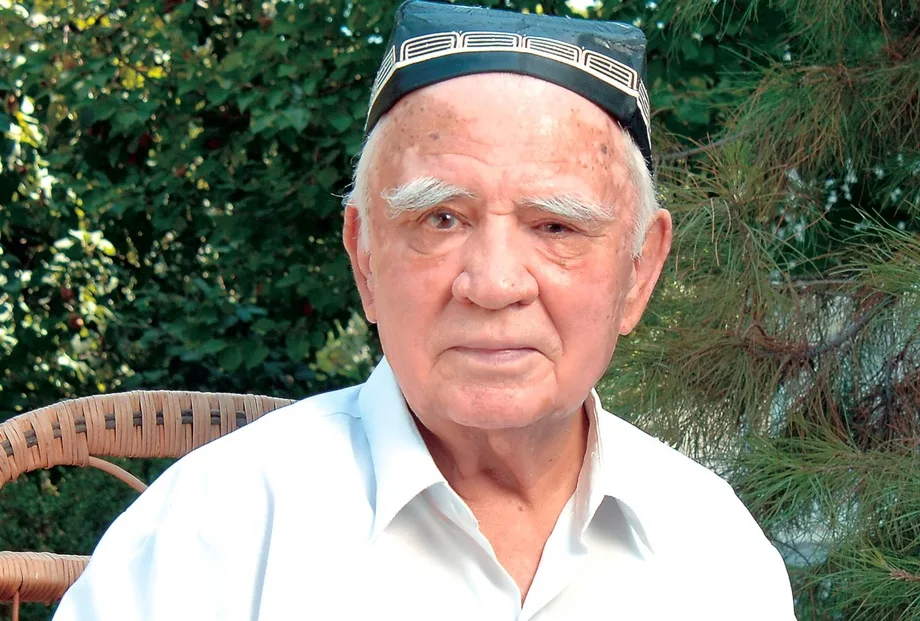
ABDURAHIM MANNONOV
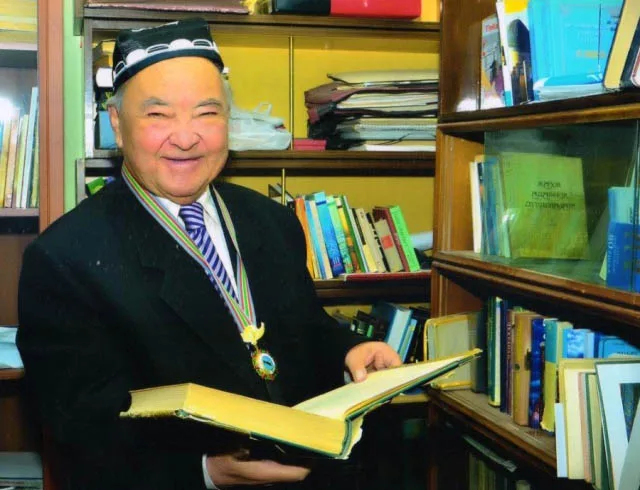
PIRIMKUL KADIROV
AZIZXON KAYUMOV
SHAYXOV ALISHER ERKINOVICH
Bakhrom Abdurakhimovich Abdukhalimov
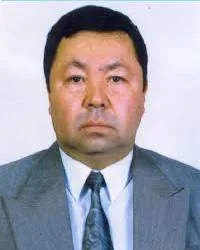
Ibroximov Nematulla
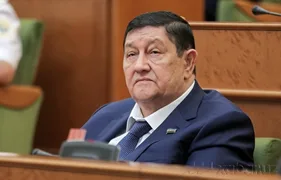
Inoyatov Rustam Rasulovich
Student reviews
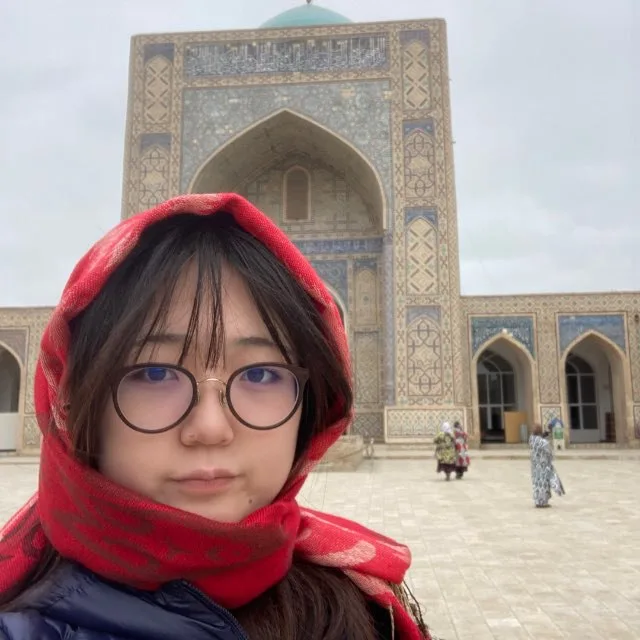
RINKA YAGAME

LI LONGXIANG

Sem Rafael