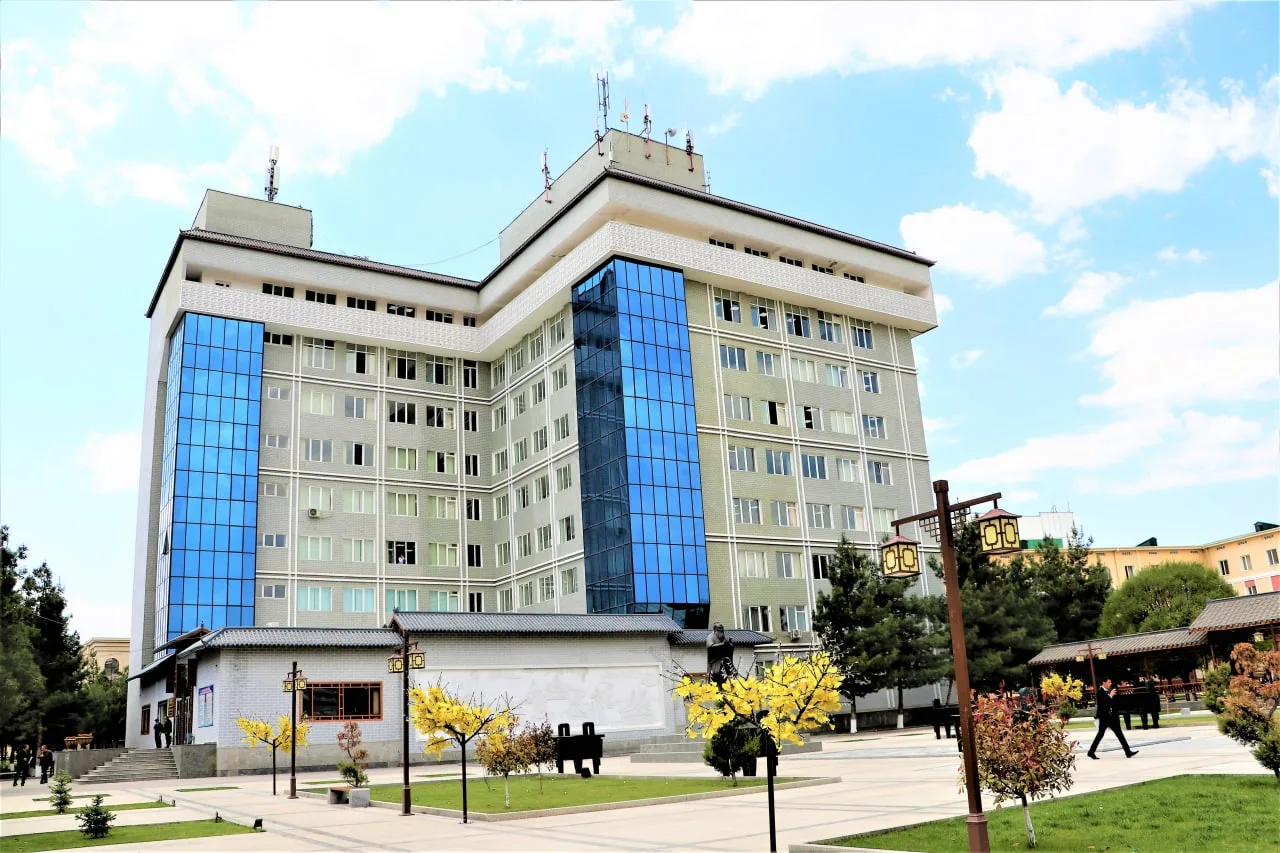
Samarkand State University named after Sharof Rashidov
16,875
Students
203
International students
865
Teaching staff
12
Faculties
61
Departments
1927
Founded
Video and photos
About the university
Samarkand State University is one of the oldest classical universities in Uzbekistan, known far beyond the country. Its history begins in the Timurid era, when on September 21, 1420, the great scholar Muhammad Havofi made a scientific report on the theory of Claudius Ptolemy before more than 100 listeners.
Historically, the university had several names. From January 22, 1927 to 1930 - Higher Pedagogical Institute, and then in 1930 it became the State Pedagogical Academy of Uzbekistan, and from 1933 to 1941 - the State University of Uzbekistan. During World War II, the State University of Uzbekistan was incorporated into the Central Asian University (now the Mirzo Ulugbek National University of Uzbekistan). In 1944, the State University of Uzbekistan was restored, and since 1960, the State University of Uzbekistan was reorganized into Samarkand State University. Samarkand State University was named after Sharof Rashidov by the Resolution No. PP-82 of the President of the Republic of Uzbekistan dated 13.01.2022.
The great ancestors Mirzo Ulugbek, Kazizoda Rumi, Ali Kushchi, Giyasiddin Koshi, Alisher Navoi, Abdurakhman Jami raised enlightenment and culture in Samarkand and laid the foundation of world civilization, and today's higher educational institutions are based on their rich heritage. The Samarkand State University is one such institution of higher learning. Over the years of its existence, the University has trained thousands of specialists and highly qualified personnel.
Today, the Institute of Agrobiotechnology and Food Security, Institute of Engineering Physics, Kattakurgan and Urgut branches and 12 faculties of Samarkand State University train more than 25000 students in full-time, evening and part-time courses, as well as in master and doctoral programs in 76 fields of study and 40 master specialties. They are taught by more than 800 professors and teachers, including three academicians of the Academy of Sciences, 81 doctors of sciences and 311 candidates of sciences. The highest pedagogical qualification (PhD, DSc) in more than 40 specialties are being trained, nine scientific councils are in operation to ensure their defence.
The University library fund includes more than 3 million copies of scientific and educational literature, including about 15 thousand rare books and oriental manuscripts. There are 3 academic lyceums, 4 museums, 1 conservatory and 2 unique objects at the university.
In order to ensure the regular operation of the educational process, a scientific-methodical journal "Scientific Bulletin of Samarkand State University" and a newspaper "Samarkand University" are periodically published; a printing house which publishes and edits educational and scientific works operates.
During the years of Independence 19 students of the university were awarded the state scholarship of the President of the Republic of Uzbekistan, 98 students were awarded state scholarships named after outstanding personalities, 9 students were awarded the state prize "Zulfiya". There are champions and prizewinners of various sports championships and competitions among the students of the university: 7 students are world champions, 57 students are Asia champions, over 170 students are Uzbek champions, over 300 students are champions and prize winners of Universiades.
The University faculty members have been awarded with state decorations: Buyuk Hizmatlari uchun - 1 person, El-Yurt Hurmati - 5 persons, Mehnat Shukhrati - 5 persons; Shukhrat medals - 3 persons; honorary titles: "Uzbekiston fan arbobi" - 3 people, "Uzbekistonda khizmat kursatgan yoshlar murabbiyasi" - 6 people.
Samarkand State University is one of the flagships of education development in the country and an active participant in the reforms in this field in Uzbekistan. One of the priorities is to harmonize the educational process, increase competitiveness of trained specialists, introduce advanced pedagogical technologies, and ensure the priority and relevance of scientific research.
Samarkand State University has joined the ranks of 5-star universities in the QS Stars rating
On May 15, 2024, the Samarkand State University named after Sharof Rashidov became the first in Uzbekistan to receive 5 stars in the QS Stars rating and joined the ranks of the most highly rated universities in the world.
QS Stars is one of the most influential and reliable rankings for universities in the world, a selection system that evaluates performance indicators in higher education institutions in several areas.
The QS (Quacquarelli Symonds) Stars ranking system was launched by international ranking agency in 2009 to help universities promote their strengths and identify and improve their weaknesses.
According to QS, employers tend to directly hire graduates from 5-star universities. The activities of such institutions are rated as "Excellent" in the QS Stars rating system.
The QS Stars rating system evaluates the activities of universities according to the following indicators:
|
Teaching
|
Quality of education - An indicator of the quality of education is calculated and evaluates the results of surveys conducted among students, the level of education after higher education, and the ratio of students to teachers. |
|
Employability
|
Graduate Employability - Surveys of employers assess graduate employability and the performance of the university's career support center. |
|
Internationalisation |
Internationalization - evaluates the ratio of international students and staff, the number of students coming to and from the university on exchange programs, the number of nationalities in the student body, the number and strength of international partnerships with other universities. |
|
Academic Development
|
Academic Development - This category assesses the university's academic development opportunities for its students and faculty outside of teaching and learning. This includes indicators such as assistantships for students, the availability of extracurricular activities, and the number of teachers participating in development programs. |
|
Facilities
|
Facilities - This category assesses the university's infrastructure, which gives students an idea of the environment they can expect from their university. These include facilities such as sports facilities, student accommodation and a library. |
|
Programme Strength
|
Selected field of study - This category considers the level of excellence of a specific field of study chosen by the university. Accordingly, the degree of competitiveness and respectability of the chosen field, leading professors, promising students, as well as the role of the field in education and industry are evaluated. |
|
Social Responsibility
|
Social responsibility - This indicator evaluates the level of the university's contribution to social interests, by examining its role in ensuring social equality and wide-ranging relations with the public. These include factors such as an institution's social impact, outreach, philanthropic investments, and human capital development. Also, within this indicator, the institution's contribution to reducing inequalities between the population and its impact on the health and well-being of the population are also taken into account. |
|
Inclusiveness
|
Inclusion - This category considers disability support services, gender equality among students and staff, and the existence of a strategic framework to ensure this. |


The university achieved the highest score 


 in the categories of education, graduate employment, internationalization, academic development, facilities, selected field of study (Physics), and social responsibility.
The university's QS 5-star rating is valid until February 2028.
}test
For international students
Currently, Samarkand State University hosts the Turkology Research Institute, which is fully equipped with modern facilities and has its own separate library.
Based on this institute, courses in English, Russian, Turkish, and Uzbek languages have been established.
In addition, a “Korean Culture Center” has been established at the university. The center is fully equipped by the Republic of Korea, and Korean language clubs are actively operating with the involvement of Korean teachers.
In 2024, a “Chinese Culture Center” was established at the university. Within this framework, more than 1,500 Chinese-language textbooks and educational materials were provided by the People’s Republic of China, and a teacher from China was invited as a volunteer.


International partnerships
Currently, Samarkand State University has established cooperation with more than 250 prestigious universities and organizations from over 35 countries worldwide
(https://www.samdu.uz/uz/pages/international-cooperation-organizations).
In addition, 240 professors and lecturers from highly ranked and leading universities around the world visited the university in 2024, while more than 270 professors are involved in scientific and pedagogical activities during the 2025–2026 academic year.
Moreover, in cooperation with 9 universities included in the world’s prestigious TOP-1000 ranking, students are studying under joint bachelor’s and master’s degree programs in 16 academic fields.
{

INTERNATIONAL COOPERATION ORGANIZATIONS
Current contracts of Samarkand State University with foreign state universities
|
University name |
Site |
Country |
Logo |
|
Arizona State University |
АQSh |
|
|
|
University of Nevada at Reno |
АQSh |
|
|
|
University of Utah |
АQSh |
|
|
|
University of Wyoming |
АQSh |
|
|
|
Holon Institute of Technology |
Isroil |
|
|
|
Leiden University |
Niderlandiya |
|
|
|
Darmstadt Polytechnic University |
Germaniya |
|
|
|
Labora GmbH |
Germaniya |
|
|
|
Rostock University |
Germaniya |
|
|
|
Universite of Paris 1 Pantheon-Sorbonne |
Fransiya |
|
|
|
Engineering Institute "n+i" |
Fransiya |
|
|
|
University of Poitiers |
Fransiya |
|
|
|
National Higher Institute of Training and Research in the Field of Special Education |
Fransiya |
|
|
|
University of the Algarve |
Portugaliya |
|
|
|
Turku University |
Finlaniya |
|
|
|
Finland Technical University of Karelia |
Finlaniya |
|
|
|
University of Granada |
Ispaniya, Granada |
|
|
|
University of Santiago de Compostela |
Ispaniya |
|
|
|
University of Malaga |
Ispaniya |
|
|
|
L'Aquila University |
Italiya |
|
|
|
University of Pisa |
Italiya Luca Ghini |
|
|
|
University of Venice |
Italiya Venetsiya |
|
|
|
Insubria University |
Italiya |
|
|
|
University of Bologna |
Italiya |
|
|
|
University of Florence |
Italiya |
|
|
|
Milan State University |
Italiya |
|
|
|
Dongguk University |
Janubiy Koreya |
|
|
|
Gachon University |
Janubiy Koreya |
|
|
|
Chonnam State University |
Janubiy Koreya |
|
|
|
Soon chun hyang University |
Janubiy Koreya |
|
|
|
Korean Pavilion, Korea-Central Asia Friendship Association |
Janubiy Koreya |
|
|
|
Keimyung University |
Janubiy Koreya |
|
|
|
Handong Global University |
Janubiy Koreya |
|
|
|
Kumoh National Institute of Technology |
Janubiy Koreya |
|
|
|
Dongduk Women's University |
|
|
|
|
Athens State and Kapodistrian University |
Gretsiya |
|
|
|
RUDN |
Rossiya Federatsiya |
|
|
|
RSPU named after A.I. Herzen |
Rossiya Federatsiya |
|
|
|
A.N. Severtsov Institute of Ecology and Evolution of the Russian Academy of Sciences |
Rossiya Federatsiya |
|
|
|
Kazan State Polytechnic University named after A.N.Tupolev |
Rossiya Federatsiya |
|
|
|
Saint-Petersburg State University named after Pushkin |
Rossiya Federatsiya, Sankt-Peterburg |
|
|
|
A.S.Pushkin State Institute of the Russian Language |
Rossiya Federatsiya |
|
|
|
Adygea State University |
Rossiya Federatsiya, Maykop |
|
|
|
Agrophysical Research University |
Rossiya Federatsiya |
|
|
|
Siberian State University of Science and Technology named after academician M.F.Reshetnev |
Rossiya Federatsiyasi, Krasnoyarsk |
|
|
|
Bashkir State University |
Rossiya Federatsiya |
|
|
|
Moscow Electrotechnical Polytechnic University named after N.E.Bauman |
Rossiya Federatsiya |
|
|
|
Belgorod State University |
Rossiya Federatsiya |
|
|
|
Tambov State University named after G.R. Derjavin |
Rossiya Federatsiya |
|
|
|
Gjel State University |
Rossiya Federatsiya |
|
|
|
Chuvash State University |
Rossiya Federatsiya |
|
|
|
Ivanovo State University of Chemical Technology |
Rossiya Federatsiya |
|
|
|
Kabardino-Balkar State University |
Rossiya Federatsiya Nalchik |
|
|
|
Kursk State University |
Rossiya Federatsiya |
|
|
|
Moscow State University named after M.Lomonosov |
Rossiya Federatsiya |
|
|
|
Magnitogorsk State Polytechnic University |
Rossiya Federatsiya |
|
|
|
Moscow State Linguistic University |
Rossiya Federatsiya |
|
|
|
Moscow State Regional University |
Rossiya Federatsiya |
|
|
|
Moscow Institute of Electronic Technology |
Rossiya Federatsiya |
|
|
|
Moscow Institute of Psychoanalysis |
Rossiya Federatsiya |
|
|
|
Saratov State Research University named after N. G. Chernyshevsky |
Rossiya Federatsiya, Saratov |
|
|
|
Nizhny Novgorod State Research University named after N. I. Lobachevsky |
Rossiya Federatsiya |
|
|
|
Nizhnevartovsk State University |
Rossiya Federatsiya |
|
|
|
Penza State University |
Rossiya Federatsiya Penza |
|
|
|
Polessky State University |
Rossiya Federatsiya |
|
|
|
Kazan (Volga Region) Federal University |
Rossiya Federatsiya , Qozon |
|
|
|
Russian State Humanitarian University |
Rossiya Federatsiya |
|
|
|
Russian Academy of Economy and Public Administration |
Rossiya Federatsiya , Moskva |
|
|
|
Russian State University of Tourism and Service |
Rossiya Federatsiyasi, Moskva |
|
|
|
Institute of Botany of the Russian Academy of Sciences named after V. L. Komarov |
Rossiya Federatsiyasi, Sankt-Peterburg |
|
|
|
Ural Federal University named after the first President of the Russian Federation B. N. Yeltsin |
Rossiya Federatsiyasi, Yekaterinburg |
|
|
|
All-Russian Poultry Research and Technological Institute of the Russian Academy of Sciences |
Rossiya Federatsiyasi, |
|
|
|
Samara State Institute of Culture |
Rossiya Federatsiyasi, Samara |
|
|
|
Saint Petersburg State Agrarian University |
Rossiya Federatsiyasi, |
|
|
|
St. Petersburg State University |
Rossiya Federatsiyasi, Sankt-Peterburg |
|
|
|
North Caucasus Federal University |
Rossiya Federatsiyasi, Stavropol |
|
|
|
Siberian Federal University |
Rossiya Federatsiyasi, Krasnoyarsk |
|
|
|
STANKIN MGTU |
Rossiya Federatsiyasi, Moskva |
|
|
|
Tomsk State Research Institute |
Rossiya Federatsiyasi, Tomsk |
|
|
|
Tomsk State Pedagogical University |
Rossiya Federatsiyasi |
|
|
|
Ulyanovsk State University |
Rossiya Federatsiyasi |
|
|
|
Ural State University of Economics |
Rossiya Federatsiyasi, Yekaterinburg |
|
|
|
Saint Petersburg State University of Electrical Engineering |
Rossiya Federatsiyasi, Sankt-Peterburg |
|
|
|
Volgograd State University |
Rossiya Federatsiyasi |
|
|
|
Saratov State Polytechnic University named after YU.A. Gagarin |
Rossiya Federatsiyasi, Saratov |
|
|
|
Ufa State Oil Technical University |
Rossiya Federatsiyasi |
|
|
|
Udmurt State University |
Rossiya Federatsiyasi |
|
|
|
Altai State University |
Rossiya Federatsiyasi |
|
|
|
St. Petersburg Polytechnic University |
Rossiya Federatsiyasi |
|
|
|
Saratov State Legal Academy |
Rossiya Federatsiyasi |
|
|
|
Vladimir State University named after N. G. and A. Yu. Stoletov |
|
|
|
|
Samara Polytechnic University |
|
|
|
|
Lebedev Institute of Physics |
|
|
|
|
Crimean Engineering-Pedagogical University named after F. Yakubov |
Rossiya Federatsiyasi, Qrim |
|
|
|
Tver State University |
|
|
|
|
Chechen State University |
|
|
|
|
Russian State University of Hydrometeorology |
|
|
|
|
Sevastopol State University |
|
|
|
|
Ural State Agrarian University |
|
|
|
|
Baltic State Technical University "VOYENMEH" |
|
|
|
|
University of Debrecen |
Vengriya |
|
|
|
Yetves Lorand University |
Vengriya |
|
|
|
Dunauyvarosh University |
Vengriya |
|
|
|
Nyiredhaza University |
Vengriya |
|
|
|
Semmelweis University |
Vengriya |
|
|
|
Javaharlal Neru University |
Hindiston, Dehli |
|
|
|
Chandigarh University |
Hindiston, Chandigarh |
|
|
|
Velsa Institute of Science, Technology and Advanced Research |
Hindiston |
|
|
|
University of Delhi |
Hindiston, Dehli |
|
|
|
Indian University Oligarch Muslim |
Hindiston |
|
|
|
Indian Institute of Software Technology |
Hindiston |
|
|
|
Don Bosco Institute of Management |
Hindiston |
|
|
|
Indian Council for Cultural Relations |
Hindiston |
|
|
|
Bombay Institute of Technology |
|
|
|
|
Allahabad Institute |
|
|
|
|
Galgoshias University |
|
|
|
|
P. P. Savin University |
|
|
|
|
Bravijaya University |
Indoneziya |
|
|
|
Mercu Buana University |
|
|
|
|
Polytechnic University of Lublin |
Polsha |
|
|
|
University of Lodz |
Polsha |
|
|
|
Jagiellonian University of Krakow |
Polsha |
|
|
|
Krakow Research University AGH |
Polsha |
|
|
|
Lviv Polytechnic University |
Ukraina |
|
|
|
Kharkiv Aerospace Institute |
|
|
|
|
Central Ukrainian State Pedagogical University named after V. Vinnichenko |
|
Ukraina |
|
|
Czech Agrarian University in Prague |
Chexiya Respublikasi |
|
|
|
University of Latvia |
Latviya |
|
|
|
Sitka Kochman Mugla University |
Turkiya, Mug‘la |
|
|
|
Ankara Humanities University |
Turkiya |
|
|
|
Ankara University |
Turkiya |
|
|
|
Kavkaz University |
Turkiya, Kars |
|
|
|
Ankara Yildirim Bayazit University |
Turkiya |
|
|
|
Istanbul University |
Turkiya |
|
|
|
OSTIM Technical University |
https://www.ostimteknik.edu.tr/ |
Turkiya |
|
|
Inonu University |
Turkiya |
|
|
|
Ege University |
|
|
|
|
Yassky University named after A. I. Kuza |
Ruminiya |
|
|
|
UNESCO International Institute of Central Asia |
UNESCO |
|
|
|
Polotsk State University |
Belarus Respublikasi, Novopolotsk |
|
|
|
Belarusian State University |
Belarus Respublikasi |
|
|
|
Yanka Kupala Grodno State University |
Belarus Respublikasi |
|
|
|
Baranovichi State University |
Belarus Respublikasi |
|
|
|
Belarus Polytechnic University |
Belarus Respublikasi |
|
|
|
Minsk State University of Linguistics |
|
|
|
|
Belarusian State University of Physical Education |
|
|
|
|
Belarusian National Technical University |
|
|
|
|
Vitebsk State University named after Masherov |
|
|
|
|
Khojand State University |
Tajikistan, Ho‘jand |
|
|
|
Pedagogical Institute of Tajikistan |
Tajikistan, Panjakent |
|
|
|
National University of Tajikistan |
Tojikiston |
|
|
|
Malaysia - Japan International Institute of Technology |
Malayziya |
|
|
|
Mara University of Technology |
Malayziya |
|
|
|
University of Putra, Malaysia |
Malayziya |
|
|
|
Kyrgyzstan-Turkey Manas University |
Qirg‘iziston Respublikasi |
|
|
|
Kyrgyz-Uzbek University |
Qirg‘iziston Respublikasi |
|
|
|
Kazakhstan Pedagogical University named after Abay |
Qozog‘iston |
|
|
|
Atyrau Institute of Engineering and Humanities |
Qozog‘iston |
|
|
|
South Kazakhstan State Pedagogical University |
|
|
|
|
Kazakhstan Institute of Economics |
|
|
|
|
Eurasian National University |
|
|
|
|
Nagoya University |
Yaponiya |
|
|
|
Aiti University of Arts |
Yaponiya |
|
|
|
Osaka University Graduate School of Languages and Culture |
Yaponiya |
|
|
|
Kogakuin University |
Yaponiya |
|
|
|
SOKA University |
Yaponiya |
|
|
|
Xiʼan Jiaotong university |
Xitoy |
|
|
|
Shaanxi Pedagogical University (Humanities, Pedagogical Education, Library, Printing and Archives) |
Xitoy |
|
|
|
Northwestern University |
Xitoy |
|
|
|
Chinese Language Center, Shanghai University |
Xitoy |
|
|
|
Shanghai University |
|
||
|
Wuhan University |
Xitoy |
|
|
|
University of Staffordshire |
Angliya |
|
|
|
Vytautas the Great University |
Litva |
|
|
|
Gazi University |
Turkiya |
|
|
|
University of English and Foreign Languages |
Hindiston |
|
|
|
VetVittles LLC |
Aqsh |
|
|
|
Seinajoki University of Applied Sciences-sewing |
Finlandiya |
|
|
|
Tyumen State University |
Rossiya |
|
|
|
The main botanical garden of the Russian Academy of Sciences |
Rossiya |
|
|
|
International Kazakh-Turkish University |
|
Qozog‘iston |
|
|
Atyrau Oil and Gas University named after Safi Utebayev |
Qozog‘iston |
|
|
|
Lincoln University College |
|
|
|
|
Teacher's House of the Ural Federal District |
|
|
|
|
Renmin University of China |
|
|
|
|
Izmir Katip Celebi University |
|
|
|
|
Institute of Zoology of the Republic of Kazakhstan |
|
|






















































































Samarkand State University is participating in the following international projects:
- "Enhancing competencies of central Asian universities in agricultural policy focused on environmental protection land management" of ERASMUS+
- “International Credit Mobility” project of ERAMUS+ program
- The project for development of qualification and acquaintance of Nursilin's program on 561742-EPP-2015-1-PT-EPPKA2-CBHE-SP.
}test
Language courses
{}
Opportunities for students
In different years, dozens of great state, cultural and scientific figures, writers and poets have graduated from the university. These are:
Sharof Rashidov (1917-1983) - 1959-1983 First Secretary of the Soviet Socialist Republic of Uzbekistan.

Hamid Olimjon (1909-1944) is an Uzbek poet, dramatist, literary critic, representative of Uzbek classical poetry of the 20th century.

Uygun (1905-1990) - poet and dramatist. People's poet of Uzbekistan. Honored artist of Uzbekistan. Corresponding member of the Academy of Sciences of Uzbekistan. Hero of Labor.

Ibrahim Mominov (1908-1974) - historian - archaeologist scientist. Academician of the Academy of Sciences of Uzbekistan, Honored Scientist of Uzbekistan, Doctor of History, Professor.

Yahya Ghulomov (1908-1977) - historian - archaeologist scientist. Academician of the Academy of Sciences of Uzbekistan, Honored Scientist of Uzbekistan, Doctor of History, Professor.

Muhammad Asimi (1920-1996) - poet and academician.

Mirtemir (1910-1978) - People's poet of Uzbekistan.

Usman Nasir (1912-1944) - Uzbek poet, translator, playwright.

Manzura Sobirova (Oydin, 1906-1953) - the first Uzbek writer, talented story writer.

Khabib Yusufi (1916-1945) is a skilled translator.

Faculties
ABOUT THE FACULTY According to the decree of the President of the Republic of Uzbekistan № PD -5987 of April 29, 2020 “On additional measures for the radical improvement of legal education and science in the Republic of Uzbekistan” and the order of the rector of Samarkand State University №290-ex of June 20, 2020 was established the Faculty of Law at Samarkand State University. The faculty trains bachelors in the areas of 5240100-“Jurisprudence”, 5111600-“National Idea, fundamentals of spirituality and legal education”, “Philosophy”, 5A120503-Ethics and aesthetics, 5A111601-Methods of teaching social and humanitarian sciences (fundamentals of spirituality), 5A120501-Philosophy (in the areas), as well as training of highly qualified personnel in the basic specialties of doctoral studies and doctoral studies in the specialties “Social philosophy”, “Ontology, gnoseology and logic”. At present, the faculty operates “Jurisprudence and law education”, “Philosophy and national ideas”, in which there are 7 doctors of science, 29 candidates of science (15 doctors of philosophy (PhD), 15 associate professors and experienced professors. At the faculty there are 432 bachelor students-1 course-164 units, 2 course-116 units, 3 course-91 units, 4 course-60 units, 1 and 2 Stage-13 Masters, 22 academic groups. QUALIFICATION REQUIREMENTS Bachelor's degree qualification requirements 5240100 Jurisprudence 5111600 National idea, fundamentals of spirituality and law education 5120500 Philosophy MASTER'S DEGREE QUALIFICATION REQUIREMENTS 5A120503-Ethics and aesthetics 5A111601-Methods of teaching social and humanitarian sciences (fundamentals of spirituality) 5A120501-Philosophy (in the areas)
ABOUT THE INSTITUTE Since the founding of Uzbek State University (now Samarkand State University) in 1927, the Faculty of Physics and Mathematics began to function. For the first time, in 1933, scientist Prof. A.M. Titov from Russia was invited to work in the physics department in Samarkand, and together with A. Yu. Pedder and N.P. Kuznetsov, the chair "General Physics" was created in 1933, and the chair "Optics and theoretical physics" was created in 1935. In 1933, under Professor AMTitov’s guidance, scientific research was conducted on solar energy (Geliophysics). For the first time, in 1935, K.T. Abdirashidov, A. Kochnev, A. Tekuchyov, U. Sultonov and Musa Muminov defended their candidate dissertations under his leadership. Prof. Muso Muminov's services should be emphasized in the development of physics. In 1944, he was appointed as a Rector of Uzbek State University and, at the same time, he was also head of the chair "Theoretical Physics" and then created the "General Physics" and "Optics" chairs. In 1951 M. Muminov together with H. Haydarov created the first laboratory textbook in the Uzbek language on "Molecular Physics". In August, 1961, the Faculty of Physics was separated from the Faculty of Physics and Mathematics and a new period began in the development of physics. In 1959, A.K. Otakhodjaev was appointed as the head of the “Optics” chair (later the Academy of Sciences of Uzbekistan), which led to the formation of the School of Optics in Samarkand State University. Six scientific schools were created. 1. “Optics” (Founder: Academician A.K. Otaxujayev), 2. Nuclear Physics (Founder: Prof. Muso Muminov), 3. “Magnetism” (Founder: Professor O. Kuvondikov), 4. Space Physics and Astrophysics (Founder: Professor B. Mahmudov), 5. Nonlinear Optics (Founder: Professor L.M. Sobirov), 5. Molecular Luminescence (Founder: Professor N. Nizomov). According to the Decree of the President of the Republic of Uzbekistan PD-82 “On additional measures to further improve the activities of the Samarkand State University” dated January 13, 2022, the Engineering Physics Institute was opened at Samarkand State University on the basis of the Faculty of Physics. The institute has 6 departments: Solid State Physics (Head of the department, Assoc. Prof. Akhrorov S.), Nuclear Physics and Astronomy (Head of the department, Assoc. Prof. Eshbureiv R.), General Physics (Head of the department Assoc. Prof. Rajabov R.), Optics and Spectroscopy (Head of the department, Ph.D. Sharifov G.), Theoretical and Applied Mechanics (Head of the department, Prof. Khudoynazarov Kh.), Quantum Electronics and Theoretical Physics (Head of the department, Prof. Eshkobilov N.). In addition to training in the physical sciences, starting in the 2022-2023 academic year, the institute has started training in the following new areas: 1. Electronics and Instrumentation. 2. Intelligent Engineering Systems. 3. Manufacturing technology for electronic equipment. 4. Engineering technology. 5. Medical physics. 6. Mechanics and mathematical modeling. Currently, more than 1,000 students are studying at the institute in 10 undergraduate specialties and more than 50 masters in 7 areas of the master’s program. The teaching staff includes more than 70 employees, of which 1 is an academician of the Academy of Sciences of the Republic of Uzbekistan, and 17 are doctors of sciences, professors, 35 PhD, associate professors, 16 senior teachers, assistants. 10 professors from foreign universities are involved in the educational and scientific process at the institute.
ABOUT THE INSTITUTE By Resolution of the Cabinet of Ministers of July 3, 2023 No. 12/8-32, the Institute of Human Resources Management and Neighborhood Development began its activities as part of Samarkand State University named after Sharof Rashidov. The first stone in the foundation of this institute was laid in 1992 by Professor Kh. Turaev and Professor K. Saidov at the Faculty of Applied Mathematics and Informatics of SamSU. In the same year, students of the specialty “Production Organization and Management” were admitted to the faculty. With the increase in the admission quota from year to year, the departments of economics and sociology of labor, management of domestic and foreign tourism, and theoretical economics were created at the faculty. By order of the rector of SamSU dated August 15, 1997, the Faculty of Economics was opened. Currently, the institute has a department of network economics, human resource management and digital economy. In these departments, undergraduate students are trained in economics (on networks and sectors), digital economics (on networks and sectors), banking, agribusiness and investment activities, and human resource management. The institute's main focus is on training potential young specialists. With the growth of the institute’s scientific potential, master’s and basic doctoral programs were opened in the departments of economic theory, economics and sociology of labor, management, human resource management and the specialty of digital economics. Today, the institute operates a research center “Human Resource Management”. Every year the center organizes a number of international, republican scientific and practical conferences and training courses, implements economic and grant agreements. The center has created an electronic journal “Human Capital and Social Development”, which is included in the list of journals recognized by the Higher Attestation Commission. Currently, one of the main goals of the institute is to establish cooperation with leading higher education institutions in the world. To this end, in 2023, the institute established cooperative relationships with South Korean Yeongnam University, Tomsk State University, V. M. Plekhanov Russian University of Economics and a number of leading universities in the world.
ABOUT THE INSTITUTE.
Faculty of Agrobiotechnology and Food Security was established at Samarkand State University in 2020. The purpose of this faculty is to raise and train a new generation of agricultural specialists for the widespread and effective introduction of modern scientific achievements, particularly advanced biotechnological methods in the education system. The faculty includes 3 departments: 1) Agrochemistry and plant protection, 2) Fruit and vegetable science and Viticulture, 3)Soil science and Agrotechnology. The number of academic staff at the faculty is 22. The faculty has 8 BSc and 2 MSc programs. The faculty have following Bachelor's degree programs: "Fruit growing and Viticulture", "Vegetable science, horticulture and potato growing science", "Agrochemistry and Soil Science", "Technology of cultivation and processing of medical plants", "Plant protection" (by crop types), "Organization and management of Greenhouses". Following Master degree programs are available: "Technology of Viticulture and Grape Processing", "Protected Land Fruit and Vegetable Growing". In order to strengthen the international cooperation the Faculty has been closely working with the Univrsity of Bologna (Italy), University of Nevada (Reno) (USA), Holon Technology Institute (Israel), University of Ankara (Turkey), University of Belgorod (Russia) and international research centers operating in the region as ICARDA and ICBA. As well as cooperation is being established with agroindustrial claster and local agricultural cooperations to provide successful integration of education process with practice. BSc and MSc programs of the Institute of Agrobiotechnology and Food Security BSc Programs Agrochemistry and agro-soil science Plant Protection (by crop types) Agricultural Breeding and Seed Production (by crop types) Zooengeenring: Fishery Fruit and Grape Science Vegetable and Potato Science Organization and management of Greenhouses Technology of cultivation and processing of medical plants MSc Programs Experimental Agrochemistry Agrochemistry Organic Farming and Food Security Plant Protection (by protection methods) Subtropics and citrus fruit crops Viticulture and preprocessing of grape Biotechnology in Fruit and Vegetable Science Vegetable Science Potato Science Protected Land Fruit and Vegetable Growing Technology of Viticulture and Grape Processing In order to organize educational processes of the institute in accordance with the requirements and standards of the modern time, close cooperation is being carried out with leading foreign universities. Foreign partners of the institute are University of Bologna in Italy, University of Szeged in Hungary, University of Nevada in the USA, Ankara University in Turkey, and Belgorod University in Russia.
ABOUT THE FACULTY According to the decision of SamSU Academic Council №11 dated June 16, 2020 and the order of the University Rector № 290-IJ dated June 18, 2020 the Faculty of Psychology and Social-Political Science, which includes areas of psychology, social work, sociology and philosophy, was created. The faculty currently has a total of 56 faculty members. Of these, 2 are doctors of sciences, professors, 24 are doctors of philosophy (PhD) and 6 are senior lecturers. Students have conditions to use modern information technologies in the educational process, the classes are held in 12 technically equipped classrooms. Faculty of Psychology and Social Relations
ABOUT THE INSTITUTE In 2023, the Institute of Biochemistry was created on the basis of the chemical and biological faculties of SamSU. The institute has 10 departments: 1. Analytical chemistry 2. Botany 3. Genetics and biotechnology 4. Zoology 5. Inorganic chemistry and materials science 6. Human and animal physiology and biochemistry 7. Organic synthesis and bioorganic chemistry 8. Polymer chemistry and chemical technology 9. Physical and colloidal chemistry 10. Plant physiology and microbiology Today, the institute employs more than 100 professors and teachers, including 17 doctors of science, professors, 72 candidates of science, PhD, associate professors and more than 10 foreign scientists. The scientific potential of the institute is 84.4%. The Institute trains personnel in the following types of undergraduate, full-time and evening education: 1. Biology (by species); 2. Chemistry (by type); 3. Biotechnology (by industry); 4. Chemical technology (by type of activity). A system for training masters in biology, chemistry and biotechnology has been created. The institute has scientific councils for awarding academic degrees PhD.02.28.2018.K.02.05, PhD.03/12.30.2019.B.02.08. Scientific works are defended in the specialties “02.00.02-Analytical Chemistry”, “02.00.04-Physical Chemistry”, “03.00.05-Botany”, “03.00.06-Zoology”, “03.00.07-Plant Physiology and Biochemistry” , "03.00.08 - Physiology of humans and animals." The Institute cooperates with a number of foreign universities, including the University of Bologna in Italy, the University of Nevada USA, Istanbul University, Ankara University, Afyon Kozatepe University of Turkey, Moscow State University, Tomsk State University, Kazan State University of Russia, University of Szeged in Hungary, University of Berlin in Germany . The institute operates a “Zoological Museum” with more than 4,000 exhibits, equipped with modern advanced equipment, a scientific laboratory named after Professor Aziz Sanjar, Nobel Prize winner “Modern Analytical Methods”, a “Greenhouse” where about 250 species of plants are grown with more than 1,000 specimens, "Herbarium Fund" with thousands of herbarium specimens, scientific laboratory "Gas Analysis", scientific laboratory "Ecological Systems and Instruments", "Entomological Collection" including all types of insects found in our local fauna, scientific laboratory "Modern Biotechnological Research", laboratory " Vivarium" for research involving living animals.
ABOUT THE FACULTY The Faculty of Philology is similar to the university - it was founded in 1927. Abdurauf Fitrat, Abdurahmon Saadi, Gozi Olim Yunusov, Sadriddin Ayni, Vohid Abdullaev, Ulug Tursunov, Evgeniy Polivanov, Abdulla Sulaymonov, Orif Ikramov, Khudoyberdi Donierov, Gani Abdurakhmonov, Botirhan Valikhodjaev, Rakhmatulla Kungurov, Nuriddin Abdurahmanov are the founders of the faculty as science and education. Shukurov, Rahmonkul Orzibekov, Nazar Rajabov and others. The faculty has prepared tens thousands of highly qualified philologists - specialists in the education system of the country and in the Central Asian republics as "Cradle of philologists". Among them, there are more than 120 doctors of science, about 500 candidates of science, public figures and scientists. Nowadays, the following Bachelor’s, Master’s degree and PhD programs taught at the faculty: Bachelor’s degree program: 5120100 - Philology and Language Teaching (Uzbek language), 5120100 - Philology and Language Teaching (Tajik language); 5A120101 - Literary Studies (Uzbek Literature). Master’s degree programs: 5A120102 - Linguistics (Uzbek Language), 5A120101 - Literature (Tajik Literature), 5A120102 - Linguistics (Tajik) Master's Degree. PhD progrms: 10.00.01 - Uzbek language. 10.00.06 - Uzbek Literature, 10.00.06 - Comparative Literature, Comparative Linguistics and Interpretation, 10.00.05 - Languages and literature of Asian and African nations. Currently 12 doctors of sciences, professors, 25 candidates of sciences, associate professors are carrying out activity at the faculty. Two of them (M.Muhitdinov, H.Umurov) were awarded the title of “Honored Director of Youth in Uzbekistan”. 10 professors and teachers have been awarded with state medals and medals. 65 professors and teachers of the 5 chairs of the faculty are carrying out effective researches in Uzbek language and literature, Tajik language and literature, literary criticism and linguistics. There are 611 students in BS degree in 5120100 - Philology and Language Teaching (Uzbek language), 5120100 - Philology and Language Teaching (Tajik language), 5A120101 - Literary Studies (Uzbek Literature) and 36 MS degree students 5A120102 - Linguistics (Uzbek Language), 5A120101 - Literature (Tajik language), 5A120102 - Linguistics (Tajik language). There are 65 professor and teacher carrying out scientific research work on Uzbek language and literature, Tajik language and literature, linguistics and literature study directions in 5 chairs of the faculty. about 611 Bachelor’s degree students in 5120100 - Philology and Language Teaching (Uzbek language), 5120100 - Philology and Language Teaching (Tajik language); 5A120101 - Literary Studies (Uzbek Literature) programs, 36 Master’s student in 5A120102 - Linguistics (Uzbek Language), 5A120101 - Literature (Tajik Literature), 5A120102 - Linguistics (Tajik) programs studying at the faculty. There are also scientifically-creative clubs such as "Shalola" Poetry Club, "Young linguist", "Young Literary", "Young Wife" for students. They are the students of academic lyceums and professional colleges cooperating with the faculties of the faculty, United their ranks.
ABOUT THE FACULTY The faculty has three areas of bachelor's degree 5120300 - "History (by countries of the world)", 5120400 - "Archeology", 5110600 - "Methods of teaching history", 5 master specializations 5A120401-Archeology, 5A120301- History of Uzbekistan, 5A120302-History (by countries of the world ), 5A120304 - Historiography, source studies and methods of historical research, 5A120402 - Ethnography, ethnology and anthropology, as well as 4 doctoral specialties in the following specialties 07.00.01 - History of Uzbekistan, 07.00.05 - Archeology, 07.00.03 - World history 07.00.08 - Historiography, source studies and methods of historical research in which highly qualified personnel are trained. The faculty has the departments “History of Uzbekistan”, “Archeology”, “World History”, “Historiography and Source Study”, which employs a team of experienced professors and teachers, consisting of 8 doctors of sciences, professors, 18 candidates of sciences, associate professors, 42 senior teachers and teachers. The faculty has 1173 bachelor's and master's degrees. In the 2020-2021 academic year, 196 bachelors graduated, of which 130 - in the field of public education, 14 - in the HC, 6 - in lyceums, 8 - in farms, 14 - in the service sector, 8 - in production, 6 - in public meetings, 4 of them work in the executive authorities, 6 in the ROVD, 5 are studying at the magistracy, 3 are on maternity leave. Over the past 10 years, students of the faculty have been awarded scholarships from the President of the Republic of Uzbekistan and 10 students of Alisher Navoi, Amir Temur and Yahya Gulyamov, of whom 3 are currently working at the faculty. Professor Abramov M.M. (1994) - holder of the state orders "Dustlik" and "Shukhrat", professor M.J. Dzhurakulov is the holder of the honorary titles "Honored mentor of youth of the Republic of Uzbekistan" and "Honored worker of public education of the Republic of Uzbekistan", (PhD) Khamrokulova Shokhista, holder of the state order "Shukhrat". The work carried out at the faculty within the framework of international cooperation is significant. In particular, in accordance with the existing agreements, cooperation and scientific and practical agreements have been established with educational institutions in Moscow, St. Petersburg, Tomsk, Samara (Russian Federation), Insubria, Bologna (Italy), Bamberg, German Institute of Archeology (Germany), Leiden ( Netherlands), Nagoya (Japan) and other prestigious universities. Within the framework of employee and student exchange programs: currently 7 students from the People's Republic of China study at the faculty, 2 undergraduate students from the Republic of Turkmenistan, 1 student from South Korea, undergraduate and doctoral student from South Korea, doctoral student from India who continue their studies, internship in qualification courses, undergraduate, graduate and doctoral studies. The department of "Archeology" in cooperation with the Eurasian branch of Germany within the framework of the agreement "On the organization of the Uzbek-German archaeological expedition and exploration in the Zarafshan oasis" is conducting archaeological excavations around the villages of Toz, Yonbulak, Urgenji, Koshrabat region. Also, our professors and teachers of the faculty give lectures at universities in the Netherlands, Spain and Russia. The Faculty has a Scientific Council PhD. 31.01.2019. Tar.02.10 for the award of the scientific degree of Doctor of Philosophy (PhD) at the Samarkand State University, specialty: 07.00.01 - History of Uzbekistan. In 2017, the team of gifted students of our faculty "Ulugbek varislari" became the regional winner of the republican competition "TAFAKKUR SINOVLARI". Among the students of our faculty there are winners of world, republican and local sports tournaments, in particular, Karimov Bobir is the world champion in Muay Thai, Khabibov Fayez is the winner of the Uzbekistan championship in hand-to-hand fighting, Radjabov Nazir is the winner of the championship of Uzbekistan in taekwondo, Ruzieva Dinora, Khudoyerov Rustam , Khasanov Doston, Burkhonova. Guzal, Abdumrotov Shahzod, Shukurov, Tursunov Diyorbek, Bakhriddinov Khusen are champions of Uzbekistan in rowing and canoeing. QUALIFICATION REQUIREMENTS Undergraduate qualification requirements 5120300 History (by country and region) 5120400 Archeology 5110600 Methods of teaching history Eligibility Requirements for a Master's Degree 5A120301 History of Uzbekistan 5A120302 History (by directions and countries) 5A120304 Historiography, source studies and methods of historical research (by country) 5A120401 Archeology 5A120402 Ethnography, ethnology and anthropology
ABOUT THE FACULTY The Faculty of Applied Mathematics and Informatics has been reorganized from the Mechanical Mathematics faculty and has been working as a separate faculty since January, 2017. More than 1,700 skilled specialists trained at the faculty and have been working in different sectors of the national economy. 20 of them have a Doctorate degree and 40 Candidates of Science. Nowadays, the following Bachelor's, Master’s and PhD degree programs taught at the faculty : Bachelor’s degree program: 5130200 - "Applied mathematics and informatics", 5110701 "Methods of teaching Informatics"; Master’s degree program: 5A110701 - Information technologies in education, 5A130200 - "Applied mathematics and information technologies". PhD program: 05.01.02 - "System analysis, management and processing of information", 01.02.05 - "Liquidity and gas mechanics", 05.01.07 - "Mathematical modeling, Numerical methods and complex of applications ". There are 4 professors, 17 assistant professors, 2 senior teachers and 20 assistant teachers are currently working at the chairs "Information technologies", "Mathematical modeling and complex programming", "Optimization methods" of the faculty. The students are provided with the opportunity to use modern information technology in 4 classrooms (80 computers), and 10 classrooms with technical equipment in the learning process. There are "Information Technologies and Systems", "Mechanics of Anomalous Liquids" scientific schools at the faculty and prof.I.Jumanov and prof. Particularly, Khodjorov's contributions is highly emphasized. Professors and teachers of the chair carry out scientific research works on application of modern information technologies in education, creation of databases and information resources, development and implementation of software. More than 15 software products have been created in the field of scientific researches. The faculty prepares and contracts on the basis of their specialties, taking into account the necessity to apply modern achievements of science with secondary special and higher education institutions, enterprises and organizations in the region. QUALIFICATION REQUIREMENTS Bachelor's degree 5110700 Methods of teaching computer science 5130200 Applied mathematics and computer science 5330100 Mathematical and software for information systems Master's degree 5А110701 Information technologies in education 5А130202 Applied mathematics and information technology
ABOUT THE FACULTY The faculty was founded in 1966. The main initiative and organizer of this work was Mardon Umarov. Professor M. Umarov worked as a dean for 25 years continuously from 1966 to 1991 and led a great deal of organizational work in the field of scientific research. Currently, the faculty prepares bachelors in three areas (geography, ecology and hydrometeorology) and masters in 4 specialties (geography of studying the object, ecology, soil science, hydrology). There are 50 professors, including 9 doctors of science, professors, 12 candidates of science, associate professors and senior lecturers. The faculty has 500 students and 25 masters. There are 1 computer class, a geological museum, 14 training rooms and a room of Uzbek-Azerbaijani friendship. The faculty members participated in the Urbalife project in collaboration with Belgium, Spain and Italy under the TACIS / TEMPUS program on tourism, urbanization and urban ecology in 1994-1997, and also studied at the Brussels Institute of Higher Architecture of the Polytechnic University of Milan. The owner of the order “El-Yurt Khurmati”, the author of the textbook, “Natural geography of continents and oceans”, recommended for students of 6 classes of secondary schools, professor A. Abulkosimov and for many years, a member of the commission on environmental protection, “Honored a scientist of the Republic of Uzbekistan" prof. L. Alibekov. Faculty members conduct research on basic, applied research and innovative projects. In particular, it is planned to create the Samarkand regional electric power industry, Environmental Protection of the Samarkand Region, Drinking Water Quality, Distribution of Household Waste, to study and create a map of wind resources using new stationary posts that receive electricity from the Samarkand Region, to create an ecological, tourist map of Zerafshan valley. The faculty also has good skills in working with talented students. In 2010, U.Abyalova gave the scholarship named Beruni, in 2011 N. Yerlapasov - the scholarship named Kadir Zokirov, in 2013 K.Kobilova - the scholarship of Jura Saidov, in 2015 R.Davronova - State Prize named Ulugbek. In the 2017-2018 academic year, four graduates of the faculty were enrolled in the magistracy on a grant from the North Caucasus Federal University in Russia. In the field of international relations, teachers are currently conducting research with foreign partners in the framework of the international ECAP project. QUALIFICATION REQUIREMENTS Bachelor's degree 5110500 Methods of teaching geography 5140700 Hydrometeorology 5140600 Geography 5630100 Ecology and environmental protection (by type and industry) Master's degree 5А140602 Geography (by objects of study) 5А141101 Hydrology (by objects of study) 5A630102 Ecology (by industry and sector)
ABOUT THE FACULTY The history of Samarkand State University begins on September 21, 1420, from the moment the Mirzo Ulugbek Madrasah was founded, when the great scientist Muhammad Khavofi made a scientific report on the theory of Claudius Ptolemy for more than 100 listeners. From that day on, Mirzo Ulugbek Madrasah began function, where, along with the canons of Islam, students were taught such fundamental sciences as algebra (al-jabr), geometry (khandasa), law (fiqh) and others. Written sources and scientific research confirm that Samarkand State University is the direct successor of the Mirzo Ulugbek madrasah. The Faculty of Mathematics is considered one of the oldest faculties of the university. The faculty has a modern scientific, technical and educational-material base, including educational and scientific laboratories, language laboratories, computer classes, printed and electronic libraries, classrooms equipped with audio-visual and interactive teaching aids. The Faculty of Mathematics has close scientific relations with many leading universities, such as the University of Missouri (USA), Kiel University (Germany), Abdussalam International Center for Theoretical Physicists (Italy), University of Toronto (Canada), Lomonosov Moscow State University, Joint Institute for Nuclear Research, Institute for Information Transmission Problems, Institute of Applied Mathematics RAS, Bashkir Federal University, Kazan Federal University, Malaysian universities Kebangsan, MARA, Putra, UTARU. Faculty structure Currently, the faculty has 6 departments: 1. Algebra and geometry, 2. Mathematical analysis, 3. Mathematical physics and functional analysis, 4. Differential equations, 5. Probability theory and mathematical statistics, 6. Department of Mathematical Modeling Lectures and practical classes are conducted by 1 academician, 15 doctors of sciences and professors, more than 60 candidates of sciences, doctors of philosophy and associate professors, 15 doctoral students conduct research work in various areas of mathematics. The Faculty of Mathematics will qualify bachelors, masters, and doctoral students (PhD and DsC) in the following areas. Undergraduate: Mathematics Mathematical Engineering Mechanics and mathematical modeling Applied mathematics. Qualification: Bachelor's degree; Full-time form of education; evening, correspondence. Language of instruction: Uzbek, Russian. Tajik, English. On the basis: 11 classes; Duration of study: 4 years; Course: Full course; Master's degree: 70540101 - Mathematics (according to directions) 5A130202 - "Applied Mathematics" The master's program reflects the current state of mathematical science and is focused on training specialists who are proficient in modern research methods in the following areas: mathematical analysis, functional analysis and their applications to modern mathematical physics, spectral theory of differential equations and Sturm-Liouville problems, qualitative theory of differential equations, ill- posed and non-classical problems of mathematical physics, power geometry of nonlinear algebraic and differential equations, probability theory and mathematical statistics, solid mechanics, continuum mechanics, elasticity theory, fluid and gas mechanics, and soil mechanics. Preparation in this program allows graduates to continue their education in PhD doctoral studies for future mathematicians-researchers, as well as to start work as comprehensively trained specialists in universities. Qualification: Master of Science (MSc) Based on Bachelor of Mathematics Full-time study - 2 years Languages: Uzbek, Russian. Tajik, English. Doctorate (PhD and DsC): 01.01.01 - mathematical analysis; 01.01.02 - differential equations and mathematical physics; 01.01.06 – algebra 01.02.05 - Mechanics of liquidity and gas The doctoral program is focused on the training of highly qualified specialists, who are proficient in modern research methods in the following areas: mathematical analysis, functional analysis and their applications to modern mathematical physics, spectral theory of differential equations, ill-posed and non-classical problems of mathematical physics, inverse and ill-posed problems of mathematical physics and problems of integral geometry, power geometry of nonlinear algebraic and differential equations, theoretical mechanics, solid mechanics, soil mechanics, fluid and gas mechanics. Qualification: Doctor of Philosophy in Mathematics, Doctor of Physical and Mathematical Sciences. Based on the Master of Mathematics. Full-time study - 3 years. Languages: Uzbek, Russian. Tajik, English
Fields of study
| Advocacy 70610501 | Master's |
| Agrochemistry 70810702 | Master's |
| Applied mathematics (by the fields of activity) 70540201 | Master's |
| Archaeology 60220400 | Bachelor Master's |
| Archaeology 70220401 | Master's |
| Artificial Intelligence 60610500 | Master's |
| Artificial intelligence 60610500 | Bachelor Master's |
| Biology (by science) 70510101 | Master's |
| Biology (by types) 60510100 | Bachelor |
| Biotechnology 70510103 | Master's |
| Biotechnology 60710200 | Bachelor |
| Chemistry (by subject area) 70530101 | Master's |
| Chemistry (by types) 60530100 | Bachelor |
| Computer science and programming technologies (by fields) 60610100 | Bachelor Master's |
| Design (landscape design) 60210400 | Bachelor |
| Ecology and environmental protection (by branches and sectors) 60710400 | Bachelor |
| Economic theory 70310101 | Master's |
| Economics 60310100 | Bachelor Master's |
| Electronics and electronic engineering (by networks) 70711201 | Master's |
| Environmental protection (by sectors and industries) 70710401 | Master's |
| Ethnogenesis (ethnic history of the Uzbek people) 70220402 | Master's |
| Field of study: Applied mathematics 70530104 | Bachelor |
| Field of study: Electronics and Instrumentation (by networks) 60710700 | Bachelor |
| Field of study: Fruit and vegetable growing and viticulture 60811000 | Bachelor |
| Field of study: Mathematical engineering (by the fields of production) 60540300 | Bachelor |
| Field of study: Medical physics 60531200 | Bachelor |
| Field of study: Museum studies (by types) 60212100 | Bachelor Master's |
| Field of study: Quarantine and protection of plants 60811000 | Bachelor |
| Field of study: Selection and breeding of agricultural crops (by crop types) 60811200 | Bachelor |
| Field of study: Technology of cultivation and processing of medicinal plants 70811101 | Master's |
| Forestry and greening of residential areas. 60820100 | Bachelor |
| Geography 60530200 | Bachelor |
| Geography (by object of study) 70530201 | Master's |
| Geology (by field of activity) 60530500 | Bachelor |
| History (by countries and spheres) 60220300 | Bachelor |
| History (by direction and type of activity) 70220301 | Master's |
| Human resource management 60411000 | Bachelor Master's |
| Hydrology (by study objects) 70530801 | Master's |
| Intelligent Engineering Systems (by sectors and fields) 60711600 | Bachelor Master's |
| International relations 60310200 | Bachelor |
| Jurisprudence 60420100 | Bachelor |
| Linguistics: English 70230101 | Master's |
| Literary Studies (Uzbek literature) 70230502 | Master's |
| Literary translation (by language) 70230203 | Master's |
| Mathematics 60540100 | Bachelor |
| Mathematics (by area) 70540101 | Master's |
| Mechanical Engineering 60712300 | Bachelor Master's |
| Mechanics and mathematical modeling 60530600 | Bachelor Master's |
| Methods of teaching exact and natural sciences (physics and astronomy) 70110701 | Master's |
| Nuclear physics and nuclear technologies 70710406 | Master's |
| Organic farming and food security 70810903 | Master's |
| Pedagogy 60110100 | Bachelor |
| Philology and Language Teaching: German Language 60230100 | Bachelor |
| Philosophy 60220500 | Bachelor |
| Physics 60530500 | Bachelor |
| Physics (by directions) 70530501 | Master's |
| Plant protection and quarantine. 60810500 | Bachelor |
| Plant quarantine and protection (by methods) 70811001 | Master's |
| Social work (in various fields of activity) 60920100 | Bachelor |
| Sociology 60310400 | Bachelor |
| Software engineering 60610400 | Bachelor |
| specialty Linguistics (Tajik language) 70230501 | Master's |
Programmes
All programmes →
Samarkand State University named after Sharof Rashidov
Archaeology
14 718 000 so'm
per year
Samarkand State University named after Sharof Rashidov
Jurisprudence
8 694 000 so'm
per year
Samarkand State University named after Sharof Rashidov
Amaliy matematika
11 040 000 so'm
per year
Samarkand State University named after Sharof Rashidov
Amaliy matematika
11 040 000 so'm
per year
Samarkand State University named after Sharof Rashidov
Human Resource Management
14 718 000 so'm
per year
Samarkand State University named after Sharof Rashidov
Human Resource Management
14 718 000 so'm
per year
Samarkand State University named after Sharof Rashidov
Comparative Linguistics, Linguistic Translation Studies: English Language
14 718 000 so'm
per year
Samarkand State University named after Sharof Rashidov
Comparative Linguistics, Linguistic Translation Studies: English Language
14 718 000 so'm
per year
Samarkand State University named after Sharof Rashidov
Fundamental medicine
11 040 000 so'm
per year
Samarkand State University named after Sharof Rashidov
Information Security
11 040 000 so'm
per year
Samarkand State University named after Sharof Rashidov
History (by countries and spheres)
11 040 000 so'm
per year
Samarkand State University named after Sharof Rashidov
Psychology
8 694 000 so'm
per year
Notable alumni
Khabib Yusufi
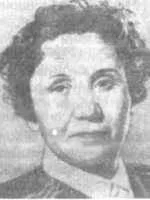
Manzura Sobirova -Oydin
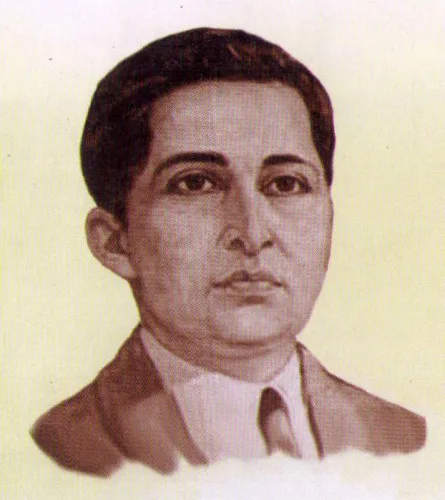
Usman Nasir

Mirtemir
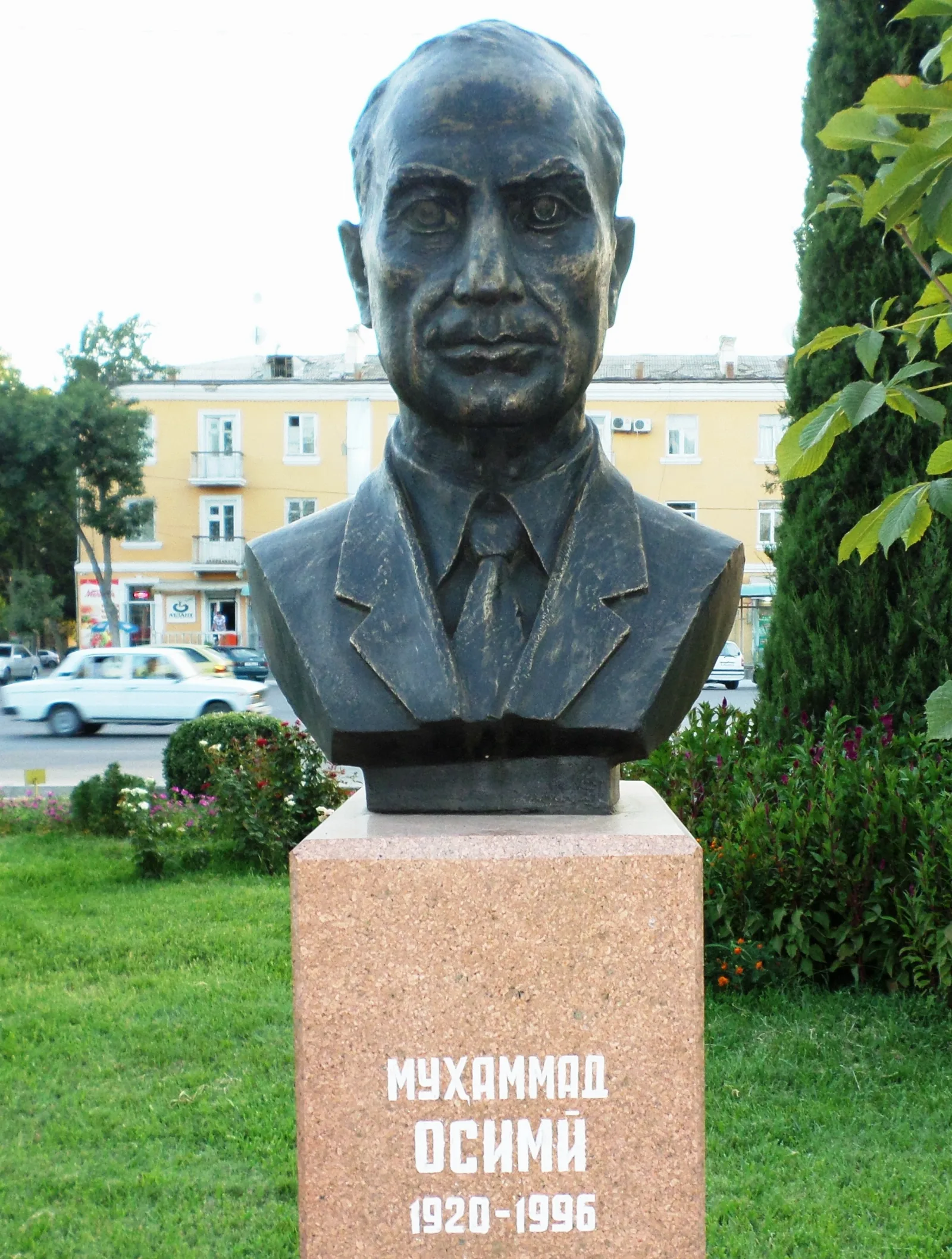
Muhammad Asimi
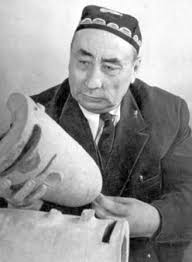
Yahya Ghulomov
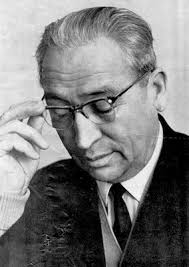
Ibrohim Muminov
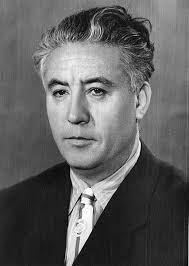
Uygun
Hamid Olimjon
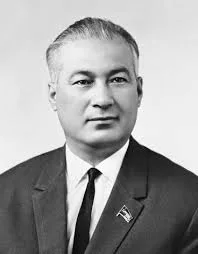
Sharof Rashidov
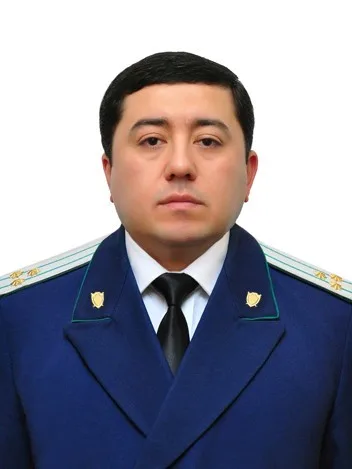
Aminov Shokhrukh Azamatovich
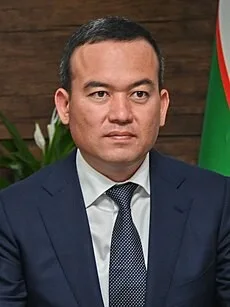
Kasimov Ulugbek Berdikabilovich
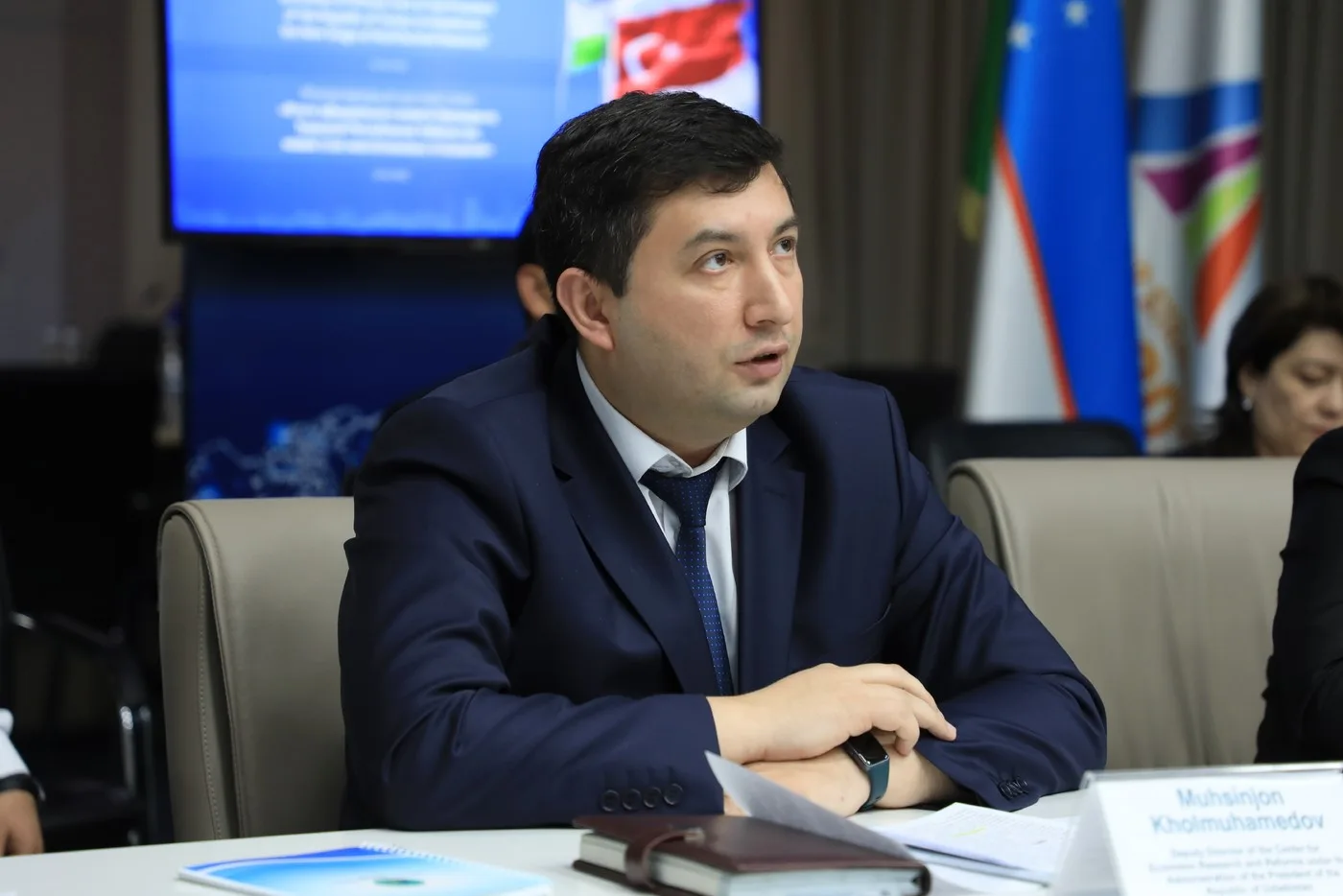
Kholmukhammedov Mukhsin Murodullaevich
Hazrat Alikulov
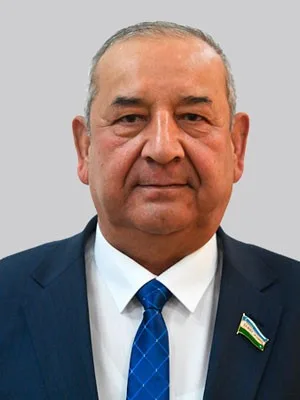
Toshev Farmon Iskhokovich
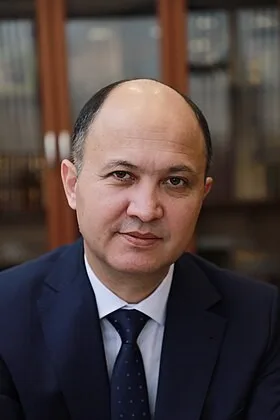
Kholbotaev Nodirzhon Jonuzokovich
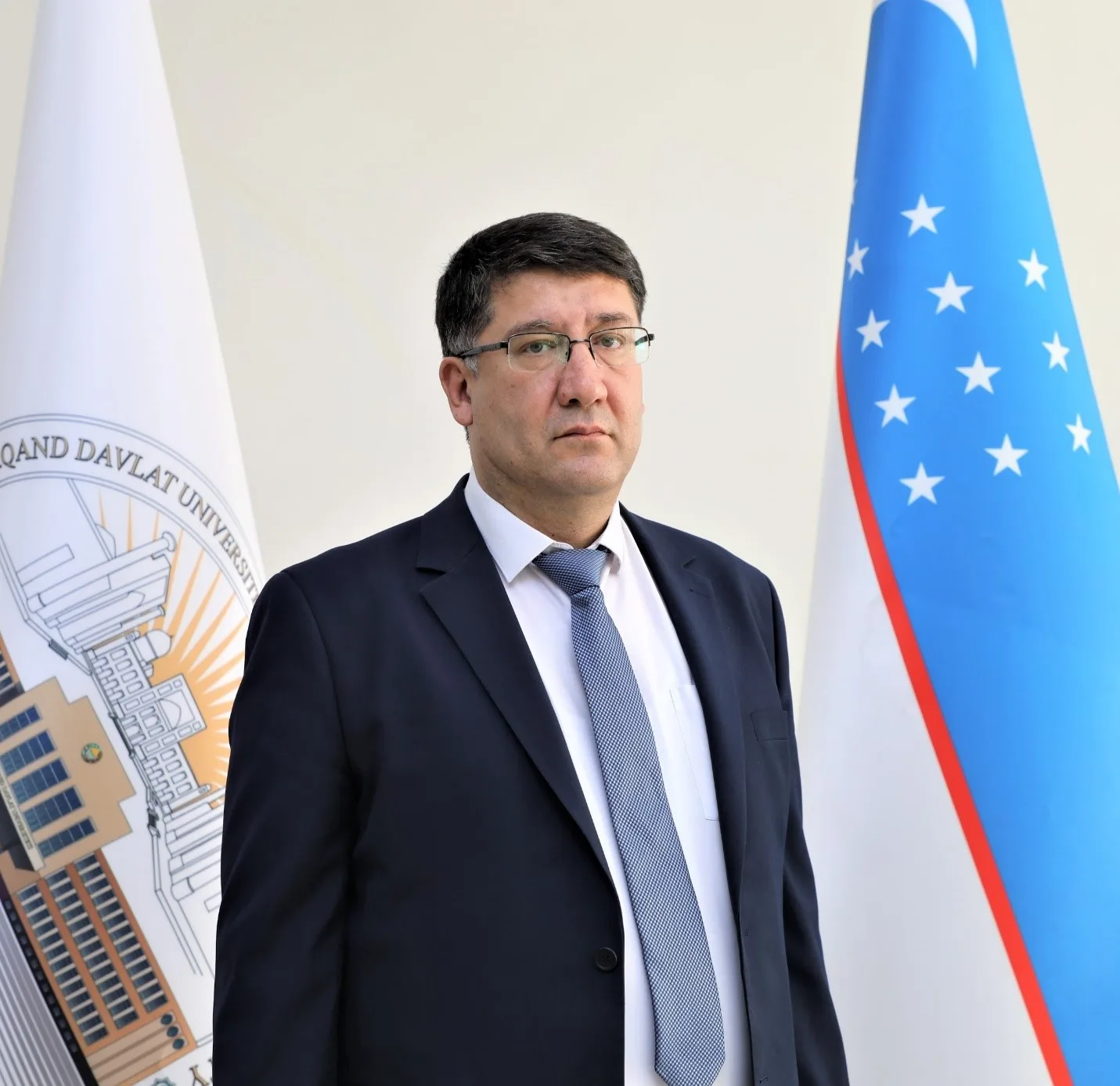
Akhatov Akmal Rustamovich
Primova Kholida Anarbaevna
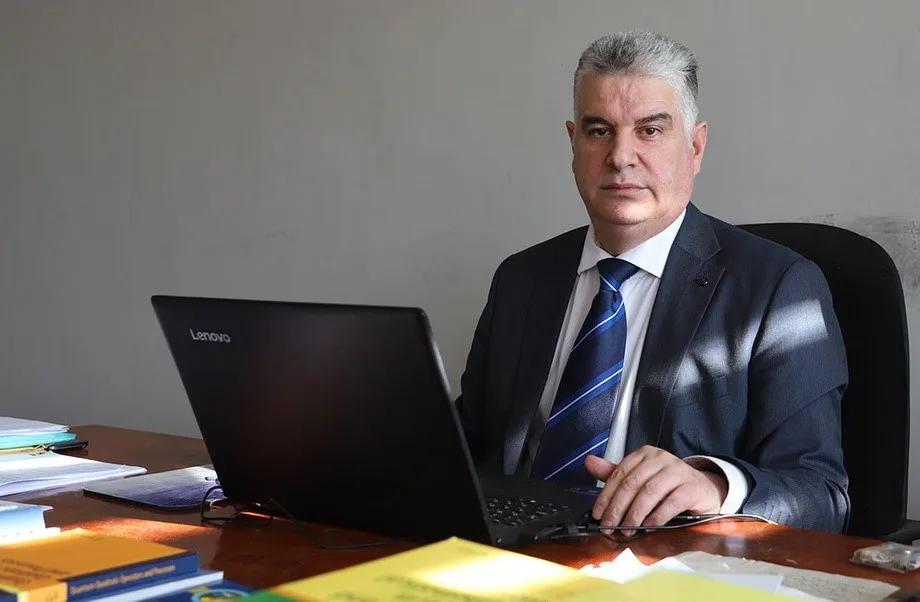
Rozikov Utkir Abdulloevich
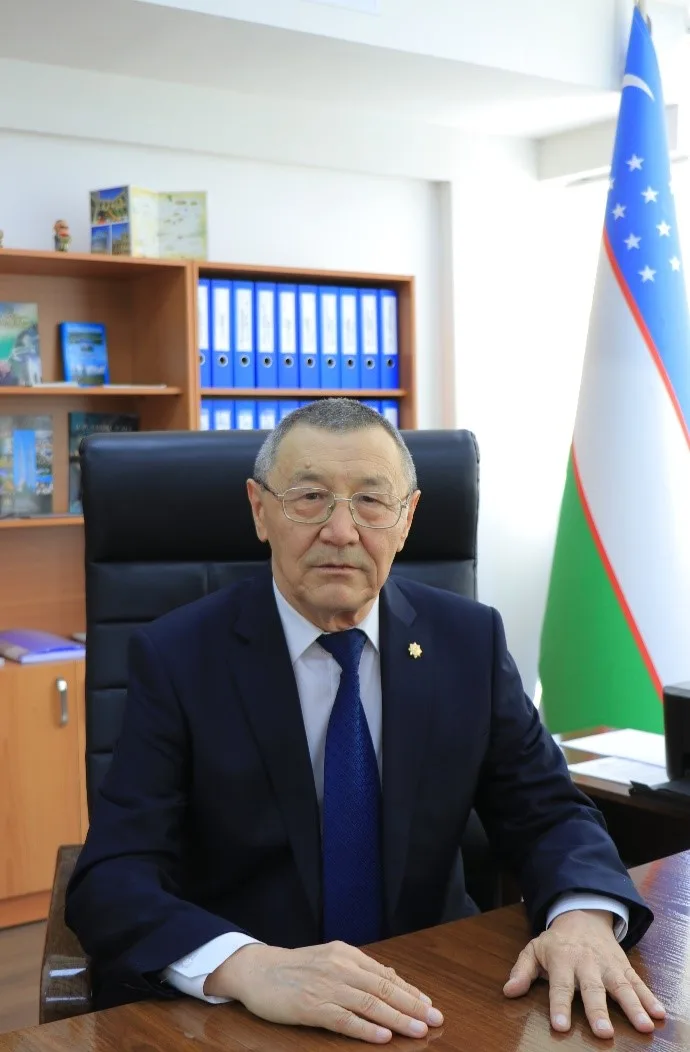
Lakaev Saidakhmat Norzhigitovich
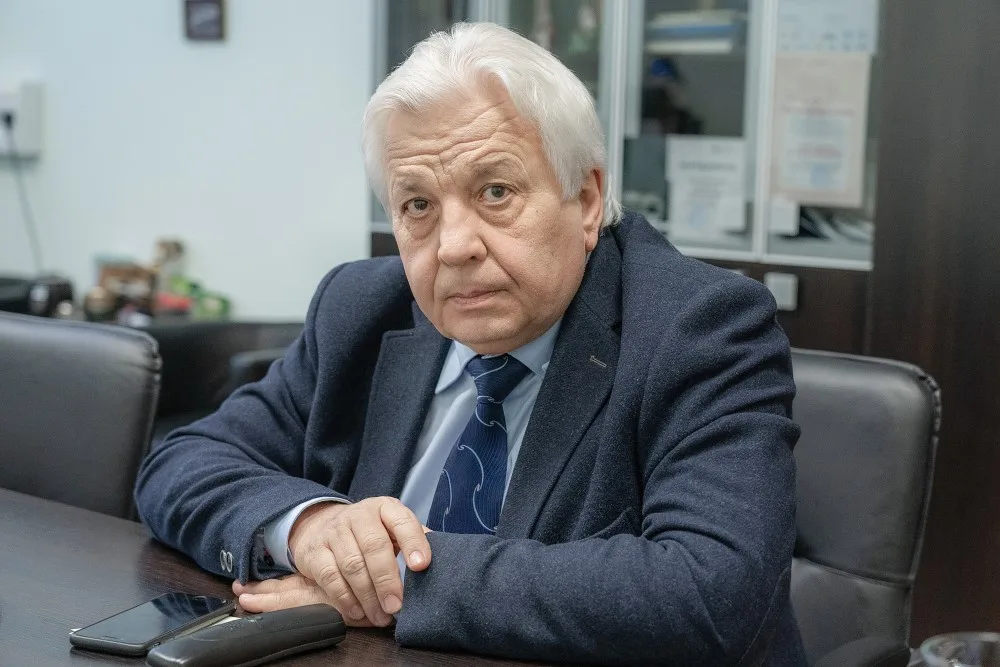
Salakhuddinov Nariman Faridovich
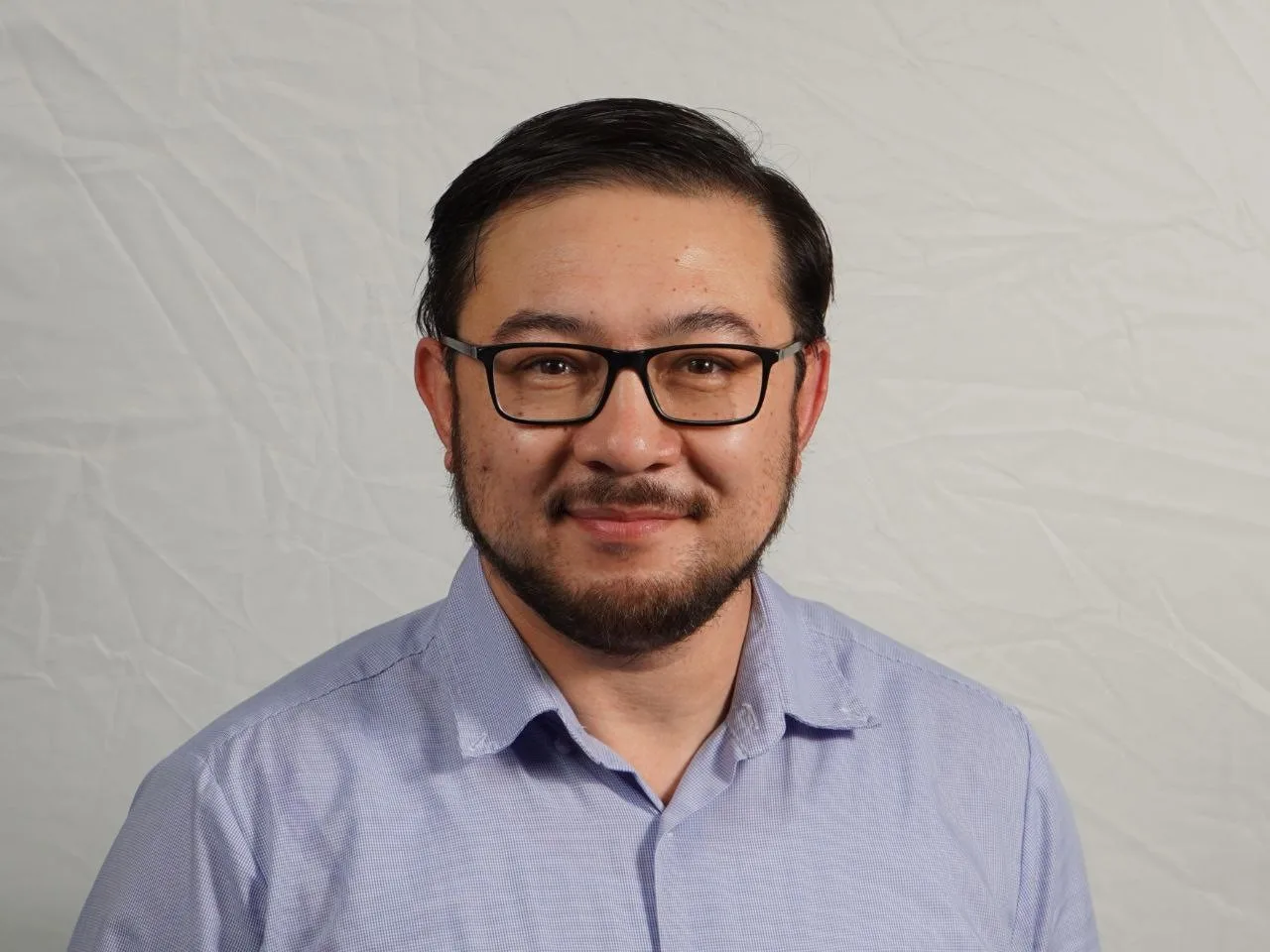
Khudoyberdiev Sharof Abdumalikovich
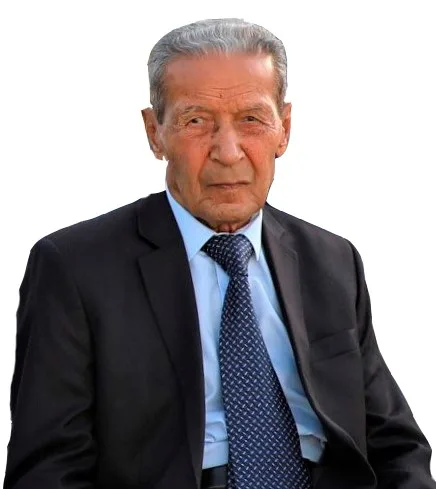
Abdulkosimov Ali Abdulkosimovich
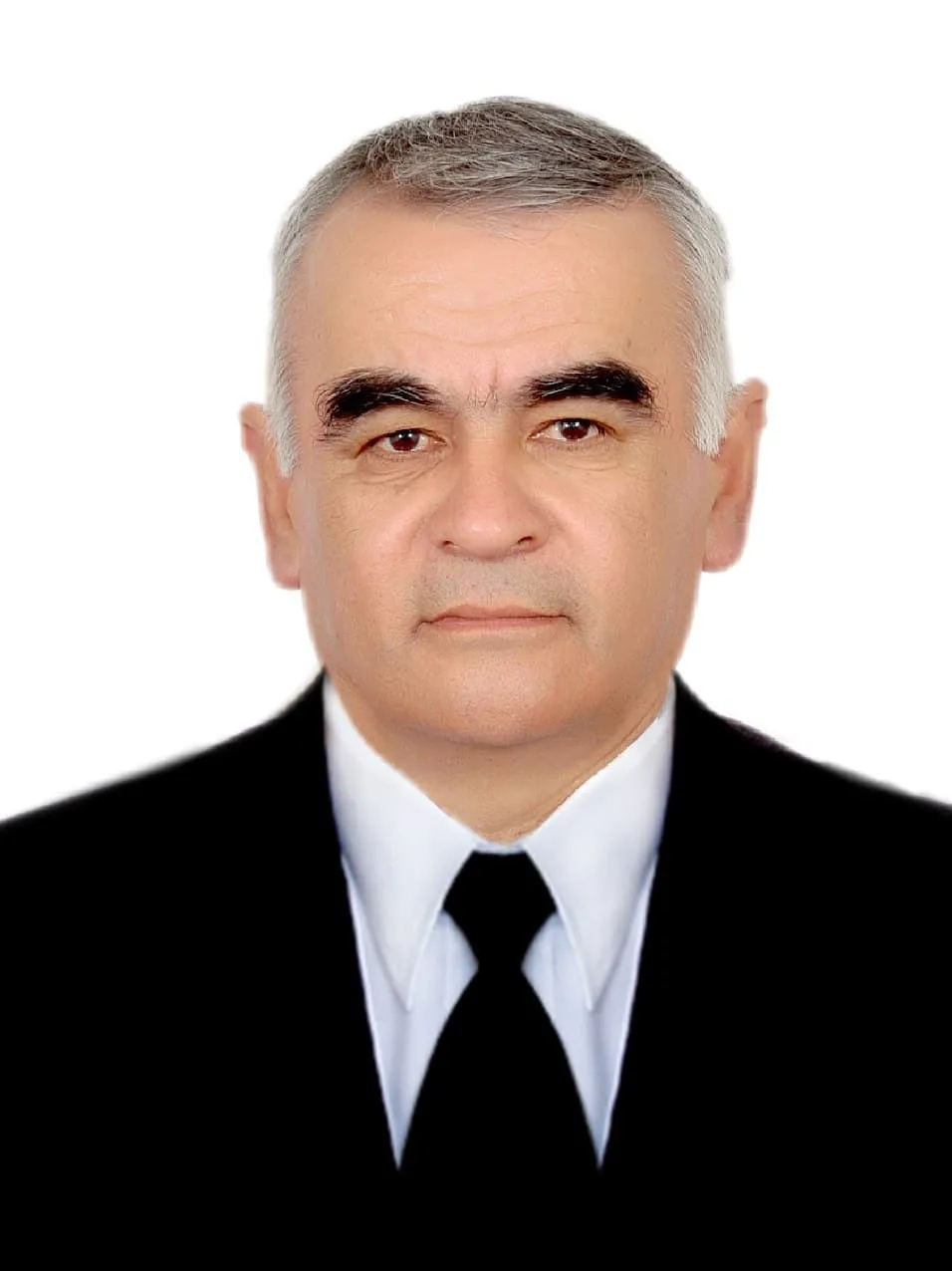
Boymirzaev Karimjon Mirzakhmedovich
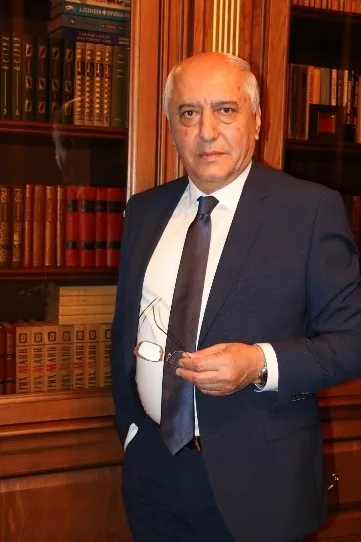
Ashurov Mukhsinjon Khurramovich
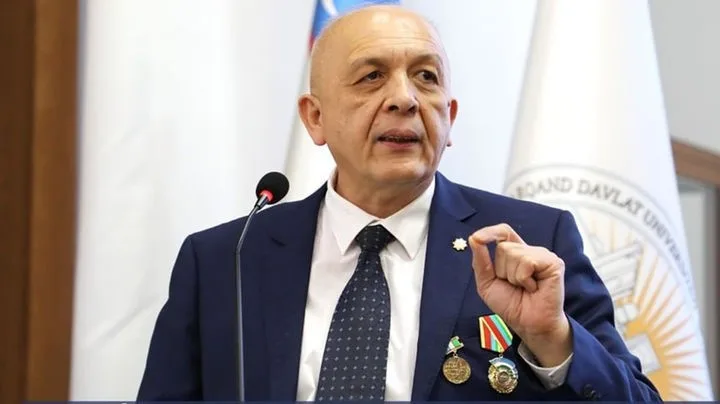
Akhmedov Bobomurоt Dzhuraevich
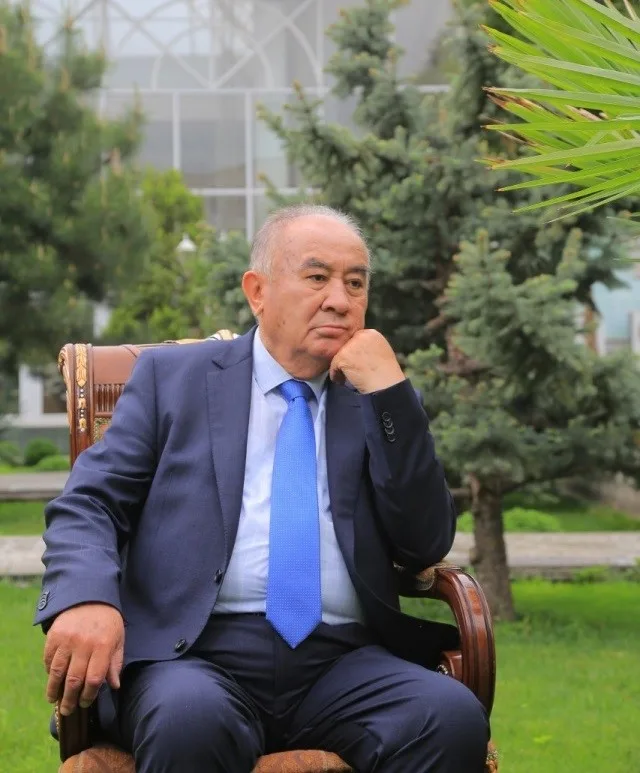
Shamsutdinov Rustambek Temirovich
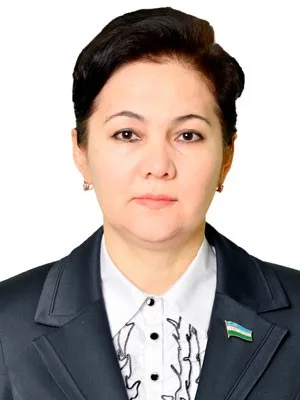
Alimova Gavkhar Zairovna
Student reviews
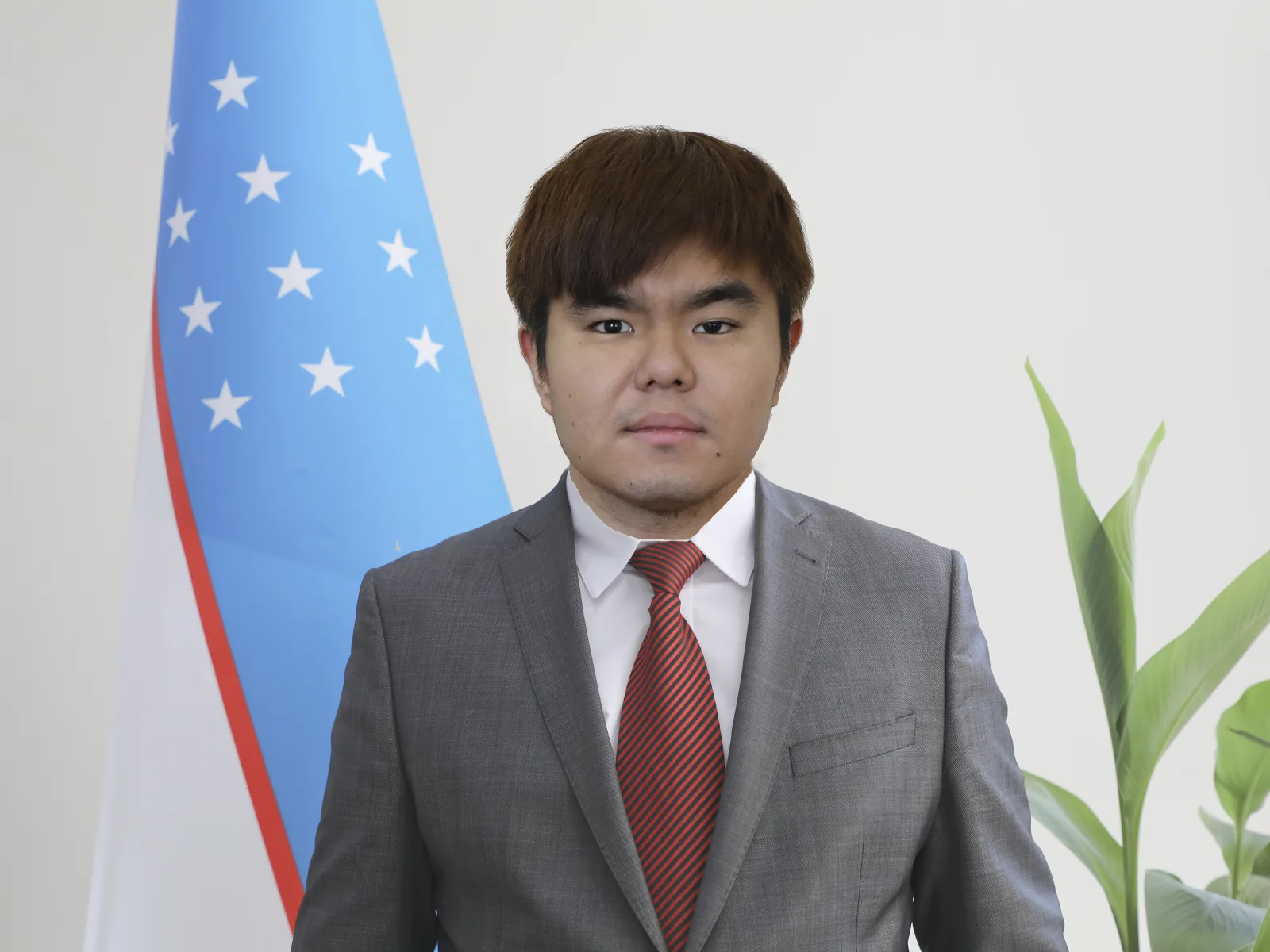
Koki Murooka
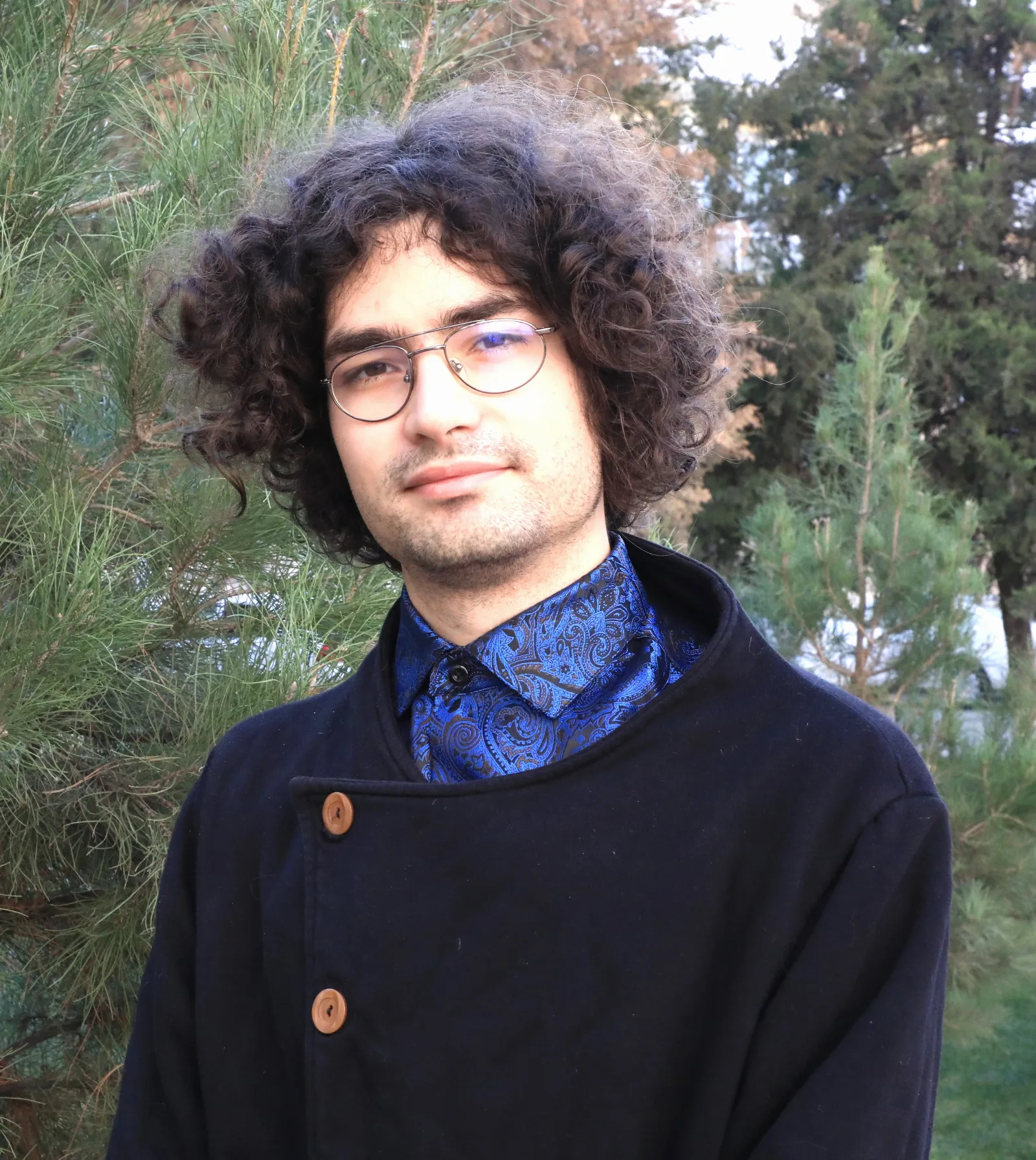
Krzysztof Kurtyka
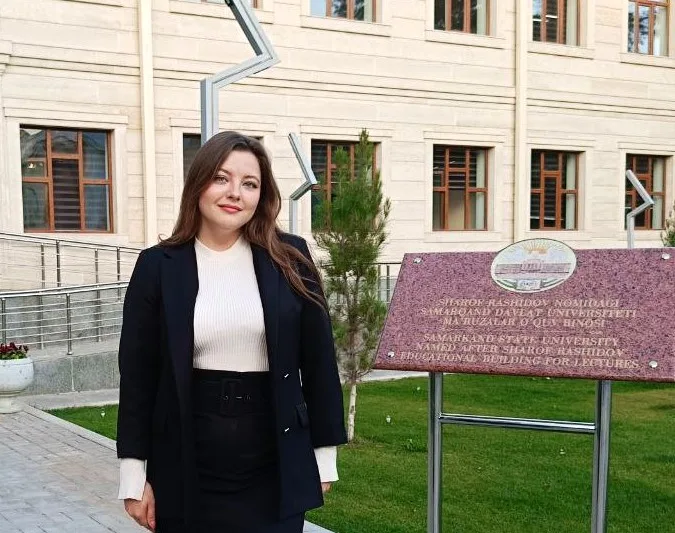
Ekaterina Khvatalova
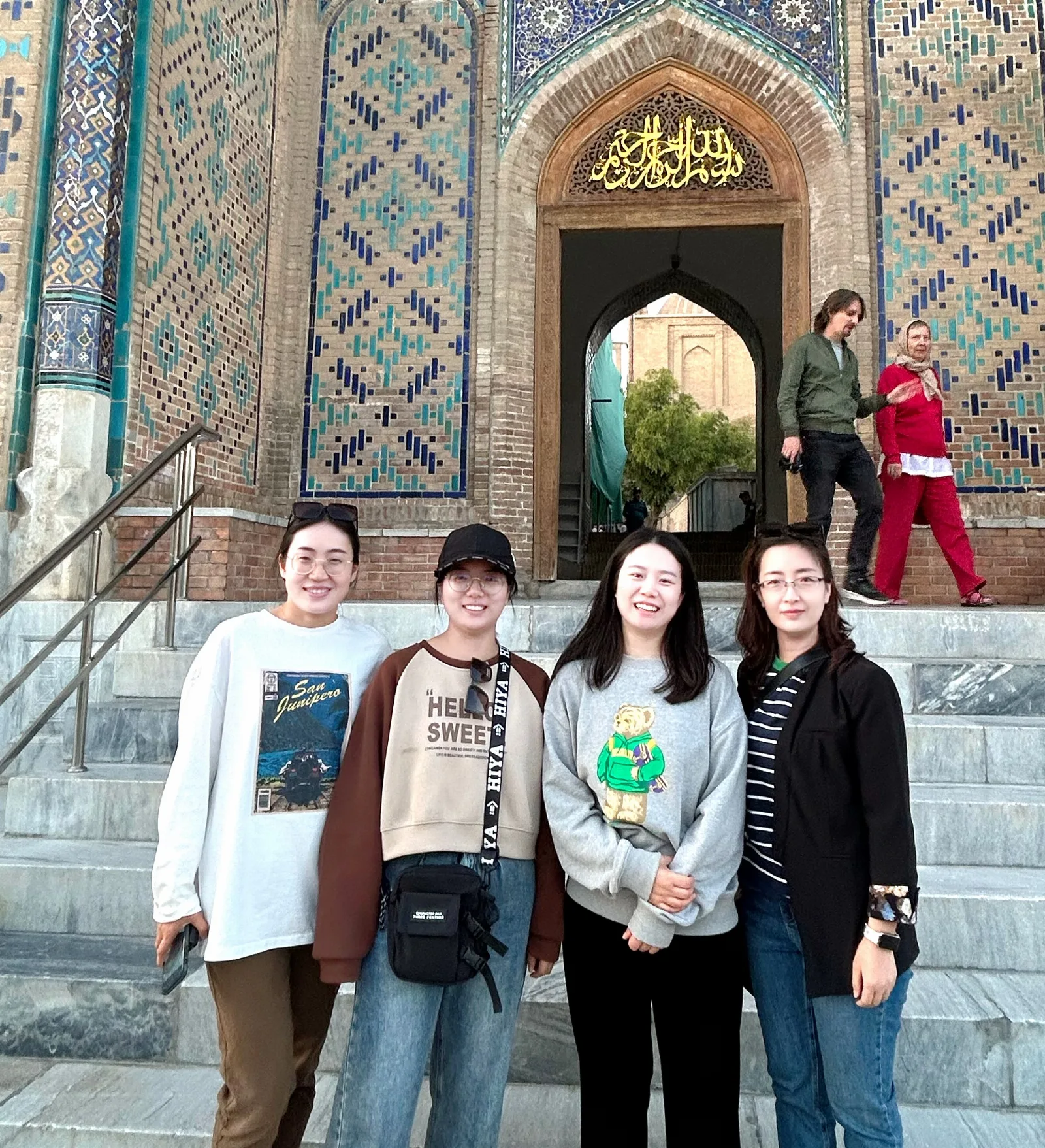
Kang Lina, Yu Xiang, Zhang Huaqing, Li Juan
Li Lei