Ville de Navoi
Région de Navoi
161,300
Population
4
Universités
4
Musées
9
Bibliothèques
1
Aéroports
1
Gares ferroviaires
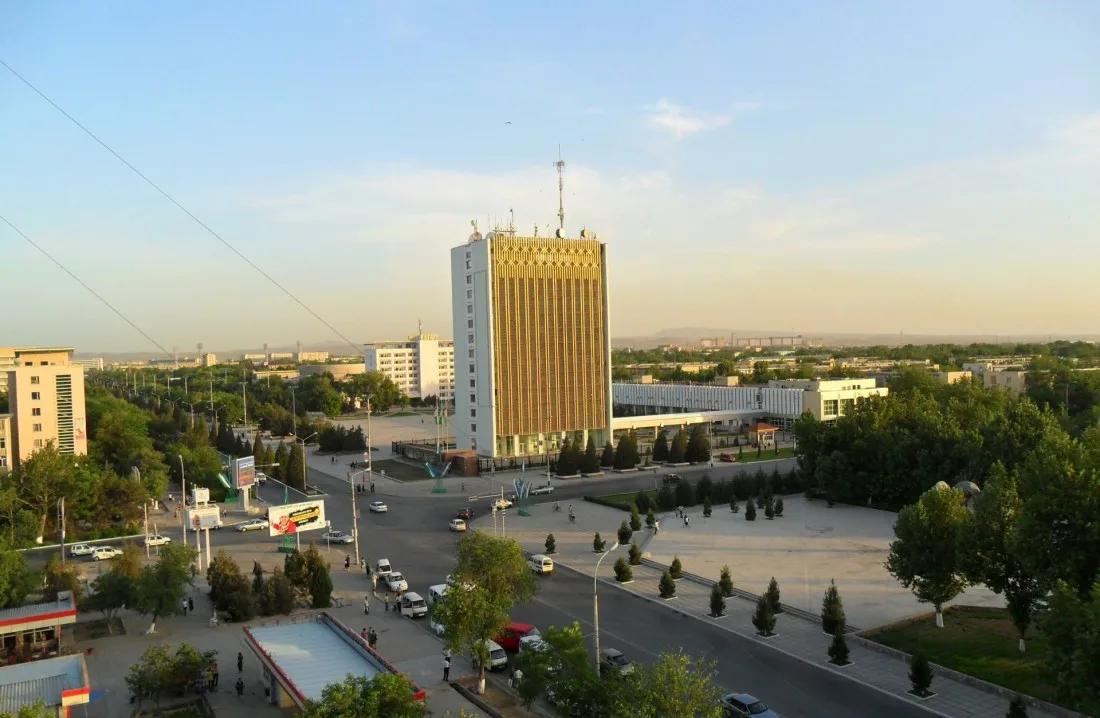
Navoi city is a city in Navoi region, it is the administrative, economic and cultural center of the region. It is located in the south-west of Uzbekistan, on the eastern edge of the region. The city of Navoi was named after Alisher Navoi. In the north is the ancient city of Karmana, which was considered the stronghold of the Bukhara Emirate in the past. In September 1958, the city of Navoi was established as an industrialized city.
The most popular attractions are:
Visit the most interesting places of Navoi city:
Park named after Alisher Navoi - a symbolic statue and park complex dedicated to Hazrat Alisher Navoi. It is located in the center of the city of Navoi. It was built in 1991 dedicated to the 550th anniversary of the birth of Alisher Navoi. Near the recreation park "Patriotic Park" "Aquapark and artificial lake, in addition, various playgrounds and 36 types of attractions are organized in the territory of the park.
Farhad Palace of Culture is a new statue dedicated to Alisher Navoi's Khamsa epic hero. This statue is made of bronze and was erected in the city of Navoi, Navoi region. As a logical continuation of this work, a statue of women carrying three jars was installed. Farhad Palace of Culture is located in front of the statue.
The Museum of Repression Victims - The Museum of Repression Victims is one of the young museums, part of which was opened in the years of independence, under the Navoi State Pedagogical Institute, located in the southern part of Navoi city. By the decision of our government on November 22, 2017, the work on the establishment of the museum began, and the museum began its operation on December 27, 2018. The museum fund has been enriched with archival documents and materials of the museum fund with the active participation of professors, teachers, young scientists and students, as well as the general public. From the museum The museum contains information, documents, photos and objects about the citizens of Uzbekistan who died in the struggle for national liberation.
Materials such as "Occupation of Central Asia by Tsarist Russia", "Repression of 1930-1937", "Cotton Case", "Restoration of historical justice in the years of independence and perpetuation of the memory of victims of repression" were also included. You can familiarize yourself with the exhibits depicting the hardships and massacres of the Soviet era and the processes up to the first periods of independence.
Hazrat Alisher Navoi Mosque - Alisher Navoi Mosque is a religious shrine built independently in the form of a mosque located in the southern part of Navoi city, and has been used for years. In August 2004, the first foundation stone of the construction of the mosque was laid, and they expressed their suggestions and opinions in order to make the mosque beautiful and meet all the needs. In 2006, the mosque, which can accommodate 2000 people, was commissioned on March 24 and today it is one of the main religious and cultural objects of Navoi city. The mosque stands out in Uzbekistan with its unique architecture. Alisher Navoi was revered as the sultan of the word estate, and this mosque was also named in his honor.
Arif Deggarani Mosque - Deggaron complex. Karmana land has been considered sacred since ancient times. Another historical monument of the city of Karmana is the Deggaron complex, located in the village of Hazora, Karmana district. The building was built in the 11th century. It is said that craftsmen lived here. The construction of Mir Sayyid Bahram's mausoleum and Deggaron mosque, firstly, was related to the development of crafts and trade during this period, and secondly, they played an important role in the improvement and development of the spiritual life of Karmana.
"Raboti Malik" "Sardoba" complex - on the Karmana - Bukhara road - along the ancient caravan road, which has been restored today, is the caravanserai of Raboti Malik (Shah Raboti). It was built in the 70s of the 11th century by Shamsulmulk Nasr ibn Ibrahim (1068-1080), one of the Karakhanids, and in the first quarter of the 12th century, it was built by Arslan Khan Muhammad ibn Sulayman (1102-1130), one of the same Karakhanids. 'mired.
Kasim Sheikh complex - Kasim Sheikh architectural monument (XVI century). In 1910-1911, a shack was built on the west side of the palace by Amir Olim Khan, and the tomb of Amir Abdulahad Khan was placed in it. Qasim Shaykh's house consists of a house, a cave, a mosque, a porch and a shack of Amir Abdulahad Khan, rooms and other rooms.
A house was built for Qasim Shaykh under the donation of Abdullah Khan II, the ruler of Bukhara Khanate (1558). In 1999-2000, on the initiative of Islam Karimov, the complex was again transformed into a prosperous place. In addition, the mihrab and entrances to the cells were built on the main facade of Sayyid Abdul-Akhad Khan's khazira. Currently, the museum of the historical-architectural complex of Qasim-Sheikh includes a lot of historical exhibits, its collection includes more than 2000 exhibits.
The tomb of Mir Said Bahrom is an architectural monument in the town of Karmana, Navoi region of Uzbekistan. It belongs to the 10th-11th centuries (in some sources it is said that it was built in 1020), it is considered the oldest architectural monument preserved in the town of Karmana. It is located on Mir Said Bahrom Street, in the north of the former Jewish neighborhood (in the vernacular, "Juguton Mahalla"). The tomb of Mir Said Bahrom was discovered by the archaeologist Antonina Pisarchik in 1942. After that, the mausoleum was completely restored in 1976. On January 18, 2008, the authorities of Uzbekistan submitted an application to include the mausoleum in the list of UNESCO cultural heritage sites.
Historical complex of Nurota and Chashma is a fortress fortress located in Nurota district of Navoi region. It is one of the old historical monuments of Navoi region. Nurota spring is a unique gift of nature, it is not known when and how it appeared. The history of the light source goes back several thousand years. In fact, this divine miracle appeared as a result of complex natural processes. Archeological findings found by ancient people in the fortress south of the spring show that people lived in this place during the Upper Paleolithic period. The word Noor, the name of the city, is also related to the spring, and this name means light and brightness in Arabic and Persian-Tajik languages.
Climate. The climate of Navoi region is sharply continental, the weather is cold in winter and hot in summer. Spring and autumn have a lot of rain, but summer can be described as not much precipitation. Mmo summer is very hot, so don't forget to take an umbrella and sunscreen when traveling to Navoi this time of year.
The kitchen. The process of preparing Uzbek national dishes and the culture of eating have a very long history and are based on many years of experience of the people. Customs and traditions were formed based on the climatic conditions of the region and the lifestyle of the local population. Residents of each region have their own way of preparing national dishes. Navoi region is especially famous for its food and special way of preparing it. The business card of every city is pilaf! In Navoi, it is cooked from a special type of rice called devzira. This rice is the tastiest and most expensive in Uzbekistan. It's red-brown in color, and it's 7 times bigger when it's ripe! To achieve sufficient juice, it is stored for two to three years, like a good wine. Only then will it reach the peak of its taste and will have a unique aroma. Also, mutton, yellow carrot, garlic and Dungan pepper are added to the pilaf. The taste of this dish is unforgettable. Each dish has its own special taste, especially "Navoi pilaf", "Dimlama", "Manti", "Shoorva" and, of course, six kebabs can be included among the wonderful dishes.
Additional; People who have been to Navoi city often admit that it is clean and free of waste. In fact, there is almost no garbage in the city, people pay special attention to cleanliness.