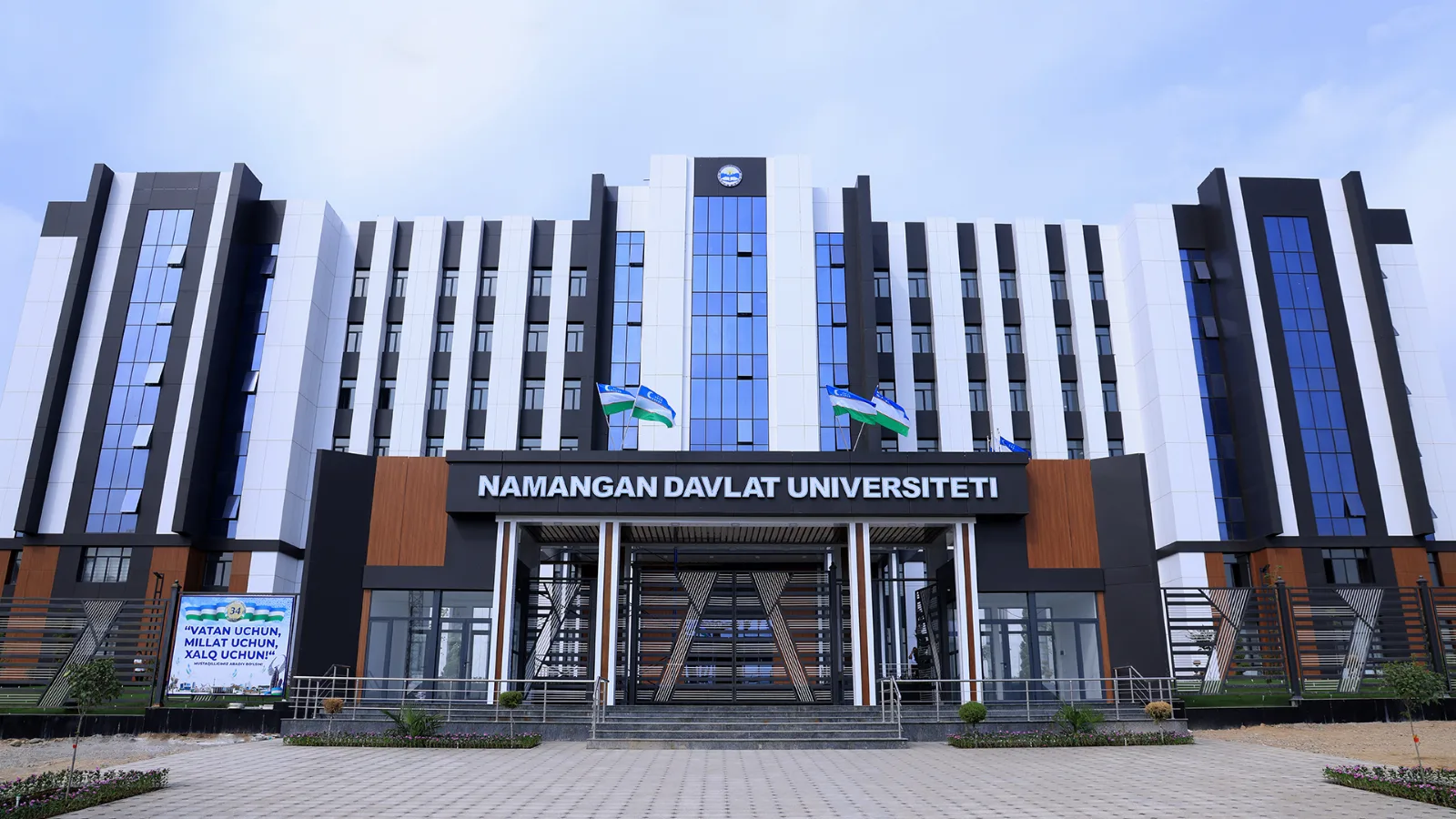
Université d'État de Namangan
14,499
Étudiants
133
Étudiants internationaux
535
Corps enseignant
10
Facultés
27
Départements
1942
Fondée en
Vidéos et photos
À propos de l'université
Pour l'année universitaire 2025/2026, l'université compte 10 facultés et 27 départements, employant 744 professeurs et enseignants. Elle forme des personnels dans 71 cursus de licence, 27 de master et 10 programmes conjoints. Cette année, l'université accueille 14 932 étudiants : 8 588 en licence à temps plein, 1 270 en cours du soir, 3 719 en formation à temps partiel, 1 128 en cycle court (deuxième cycle de l'enseignement supérieur), 227 en formation à distance et 474 en master.
Pour les étudiants internationaux
Liste des documents
1. Les documents doivent être envoyés par courriel à : international@namdu.uz.
2. Copie numérisée du passeport (format PDF).
3. Copie numérisée du certificat ou du diplôme indiquant les matières étudiées et les notes obtenues. Copie numérisée du diplôme de licence ou de master indiquant les matières étudiées et les notes obtenues.
4. Photo d'identité récente (moins de trois mois) – 3,5 cm × 4,5 cm.
5. IELTS : score de 5,5 ou plus / TOEFL iBT : score de 71 ou plus. 6. Conditions d'admission pour l'année universitaire 2025-2026.
Procédure d'admission : Les ressortissants étrangers souhaitant étudier à l'Université d'État de Namangan au niveau licence ou master doivent passer un entretien avec les membres du comité de sélection de leur domaine d'études ou spécialité. L'entretien aura lieu durant la première ou la seconde quinzaine d'août et se déroulera en russe, en ouzbek ou en anglais.
Partenariats internationaux
Khakimjon Khoshimov Abdukakhkhor ugli
Chef de département
Tél. : +998 97 426 14 17, +998 69 210 02 27
Courriel : international@namdu.uz
Khumoyun Khusniddin Khusnidov ugli
Spécialiste principal
Tél. : +998 99 398 90 94
Courriel : international@namdu.uz
Abdusattorov, Nodirjon Azimjon Ugli
Spécialiste principal
Tél. : +998 77 204 36 35
Courriel : exchange@namdu.uz
Objectif du département : L’intégration des dernières avancées dans le processus éducatif, conformément aux normes internationales, est aujourd’hui un enjeu crucial. À cet égard, le Département des relations internationales établit et renforce la coopération amicale, culturelle, éducative et scientifique entre l’université et d’autres établissements d’enseignement à travers le monde. Ce document formule également des recommandations concernant la participation des professeurs et du personnel enseignant aux programmes de subventions et de bourses annoncés par la Fondation El-Yurt Umidi, sous l'égide du Cabinet des ministres de la République d'Ouzbékistan, de l'Union européenne, de la Russie, des États-Unis et de nombreux autres pays. Ces programmes concernent la formation continue à l'étranger, les stages, les formations courtes et les échanges d'étudiants.
Les priorités du département pour l'avenir proche sont les suivantes :
- développer des programmes d'enseignement conformes aux normes internationales et établir une coopération mutuellement avantageuse avec les principaux établissements d'enseignement supérieur (classés parmi les 1 000 meilleurs par des organismes reconnus tels que THE, QS et ARWU) des pays développés ;
- développer des programmes de recherche conformes aux normes internationales et établir une coopération mutuellement avantageuse avec les écoles scientifiques internationales ;
- améliorer les programmes de développement potentiels et étendre la coopération mutuellement avantageuse avec les principaux établissements d'enseignement supérieur et de recherche internationaux, les fondations internationales et les bailleurs de fonds.
- Créer les conditions nécessaires et stimulantes à la participation active des professeurs, doctorants et étudiants aux événements de coopération internationale, et mettre en place un système objectif et transparent de suivi du déroulement et des résultats de ces événements ;
- Sélectionner et former de manière ciblée les étudiants universitaires les plus talentueux en vue des concours internationaux d'enseignement supérieur ;
- Attirer un grand nombre d'étudiants internationaux et renforcer l'attractivité académique de l'université sur la scène internationale ;
- Impliquer des professeurs et des enseignants d'établissements d'enseignement supérieur étrangers de premier plan dans le processus pédagogique des programmes de licence et de master de l'université.
Procédure de voyage
Invitation d'une université ou d'un organisme étranger (invitation ou lettre officielle)
Plan de voyage
Objectif du voyage
Dans les trois jours ouvrables suivant la fin du voyage, préparer une présentation sur les résultats de la mission à destination des étudiants et des enseignants, et soumettre un rapport écrit et une présentation sur les résultats du voyage au Bureau de la coopération internationale de l'université.
Cours de langue
{}
Opportunités pour les étudiants
 Tojiboyev Komiljon Sharofiddinovich
Biologiya fanlari doktori, O'zbbekiston Respublikasi Fanlar Akademiyasi akademigi.
O'zbekiston Respublikasi Fanlar Akademiyasining Botanika instituti direktori.
Facultés
Established on the basis of the Decree of the President of the Republic of Uzbekistan dated April 29, 2020 No. PF-5987 “On additional measures to radically improve legal education and science”.
The Namangan State Faculty of Law began its activities in September 2020.
Mission and values
To radically improve the system of legal education and science, ensure their competitiveness in the international educational arena, improve the quality of legal personnel training, as well as implement the tasks set out in the Concept for the Development of the Higher Education System of the Republic of Uzbekistan until 2030
Educational areas and programs
Bachelor's programs:
60420100-Jurisprudence (by type of activity) Bachelor. Full-time, duration of study 4 years.
60420100-Law (by type of activity) Bachelor. Correspondence, duration of study 5 years.
60420100-Law (by type of activity) Bachelor. Correspondence, second duration of study 4 years.
60420100-Law (by type of activity
Additional courses or certificate programs: The Faculty of Law has organized special courses for students of the Namangan Law College to enter the Faculty of Law.
Information for students
Scholarships and financial assistance: 1 scholarship holder of the President of the Republic of Uzbekistan and 2 winners of the Navoi State Scholarship study at the Faculty of Law.
Internship and job opportunities: Graduates of the Faculty of Law undergo internships at the Prosecutor's Office, the Department of Internal Affairs, the Department of Justice, the Chamber of Advocates, the Notary Chamber, and the Compulsory Enforcement Bureau. Students undergo internships in law enforcement agencies in their regions of residence.
Infrastructure and resources
Laboratories and technical equipment: The Faculty of Law has 3 lecture rooms and 6 practical training rooms, all of which are equipped with ICT equipment.
Events and activities
Student organizations: The Faculty of Law has clubs such as “Future Prosecutors”, “Future Court Employees”, “Future Notaries”, “Future Lawyers”, and “Oratory” and “Skillful Hands” clubs.
International cooperation: The Faculty of Law has established international cooperation relations with the Ural State Law University and Osh State University.
Contacts and social networks
Contact information: 201 Kh.Kholkhonov Street, Namangan city
Social network pages: https://t.me/yuridikfakultet
The Faculty of Biotechnology was established in 2019 in line with the development of modern science and technology. The main goal of the faculty is to train competitive, skilled professionals in the field of modern biotechnology by integrating the fields of biology, biotechnology, and agriculture. Additionally, the faculty aims to develop scientific research activities, implement innovative projects, and work in close collaboration with industry.
Currently, the faculty has 2 departments. Each department conducts educational, scientific, and practical work in its respective field. Through these departments, students not only gain theoretical knowledge but also have the opportunity to strengthen their skills through laboratory and industrial practices.
The Faculty of Biotechnology is based on providing quality education through modern laboratories, highly qualified professors, and international collaborations. The faculty’s activities focus on various fields such as biology, biotechnology, food safety, and different sectors of agriculture.
Our Main Goals:
To train highly skilled professionals by providing students with deep theoretical knowledge and practical skills.
To develop fundamental and applied research, and implement innovative projects.
To expand local and international scientific collaborations.
To promote projects in various fields of biotechnology (food, biology, agriculture, etc.) that meet the needs of society.
Our Values:
Innovative Thinking – continuous exploration and striving for innovation.
Quality Education – dedication to providing modern and practical knowledge.
Scientific Integrity – adherence to ethical standards in all scientific and educational processes.
Service to Society – contributing to the well-being and sustainable development of society.
Collaboration – expanding scientific and academic connections at both local and international levels.
Educational Programs and Courses
Undergraduate Programs: A brief overview of each program (e.g., duration of studies, form of study: full-time, evening, distance learning).
Master’s Programs: Available specialties and the admission requirements for them.
PhD/DSc Programs (if available): Information related to doctoral degrees.
Undergraduate Programs: (Form of Study)
№
Program Code and Name
Form of Study
1
60510100 - Biology (by types)
Full-time
2
60510100 - Biology (by types)
Evening
3
60710200 - Biotechnology (Food, Nutrition, Chemical Products, and Agriculture)
Full-time
4
60810900 - Agronomy (by types of agricultural products)
Full-time
5
60812100 - Medicinal Plant Cultivation and Processing Technology
Full-time
6
60812000 - Greenhouse Management and Operation
Full-time
7
60811800 - Fruit Growing, Vegetable Growing, and Viticulture
Full-time
8
60812200 - Plant Science (Floriculture)
Full-time
9
60830100 - Aquatic Bioresources and Aquaculture
Full-time
10
60810900 - Agronomy (by types of agricultural products)
Evening
№
Master’s Programs
Form of Study
1
70510101 - Biology (by scientific field)
Full-time
№
PhD/DSc Programs
Form of Study
1
02.00.17 - Agricultural and Food Processing, Preservation, and Biotechnology Technologies
Full-time
2
03.00.05 - Botany
Full-time
3
03.00.06 - Zoology
Full-time
60710200 - Biotechnology (Food, Nutrition, Chemical Products, and Agriculture) - This program focuses on developing high-quality, eco-friendly, and safe food products using biotechnological methods. It aims to advance the production of dairy products, bread, beer, juices, and other products based on fermentation technologies. The program also seeks to enhance the biological activity of food products, develop vitamin and probiotic supplements, and prepare qualified specialists with in-depth knowledge and skills in these areas.
60810900 - Agronomy (by types of agricultural products) - The main objective of this program is to grow high-quality and high-yield agricultural products, cultivating various crops based on agro-technological requirements. It involves using advanced agronomic methods to improve soil fertility and increase productivity. The program emphasizes maintaining the ecological purity of agricultural products and adhering to quality standards. It also focuses on increasing soil fertility, preventing land degradation, and developing technologies to improve soil quality, along with effective use of mineral and organic fertilizers. The program aims to study environmentally safe crop cultivation methods and train specialists in the field.
60812100 - Medicinal Plant Cultivation and Processing Technology - This program focuses on the development of medicinal plant cultivation technologies, studying their agro-technological peculiarities, and growing them on an industrial scale. The program emphasizes the eco-friendly and biological methods of plant care, as well as conducting genetic and breeding research to enhance the medicinal value of plants. The program includes studying methods for extracting and processing biologically active substances from the roots, leaves, flowers, and fruits of medicinal plants, as well as developing technologies for obtaining phytochemical extracts, essential oils, and other biologically active components. The program prepares students for producing medicinal plants as raw materials for the pharmaceutical and cosmetics industries.
60812000 - Greenhouse Management and Operation - This program is of significant importance in modern agriculture and focuses on learning technologies for cultivating high-yield vegetables, fruits, and other crops throughout the year in greenhouses. The main aim is to study the production of eco-friendly and high-quality products and efficiently manage greenhouse systems.
60811800 - Fruit Growing, Vegetable Growing, and Viticulture - This program is dedicated to the important branches of agriculture: fruit growing, vegetable growing, and viticulture. The main goal is to cultivate fruits, vegetables, and grapes based on scientific principles, improve their quality, introduce modern agro-technologies, and produce eco-friendly products.
60812200 - Plant Science (Floriculture) - This program holds great importance in the fields of agriculture and landscape design. The primary goal is to cultivate flowers based on scientific principles, study their selection, care, and propagation technologies, and apply this knowledge to landscape architecture and decorative horticulture.
60830100 - Aquatic Bioresources and Aquaculture - This program focuses on water ecosystems, fish farming, and the cultivation and management of other aquatic organisms. Its main goal is to use aquatic bioresources efficiently, develop aquaculture technologies, ensure the sustainable development of the fishing industry, and maintain ecological balance.
Information for Students
Scholarships and Financial Aid: Information on benefits and grants provided to students.
The university has implemented various financial support systems for students, aimed at increasing their motivation for studies, supporting their scientific activities, and providing assistance based on their social circumstances.
State Scholarships:
Basic Scholarship: All students studying on a full-time basis without a contract (under the state grant system) receive a monthly scholarship, the amount of which is determined by the government.
Special Scholarships for Talented Students:
– Prestigious Named Scholarships
These scholarships are awarded through a competitive process to students who stand out for their academic achievements and scientific activities.
Competitions Organized by the University: Through competitions organized by the university, talented students are provided with additional financial incentives.
Social Assistance: Students in need of social protection (such as those who have lost their parents, students with disabilities, and children from low-income families) are provided with financial aid and benefits.
Accommodation for Students from Distant Regions: Students coming from distant regions are allocated dormitory space, with financial benefits considered for these students.
Internship and Employment Opportunities: Collaborating Organizations and Internship Locations
The Faculty of Biotechnology places great emphasis on not only theoretical knowledge but also practical skills development for its students. Therefore, laboratory sessions and industrial internships play a significant role in the educational process.
Partner Organizations:
The faculty has established collaborative relationships with the following prestigious organizations and companies:
Partner Organizations:
The Faculty has established collaborative relationships with the following prestigious organizations and companies:
Departments of National Education
Food Industry Enterprises
Namangan Don LLC
Namangan Juice LLC
Namangan Tip-Top
Namangan Coca-Cola
Namangan Nestle LLC
Uchqo‘rg‘on Farel LLC (joint ventures)
Pharmaceutical Companies
Pharmaceutical production and testing laboratories
Agriculture and Breeding Centers
To‘raqo‘rg‘on District “Veterinary and Livestock Development Department”
Namangan Regional Agricultural Department
Uychi District Academic M. Mirzaev's Scientific Research Institute for Horticulture, Viticulture, and Vegetable Growing at the Namangan Experimental Station
Abu Bakr Flowers LLC (greenhouses for flower cultivation on the airport road)
Namangan Horticulture Development Center LLC
Scientific Research Institutes
Cotton Selection, Seed Production, and Agricultural Technology Research Institute, Namangan Scientific-Experimental Station
Employment Opportunities:
The faculty regularly organizes job fairs, company introduction seminars, and career days for its graduates. These events help facilitate finding jobs that match their qualifications and specializations, offering students direct access to potential employers and professional opportunities in their fields.
Infrastructure and Resources
Laboratories and Technical Equipment:
The Biotechnological Faculty has created a learning environment equipped with modern infrastructure and advanced technical tools, which provides students and researchers the opportunity to acquire in-depth practical knowledge.
Main Laboratories:
The faculty operates specialized modern laboratories in the following areas:
Algology
Aquaculture
Production of bio-products from non-traditional raw materials
Biology and Agricultural Education Laboratories
Events and Activities
Student Organizations:
At the Biotechnological Faculty, there are ample opportunities for extracurricular activities. Students can join various clubs and teams based on their interests, showcase their initiatives, and actively participate in socially beneficial projects.
Main Student Organizations at the Faculty:
“Bioinnovators” Club – Organizes scientific seminars, projects, and competitions for students.
Sports Clubs – The faculty has teams for football, volleyball, chess, checkers, and table tennis.
“BiotexArt” Cultural Club – Allows students to showcase their creative potential through theater performances, musical acts, and literary evenings.
Volunteer Student Team – Organizes social projects, charity events, and activities aimed at fostering unity among students.
These activities contribute to the personal development, leadership skills, and social engagement of the students.
International Cooperation
The Biotechnological Faculty places a special emphasis on international scientific and academic cooperation. Strong ties have been established with foreign universities and research centers, creating broad opportunities for both students and faculty members.
Partner Foreign Scientific Organizations and Universities:
Kunming Botanical Institute, Chinese Academy of Sciences, People's Republic of China
Xinjiang Institute of Ecology and Geography, Chinese Academy of Sciences, People's Republic of China
National Arboretum of South Korea
Ege University, Turkey
Baku State University, Azerbaijan
Osh State University, Kyrgyzstan
Khujand State University, Tajikistan
Biotechnology University of Russia
Magilov University of Food and Chemical Technologies, Russia
The Faculty of Economics was established on the basis of the socio-economic faculty according to the order of the rector of NamDU in 2020.
The faculty has 39 academic groups at the undergraduate level, with 781 undergraduate students and 31 graduate students. In the current academic year, 4th-year students Abdullabekova Naila and Mirhamidova Gulibonular became laureates of the Naoviy State Term Scholarship. 4th-year student Abdunabiyev Ahmadbek became the champion of Uzbekistan in the May-Tai sport. More than 50 students are included in the “Young Scientists” club at the faculty, and a number of potential professors and teachers are assigned to their scientific and educational activities. Starting from the 2024-2025 academic year, students will be admitted to new areas such as “Banking”, “Financial Technologies” and “Accounting”, and 87% of students admitted to the 1st level are students with a foreign language certificate. This brought the number of educational programs at the faculty to 11.
Mission and Values
The Faculty of Economics of Namangan State University was established in 2020 on the basis of the Faculty of Socio-Economics. Since its establishment, the faculty has been headed by the following: Ph.D., Associate Professor T.Abdullayev, Doctor of Philosophy (PhD) in Economics R.Imomov, Candidate of Economic Sciences, Associate Professor N.Narzullayev.
The main goal of the Faculty of Economics of Namangan State University is to train competitive, innovative-thinking specialists with deep theoretical and practical knowledge in the field of economics, who can analyze modern economic processes.
The main goals and objectives of the faculty can be explained as follows: First, to provide high-quality economic education, that is, to provide professional knowledge required in a market economy and to train economists in accordance with local and international standards.
Secondly, to develop research activities, that is, to increase the scientific potential of students and professors and teachers and to study and propose solutions to regional and republican economic problems.
Thirdly, to study the innovative and digital economy, that is, to form knowledge and skills in the application of digital technologies in the economy and to bring students closer to modern experience through startup projects and practice centers.
Fourthly, to integrate with practice, that is, to cooperate with production and service enterprises and conduct student practices in real economic conditions.
Fifthly, to form an economic culture, that is, to develop economic thinking, responsibility, and initiative in students.
Educational Fields and Programs
Bachelor's Programs:
60410200-Accounting (Form of education: full-time, evening, part-time, duration of study: 4 years, 4.5 years, 5 years)
60410500-Finance and financial technologies (Form of education: full-time, duration of study: 4 years)
60410600-Banking (Form of education: full-time, evening, part-time, duration of study: 4 years, 4.5 years, 5 years)
60310100- Economics (by sectors and sectors); (Form of education: full-time, evening, part-time, duration of study: 4 years, 4.5 years, 5 years)
60310400- Economic security; (form of education: full-time, part-time, duration of study: 4 years, 5 years)
60411300- Business management (by areas); (Form of education: full-time, duration of study: 4 years)
60411200- Management (by branches and sectors); (Form of education: full-time, duration of study: 4 years)
60411700- Logistics (by specialty); (Form of education: full-time, duration of study: 4 years)
60412200- Management in finance; (Form of education: full-time, duration of study: 4 years)
61010400- Tourism (by career); (Form of education: full-time, duration of study: 4 years)
61010100- Organization and management of the hotel business; (form of education: full-time, part-time, duration of study: 4 years, 5 years)
Master's Programs:
70310102- Economics (by sectors and sectors). (2 years of ochnogo obuchenia)
71010101- Organization and management of the hotel business; (2 years of ochnogo obuchenia)
71010101- Tourism and Hospitality (2 years of ochnogo obuchenia)
For the Master's degree program at the Faculty of Economics, students must have a language proficiency certificate of at least B2 or higher.
PhD/DSc Programs:
The faculty is conducting research work for the Doctor of Philosophy (PhD) in Economics with the following specialties:
08.00.04 – “Agricultural Economics”
08.00.13 – “Management”
08.00.04 – “Agricultural Economics” The main research areas in the specialty 08.00.04 – “Agricultural Economics” may cover the following issues:
Economic efficiency of the system of production, processing and marketing of agricultural products.
Financial stability and management of farms.
Effective use of resources (land, water, labor).
Economic efficiency of introducing digital technologies into the network.
Development of rural infrastructure and achieving economic growth through it.
Economic analysis of agrarian policy and state support mechanisms.
08.00.13 – Management specialization is one of the areas of scientific research in the field of economics, aimed at studying the management processes of organizations, improving their efficiency, developing leadership, and modern management technologies.
MAIN RESEARCH AREAS OF THIS SPECIALITY:
Economic foundations of organizational management: effective management of resources within the organization, Targeted management and decision-making processes.
Strategic management: development and implementation of organizational strategies, ensuring continuous development and competitiveness.
Organizational behavior and leadership: leadership styles and socio-psychological aspects of management, effective organization of relations with employees.
Resource management: effective management of human resources, financial resources, material and technological resources.
Innovative management: covers issues such as the introduction of innovative technologies into the management system, the role of digital technologies and artificial intelligence in management.
Brief Overview by Fields
Bachelor's degree programs
60410500 - Bachelor's degree in Finance and Financial Technologies is taught in full-time and part-time forms. The standard duration of a bachelor's degree program in full-time education is 4 years, in part-time education - 5 years. The areas of professional activity of the field of study are public finance, corporate finance, household finance, state budget, finance of local governments, social security, budget financing, treasury, public procurement, state trust funds, financial planning, financial analysis, financial market operations, financial risk management, the mechanism of activity of financial-industrial groups and transnational corporations, organization of activities in the securities market, organization of direct settlements, management of financial resources of corporate structures, management of financial activities of financial intermediaries, fundamentals of financial technologies, international finance, insurance activities, valuation work.
60410800 - Bachelor's degree in Management is taught full-time. Training in this form of education is organized on the basis of a credit-module system. The standard duration of a bachelor's degree program in full-time education is 4 years. The field of education is a direction related to the field of business, management and law education, which includes economic, financial, marketing, production and economic and analytical services of economic entities of various forms of ownership, sectors, financial, credit and insurance institutions, state and local authorities, academic and industry, scientific research organizations, preschool, general education, secondary specialized and higher educational institutions. It covers a range of issues related to the development of industries and enterprises, determining their prospects, professional skills, and the means, methods and techniques of human activity aimed at the formation of managerial skills.
60410900 - Bachelor's degree training in Business Management is carried out in the form of full-time education. Training in the form of education is organized on the basis of a credit-module system. The standard duration of a bachelor's degree program in full-time education is 4 years. The field of education is a direction in the field of science, production and service, covering the issues of organizing management in economic entities, the tasks, principles and socio-economic essence of business management, the features of the organizational system of business management, the role of corporate governance in the effective organization of companies' activities and protecting the rights of owners, increasing the investment attractiveness of a corporation using competitive tools, business management models in the context of economic modernization, and comprehensive solutions to the problems of corporations in their relations with management bodies.
Bachelor's degree training in the field of study 60310400 - Economic Security is carried out in full-time and part-time forms of education. Training according to the form of education is organized on the basis of a credit-module system. The standard duration of a bachelor's degree program in full-time education is 4 years, in part-time education - 5 years. Educational direction - is a direction of education in the field of science and production, which includes ensuring the economic security of society, the state and individuals, as well as economic entities, ensuring law and order and legality in the economy, economic entities of various forms of ownership, various sectors, industries, financial, credit and insurance institutions, state and local authorities, academic and sectoral scientific research organizations, preschool, general education, secondary specialized and higher educational institutions, economic security, financial, production - economic and analytical services, detection of economic crimes, forensic economic expertise, competitive intelligence. It covers a set of tools, methods and techniques of human activity aimed at developing economic activity in sectors and industries, determining its prospects, professional skills, and managerial abilities.
Bachelor's degree training in the field of organization and management of hotel management 61010100 is carried out in full-time and part-time forms of education. Training according to the form of education is organized on the basis of a credit-module system. The standard duration of the bachelor's degree program in full-time education is 4 years, in part-time education - 5 years. The educational direction is an educational direction in the field of science and tourism, covering a complex set of issues related to improving the legal and regulatory framework for organizing small businesses and private entrepreneurship in the tourism sector, systematic analysis and development of hotel business entities, organization, planning, formation of organizational management structure, analysis, processing and implementation of business strategies, advertising products and services, conducting marketing research, analysis, modernization, diversification of service processes in the hotel industry, application of mathematical models, analysis of the competitive state of enterprises in the hotel industry, and tools, methods, techniques and styles of human activity aimed at developing enterprises, determining their prospects, professional skills, and leadership abilities.
Bachelor's degree training in the field of education 61010400 - Tourism (by activity) is carried out in the form of full-time education. Training in this form of education is organized on the basis of a credit-module system. The standard duration of a bachelor's degree program in full-time education is 4 years. The educational direction is an educational direction in the field of science and tourism, covering a complex set of issues related to improving the legal and regulatory framework for organizing small businesses and private entrepreneurship in the tourism sector, organizing entrepreneurial activities in tourism enterprises, planning, forming an organizational management structure, analyzing business strategies, advertising products and services, conducting marketing research, organizing service activities in tourism enterprises, segmenting the service market, studying the behavior of tourism product consumers, managing the activities of tourism enterprises, analyzing the state of competitiveness, compiling a program for tourism enterprises, developing the activities of tourism and service enterprises of various forms of ownership, determining their prospects, professional skills, and tools, methods and techniques of human activity aimed at the ability to manage.
Master's degree programs:
The training of masters in the specialty 71010101 - Tourism or Hospitality is carried out in the form of full-time education. The standard duration of the master's program in full-time education is 2 years. The specialty 71010101 - Tourism or Hospitality is a specialty in the field of education "Service Sector" and covers a complex set of human activities aimed at teaching subjects related to the specialty, conducting scientific research activities in the Academy of Sciences of the Republic of Uzbekistan and sectoral scientific research institutes, centers, scientific production associations, solving complex issues related to the organization and management of economic activities in tourism enterprises of various forms of ownership, non-governmental and non-profit organizations, central and local government bodies, small businesses and private entrepreneurship in the tourism sector, and developing professional skills and leadership abilities in the specialty.
60310100-Economics (by branches and areas); The duration of study in this field of education is 4 years in full-time education, 4.5 years in evening education, and 5 years in part-time education. In addition, there is a second form of higher education in this field, which is studied in part-time education for 4 years.
60310400-Economic Security; The duration of study in this field of education is 4 years in full-time education.
60411300-Business Management (by branches); The duration of study in this field of education is 4 years in full-time education.
60411200-Management (by branches and areas); The duration of full-time study in this field of study is 4 years.
60410200 - Accounting; The duration of full-time study in this field of study is 4 years and part-time study is 5 years.
60411700 - Logistics (by direction); The duration of full-time study in this field of study is 4 years.
60412200 - Management in the financial sector; The duration of full-time study in this field of study is 4 years.
60410500 - Finance and financial technologies; The duration of full-time study in this field of study is 4 years.
61010400 - Tourism (by direction); The duration of full-time study in this field of study is 4 years.
61010100-Organization and management of hotel management; The duration of full-time study in this field of study is 4 years.
The faculty prepares masters in the following areas:.
70310102-Economics (by sectors and areas).
Information for Students
Scholarships and Financial Aid: Information about benefits and grants for students.
In the academic year 2024/2025, a student of the 4th stage of the direction of Tourism (on Sox) Mirkhamidova Gulibonu Mirabdullojon and a student of the direction of organization and management of the Mekhmonhona farm Abdullabekova Noilahan Gofurjon was the recipient of a state scholarship named Navoi
In order to ensure the employment and employment of graduates, a branch of the Department of Green Economy and Sustainable Business has been opened in the Namangan Regional Statistics Department and the Namangan Regional Investment and Foreign Trade Department of the Economics Department, and today it is planned that graduates will complete their graduation practice in these organizations.
For graduates of the 61010100-Organization and Management of Hotel Management and 61010400-Tourism (by area of activity), a branch of the Department of Management has been opened in the Namangan Regional Tourism Department and the Namangan Grain Products Joint-Stock Company, and today it is planned that graduates will complete their graduation practice in these organizations.
2 of the graduates are Nomdor scholarship holders. 21 (24%) work in their field and economic sectors. 18 students are in the process of learning a foreign language, 8 students have a certificate of proficiency in a foreign language. Currently, they are teaching at language centers. The remaining 39 students have been assigned to the relevant department teachers for job placement.
Events and Activities
Talaba tashkilotlari: Fakultetdagi klub va jamoalar (sport, madaniyat, fan va boshqalar).
"Faculty Theater Studio", "Young Scientists" circle, "Young Economist" circle, "Young Manager" circle, Coordinators' Group.
Xalqaro hamkorlik: Chet el universitetlari bilan aloqalar, almashinuv dasturlari.
Currently, the Faculty of Economics has 2 departments and 40 professors and teachers. In the last 6 months, 6 professors and teachers have successfully defended their dissertations. The professors and teachers have published 2 textbooks and 3 study guides, and 9 articles in highly indexed databases. The faculty has established cooperative relations with UTARA in Malaysia, SYNERGY in Russia, ANATOLI University in Turkey, and KING SEJONG University in Korea.
Contact and Social Media
Address: Namangan city, Obihayot MFY, 5 Me’ros street (building 11)tel:+998 97 250 43 20.
Email: baratovabdumalik4@gmail.com
Social Media Pages: t.me/namduif309
The faculty was founded in 1998. Since 2005 it has been called the Faculty of Natural Sciences.There are 43 full-time professors and lecturers working in the faculty. Including 7 Doctor of Science, 21 doctor of philosophy, PhD, scientific potential of faculty is 65%. There are also 4 tutors.
Currently, 788 students and 37 academic groups are enrolled in the faculty. 637 students study in 29 academic groups in the day form, 151 students study in 8 academic groups in the evening form.
Mission and values
Educational directions and program
Bachelor program:
60530100-Chemistry
60530400 – Geography
60520200 - Meteorology and climatology
60520200 - Ecology and environmental protection
Brief information about the course (for example, extension of training, form of training: day time, evening, correspondence course).
Master Program:
70530101-Chemistry
70530402 – Geography
70520201 - Okhrana regional center
PhD Program:
02.00.01-Inorganic chemistry
02.00.06-High molecular weight compounds
02.00.08-Chemistry and technology of oil and gas
02.00.10-Bioorganic chemistry
11.00.01 - Natural geography
11.00.02 - Economic and social geography
11.00.04 - Meteorology. Climatology. Agrometeorology
11.00.05 - Environmental protection and rational use of natural resources
Information for students
Scholarships and financial assistance: In recent years, thanks to the efforts of the faculty, the Presidential State Scholarship was awarded to postgraduate student Nodira Abdulladzhanova, studying in the specialty "Chemistry", D. Holmatov, S. Botirova, D. Haydarova, O. Kasimova. The Ulugbek State Scholarship was awarded to F. Umarov and D. Barakayeva, and students of the geography department Khusanova, A. Toshpulatov, B. Mirabdullaev and Zh. Ismailov also were awarded the Ulugbek State Scholarship.
Internships and employment opportunities: Uzhydrometeorological Service, UzGIPROZEM, UzDAVER project, Naryn-Syrdarya Basin Water Authority, Namangan Regional Department of Ecology, Environmental Protection and Climate Change, Lactalis Agro LLC, Ifoda Agrokimyo LLC, UchkuorgonMegaStandart LLC, Merrimedfarm LLC and other local manufacturers
Infrastructure and resources
Laboratories and technical equipment: The faculty has 12 educational and 5 scientific laboratories. Starting from 2022, in order to ensure the implementation of the Resolution of the Cabinet of Ministers of the Republic of Uzbekistan dated November 22, 2018 No. 942, the Ministry of Higher and Secondary Specialized Education, within the framework of the project “Strengthening the material and technical base of higher educational institutions” with the participation of the Islamic Development Bank, imported and put into operation modern educational and laboratory equipment worth 350 thousand US dollars.
Events and Activities
Student Organizations: The faculty is also a scientific and methodological platform for the activities of the "Integrated Scientific Center for Geographical Research" and the scientific and practical creative club "GeoResident". The activities of the youth social and environmental movement "Ecomacon", "Ecological Center", circles "Young Chemist", "Programmer-Chemist", "Repeater", "Scientific and Innovative", "Geographer", "Meteorologist", "Ecologist", "Intellectual Club" have also been established.
Student activities: In order to provide comprehensive support to students, to assist talented and gifted students, and to further develop their abilities, the faculty has created such clubs, projects and groups as “Five Important Initiatives and Sports”, “Working with Talented and Gifted Youth”, “Support for People in Need of Social Protection and Patriotism”, “I am an Uzbek Girl”, “I am an Uzbek Boy”, “Volunteer Youth”, “Ecopatrol”, “Geography Coordinator”, “Ecology and Meteorology Coordinator”, “Chemistry Coordinator”, “Student Theatre Studio and QVZ Team”, and the students themselves participate in the implementation of youth policy in these areas.
International Cooperation: Scientists of the faculty have achieved a number of results in the framework of international cooperation. In particular, Associate Professor of the Department of Chemistry Olimzhon Abdullaev worked at the Chinese Academy of Sciences from 2015 to 2019 and was awarded the title of Honorary Professor of the Chinese Academy of Sciences. In addition, he won first place in the competition of foreign scientists working in China and was awarded a gold medal. Our masters defended their dissertations at various research institutes that are part of the Chinese Academy of Sciences. Among them, Begmatov Nurmirza and Kamoldinov Hamid received their doctoral degrees directly from the Chinese Academy of Sciences, and Kadyrkhanov Jamshid received his doctoral degree from a higher education institution that is among the top 300 in the world.
D. Sattarova conducted research internships at the Changchun Institute of Applied Chemistry of the Chinese Academy of Sciences in the 2011/2012 academic year, funded by a UNESCO grant, and in 2018, funded by the Talent Fund.
Currently, three of our graduates are studying for their doctorate at universities in Paris (France), which are among the top 100 in the world, three are doctoral students at the Chinese Academy of Sciences, and one is studying for his doctorate in Poland.
In addition, our departments cooperate in the field of science with universities that are among the top 300 leading universities in the world, in particular with Aachen University in Germany, Paris PSL University in France, University of Antwerp in Belgium and Vrije University in the Netherlands. As a result of cooperation, in May-June 2023, M. Khakimov returned from a 2-month scientific internship at Vrije University in the Netherlands, funded by a grant from the Ministry of Innovative Development of the Republic of Uzbekistan, and in 2024 - from a 3-month internship.
Scientists of the Department of Geography and Environmental Protection have established mutually beneficial cooperation with foreign universities, research institutes and centers (Russian Federation, India, Azerbaijan, Kazakhstan, Turkey, Tajikistan, Kyrgyzstan), editorial boards of scientific and methodological journals. Associate Professor of the Department B. Abdurakhmanov conducted a scientific internship at the Institute of Physiology and Genetics named after A.I. Herzen, in 2019, Associate Professors K. Boymirzaev and I. Soliev completed a scientific internship at the Kazakh State Pedagogical University named after Abay, in 2021-2024 Associate Professors H. Mirzaakhmedov, B. Abdurakhmanov, teachers I. Akaboev and I. Turdaliev held lectures and meetings at Osh State University, and in the 2024-2025 academic year, Associate Professors Sh. Z. Dzhumakhanov and I. R. Soliev held lectures and meetings at the Kyrgyz-Turkish Manas University in Bishkek.
Communications and social networks
Contact information: faculty address, phone number, email.
Social media pages: Telegram: t.me/namdu_tabiiy_fanlar
Although the Faculty of World Languages was established in 2020, foreign language specialists have been trained at the university since 1966 within the faculties of English Philology, Philology, and Foreign Philology.
The faculty was headed by associate professor S.Jamolov, associate professor D.Eshondadayev, associate professor T.Goziboyev, associate professor Kh.Sharipov, associate professor R.Mukhammadjonova, associate professor A.Soy, associate professor P.M.Bronshteyn, associate professor Q.Nosirov, associate professor M.Yusupov, professor O.Nosirov, professor N.Otajonov, Professor S.Saydaliyev, associate professor A.Abdullajanov, Associate Professor F. Gabdulkhakov, associate professor O.Golubsov, associate professor H.Usmonova, Associate Professor Sh. Abdurakhmonov, associate professor N.Ulukov, associate professor R.Karimov, associate professor S. Misirov. Today, the faculty is headed by professor Q.Sidiqov.
The faculty mainly trains bachelors and masters in English and German. It provides educational institutions of the Namangan region with foreign language specialists. In addition, graduates of the faculty are also engaged in the activities of translators-referents and guide-translators in Uzbekistan and foreign countries.
Faculty professors and graduates conduct scientific research in the fields of foreign language teaching methodology, comparative literature, comparative linguistics and translation studies.
36 of faculty professors have completed internships and advanced training courses in developed foreign countries.
The faculty has 2 doctors of science, 2 candidates of science, 5 doctors of philosophy, associate professors.
All professors have C1 certificates in foreign languages.
A volunteer English language specialist from the United States teaches students at the faculty.
Mission and values
The main educational goals of the faculty are to develop language learning and teaching, thereby increasing cultural awareness and forming the necessary language skills of personnel in the field of language in the current era of globalization;
Also, through consistent training of language skills, to develop and implement innovative and alternative language teaching technologies in the field, to find modern solutions to the problems facing the current world community in the field of language teaching and learning;
To strengthen international relations and become active participants in cultural exchanges by training highly qualified linguists, to provide language services to society, diplomatic processes and management, and cooperation in the fields of
Educational areas and programs
Bachelor's programs offered by the faculty:
60230100-Philology and language teaching (English) – full-time – 4 years
60112600-Foreign language in preschool and primary education (English) – full-time – 4 years
60111800 – Foreign language and literature (English) – full-time – 4 years
60112600-Foreign language in preschool and primary education (English) – evening – 4.5 years
60111800 – Foreign language and literature (English) – evening – 4.5 years.
Master's degree specialties
Linguistics (English) – full-time – 2 years. С1 certificate required
Literary Studies (English Literature) – full-time – 2 years. С1 certificate required
The faculty offers basic doctoral studies in the following specialties: 13.00.02-Theory and Methodology of Education and Training (by field), 10.00.04-Language and Literature of European, American and Australian nations, and 10.00.06-Comparative Literary Studies, Comparative Linguistics and Translation Studies.
The faculty has an Academic Council and a Scientific Seminar that awards academic degrees Phd.03/31.03.2021.Fil.76.05 in the specialties 10.00.06 - Comparative Literature, Comparative Linguistics and Translation Studies and 10.00.04 - Languages and Literature of the Peoples of Europe, America and Australia.
Description of the direction and specialties:
60230100-Philology and language teaching (English)
Philology and language teaching (English) is one of the most promising areas of modern linguistics and education. Work in the field of philology and language teaching (English) is aimed at gaining in-depth knowledge of the grammar, lexicon, phonetics, history and cultural context of the English language, familiarization with various genres of the English language (literature, journalism, scientific writing, etc.). Specialists of this direction have the opportunity to implement modern methods of teaching English and effectively organize the teaching process with various educational materials and technologies, identify the needs of students and create curricula adapted to them.
60112600-Foreign language in preschool and primary education (English)
Foreign language in preschool and primary education (English) is one of the most important areas in the field of improving foreign language teaching. The work on foreign language (English) in preschool and primary education is aimed at teaching children the characteristics of language learning, methods of teaching English to children, teaching materials and technologies used in teaching English to children. Specialists in this area acquire knowledge such as methods of stimulating and increasing the motivation of students in the classroom when teaching English to children, and methods of increasing cultural awareness when teaching English to them.
60111800 – Foreign Language and Literature (English)
is one of the most important areas of improvement in the field of teaching. The Foreign Language and Literature (English) field is aimed at teaching language learners the characteristics of language learning, methods of teaching English to them, teaching materials and technologies used in teaching English to students. Specialists of this field have skills such as methods of stimulating students in the classroom when teaching English to students, methods of increasing their motivation, and methods of increasing cultural awareness when teaching English to them.
70230101 - Master's Degree in Linguistics (English)
The Master's Degree in Linguistics (English) is one of the most important areas of improvement in the field of teaching foreign languages. The Linguistics (English) specialty is aimed at teaching language learning characteristics for language learners, methods of teaching English to them, teaching materials and technologies used in teaching English to students, as well as conducting scientific and practical research, analyzing experimental results and drawing scientifically based conclusions based on them, and discovering scientific innovations. It includes skills such as preparing and editing scientific articles, reports, pamphlets, educational literature, conducting scientific work on the topic of the research being conducted, and compiling bibliographies.
70230502-Literary Studies (English Literature) Master's Degree
Literary Studies (English Literature) Master's Degree is one of the most important areas in the study of the development and history of world literature, stages of development. Work in the field of literary studies (English literature) master's degree is aimed at studying the history of English literature from the Middle Ages to the present day, getting acquainted with important periods, writers and works, getting acquainted with various theories of analyzing literary works, and studying in depth the novel, poetry, drama, essay and other literary genres. Specialists in this area have the ability to gain in-depth knowledge of English literature and subsequently apply this knowledge in teaching, research, writing and other fields, conduct their own research projects in the field of English literature, develop critical thinking, analysis and writing skills.
The faculty offers a TESOL course for obtaining an international certificate in English and the “Translation and Editing Service” center.
Information for students
Grants from the USA, England, Germany and other countries are announced for students.
The university regularly provides financial incentives to talented students and students in need of social assistance. Part of students' rent is paid by state.
Faculty students undergo internships in preschool education, secondary schools, vocational education institutions, state higher education, non-state educational institutions, tourist companies and hotels in Namangan region and other regions of the republic.
Infrastructure and resources
All classrooms of the faculty are equipped with projectors and smart boards, and classes are organized based on modern pedagogical technologies.
Events and activities
To effectively organize students' free time, the faculty has the following clubs: "Academic writing", "Speaking club", "Book club", "English club", "Research club", and the "Nihol" student theater club.
International cooperation: Relations with foreign universities, exchange programs.
The faculty cooperates with the embassies of America, Britain, Malaysia, India and Germany. Mainly, the Faculty Enrichment Program (FEP) of the US Embassy cooperates with the “American corner” and international “TESOL” organizations, with the NETRUZ international project funded by the British Hornby Trust, with the ITEC (Indian Technical and Economic Cooperation) program of the Indian government, with the MTCP (The Malaysian Technical Cooperation Programme) program of the Malaysian government, with the DAAD (Deutscher Akademischer Austauschdienst) international program of the German government
Communication and social networks
Address: Namangan city, Boburshoh street, 161.
Phone: 998692288502
Email: info@worldlang.namdu.uz
Telegram: @NamSU_EngglishF
Manba: www.namdu.uz
President of the Republic of Uzbekistan I.A. Karimov's Namangan Institute was closely linked to the establishment of Namangan State dorilfunun on the basis of February 28, 1992. The teachers, employees of this high trust, and about 6.5 thousand students, urged a lot of students, and encouraged them to serve the development of our young Motherland with the secrets of knowledge.
The Faculty of Namangan State University separated from September 1, 1993 as a separate faculty, and one of the most magnificent buildings in Namangan moved to the former industry and agricultural management. During this period, the only department was the Department of History of the People's Peoples of Uzbekistan, 152 students studied. In 1993/199 and 1994 and 1994/195, a total of 18 students were admitted to the care of the faculty and the specialists of orientalists to expand the capacity of the faculty. From 1994/199 academic year, the faculty was invited from the faculty, Professor Sultanmurad Soliyev, the Department of General History was established under the leadership of Sultanmurad Soliev. By 1994, the Management of the Faculty was entrusted with the trust of B.Talapov. That is why at the initiative of the university leadership, the faculty has launched bachelors in the field of lawyer in the field of lawyer in the field of lawyers in the field of lawyer. The 1998/1999 academic year was separated from the 1998/1999 academic year. The faculty of law was headed by T.F. N.Talapov in 1998-2002.
In 1997/1998, 2007/2008 academic year, in the Faculty of History, t.f.n. Q.Askarov In 1998/2000, 2001/2002 academic year, t.f.n. G '. Abdurahmanov, 2002/2005 in t.f.n. A. Pozilov, 2005/2006, 2010/2012 Juraev, In the 2006/2007 academic year, t.f.n. S. Bolaboyev, 2008/2010, 2013/2014 t t.n. B.Talapov, in the 2012/2013 academic year, B. Tursunov, in 2014/2020 academic years, t.f.n. N. Dexkanov In the 2020//2023 academic year, s.f.d. Professor R. Juraev, 2022/2023 academic year, according to t.f.n., Associate Professor B. Mallabayev served as deans. From September 4, 2023, t.f.n., Associate Professor Sh . Khaydaraliev is leading the diplomatic mission.
By 2001, the faculty was opened by the new bachelor's and socially cultural activities and national ideas, law and the significance. From the 2000/2001 academic year, masters are being prepared for the history of Uzbekistan.
History has hosted three faculties in 1998-2011 in the faculty building. Initially, in 2003-2006, in 2003-2006, in 2003-2006, in 2003-2006, he worked as a separate social and humanitarian division (head of the department), in 2009-2011, worked by the Socio-Human Faculty.
The Faculty of Socio-Economics was established on the basis of the order of the Ministry of Higher and Secondary Special Education of the Republic of Uzbekistan on 15 August.
Since the 1920 he is called the Faculty of Social Sciences.
The faculty is prepared by a bachelor's degree in history of 60220300 (by countries and regions), 603211000-sociology, 60320400-Archeology and 60320300-Archeology and the field of archival science.
Masters in 70220301 - 70230501-ethnography, ethnology and anthropology, 70220401-Arthropology and 7031,1001 Specialics are prepared.
Mission and values
Provide students in teaching social sciences.
Formation of critical thinking, analytical approach and independent decision-making skills.
Training specialists capable of understanding and evaluating the political, cultural and social processes in society.
Study current problems in social life (for example, social equality, gender issues, political reforms, inter-cultural communication).
Participation in conferences, seminars and projects in the framework of local and international scientific cooperation.
Involvement of young researchers and students in scientific activities.
Service to develop social stability, tolerance and intercultural dialogue through science and education.
PHD / DSC programs
07.00.01-13 base doctoral students in the field of history of Uzbekistan
22.00.03-2 doctors in the field of sociology of social consciousness and social processes.
23.00.02 - 2 doctors of political institutions, processes and technologies.
Brief appearance in directions
60220300 (Countries and Regions) - Bachelor's degree Education - Research facilities and organizations related to historical research in the manner at the field of education in general secondary, secondary special, vocational education institutions; public administration bodies; State Museums; non-profit organizations; The centers of historical, cultural, spiritual heritage will cover comprehensive problems.
60220400 - Archeology is a science that is closely linked to history and anthropology, and through the study of material and cultural monuments of ancient societies, it serves to create scientific knowledge on human history. This route is aimed at conducting archeological excavations, analysis of the findings, historical reconstruction and maintenance and promotion of cultural heritage. 60220400 - A student on archeology will have important skills such as the analysis of historical monuments using field research, laboratory analysis, and gice technologies. Modern technologies, including the use of geophysical methods, 3D modeling and digital databases, the system of archeological data is being improved, processing and analysis. This route is of great importance in studying and providing cultural heritage to study, conservation and submit to future generations.
60311000 - Social Socialities, as well as the activities of society, as well as the activities of the social vocations of the socially constituents, processes and people, study them in theoretical and practical reports on theoretical and practical reports. This route covers issues of public opinion researching centers, media, government agencies, law enforcement, marketing and consulting bodies, local self-government bodies, local self-government bodies, government and non-government agencies.
60320300 - Archive Science Bachelor Education of Archive Science covers a set of social issues, the development of society, the development of the history of history, complexity, associate other complexity. Implementation of current work in the national archive of the Republic of Uzbekistan and the national archives of the Republic of Uzbekistan and the Republic of Uzbekistan, in the regional, city, city archives and non-governmental archives; - work in departmental archives of public administration bodies; - Development of scientific and methodological and methodological information on archiving, documentation and performance of models, which is required and modern information technologies, and the use of proceedings used to be used. In museums, the information resource centers maintain archiving and documentary activities in various businesses, non-governmental non-profit and public organizations, etc.
International cooperation: relations with foreign universities, exchange programs.
O’sh State University;
O’sh State Pedagogical University;
Kyrgyz-Uzbek International University named after Sodiqov;
Faterial International University of Farabi;
Kyrgyz-TURK MANAS University
Turkey University of Selljuq
Bashkirdistan State University
Communication and social networks
Contact information: Address of the faculty Namangan Namangan Sh., Namonga Street, 160th
Phone number: +99891 051 74 74
Email: Shuhratjo2020 @bk.ru
Social Network Pages: Faculty Telegram Address https://t.me/Namdu_IFF
Manba: www.namdu.uz
The Faculty of Philology was one of the first faculties of the Namangan Teachers' Institute (now NamSU), which opened in 1942 as a branch of the Andijan Pedagogical Institute.
The first students of the Uzbek Language and Literature Faculty of the Namangan Teachers' Institute (later Namangan State Pedagogical Institute, now NamSU) received a diploma as a teacher of Uzbek language and literature in 1944. Among the first graduates were Doctor of Philological Sciences, Professor Ismatulla Abdullaev, who later received academic degrees and titles in the field of philology and worked at the Tashkent State Institute of Oriental Studies, and later at the university; scientists who worked at NamSU and made a worthy contribution to the development of philological science were Candidate of Philological Sciences, Associate Professor Alikhon Khalilbekov; Candidate of Philological Sciences, Associate Professor Ugilkhon Azimova.
In 1945, the second graduates, the pride of NamSU, our retired teacher Tursunboy Nu'monov, Candidate of Philological Sciences, Associate Professor, and his coursemates Kholmatjon Qahhorov, Ibrohim Qahhorov, Yusufjon Yunusov, Munavvar Mahmudova, Farida Badalova, Abdurahmon Hasanov, and Ibrohim Yoqubboyev received diplomas as specialists in Uzbek language and literature.
In different years, the Faculty of Philology was named after philology-history, Uzbek philology, Uzbek and Russian philology, and Uzbek philology. For many years, the faculty was headed by Candidate of Philological Sciences, Associate Professor Tojiboy Goziboyev (1980-1984), Candidate of Historical Sciences, Associate Professor Tursunboy Fayzullaev (1984-1985), Candidate of Philological Sciences, Associate Professor Salohiddin Jamolov (1985-1988), Candidate of Philological Sciences, Professor Odiljon Nosirov (1988-1989), Candidate of Historical Sciences, Associate Professor Abdulhaq Madumarov (1990-1993), Candidate of Philological Sciences, Associate Professor Muhammadjon Yusupov (1993-1998), Candidate of Philological Sciences Tohirjon Rahmonov (1998-2002), Candidate of Philological Sciences, Associate Professor Muhammadjon Yusupov (2002-2004), Candidate of Philological Sciences, Associate Professor Nosirjon Uluqov (2004-2005).
For less than a quarter of a century, the Faculty of Philology has trained teachers of Uzbek language and literature, Russian language and literature not only in the Namangan region, but also in the neighboring Andijan region, Kyrgyzstan, and Tajikistan. Among them are hundreds of distinguished teachers and mentors, such as Sayfulla Ismatullaev, Dilorom Isomiddinova, Rano Isakova, Lobarkhon Rustamova, Sanobar Abdurakhmanova.
Among the former students who studied at the faculty, experienced journalists, writers, and poets also emerged. Among them are Ziyoviddin Mansurov, Rustamjon Ummatov, Sodiq Sayhun, Isoqjon Nishonov, Musokhon Akmalov, Gulchehra Zokirova (Benazir), and Manzura Abdullayeva.
At the initiative and under the leadership of the rector of the university, Doctor of Physical and Mathematical Sciences, Professor Abdulla Azamov, in the 1993-1994 academic year, Oriental Studies and Journalism programs were also opened at the Faculty of Philology.
Professors and teachers of journalism worked at the Department of Uzbek Literature. Future journalists were taught by Mahmudjon Ma'murov, Candidate of Philological Sciences, Associate Professor, who worked for many years as an editor of the Yangiqo'rg'on district newspaper "Mehnat bayrog'i" and the Chortoq district newspaper "Chortoq haqiqati"; Abdulhaq Madumarov, Candidate of Historical Sciences, Associate Professor, who worked for many years as an editor of the "Namangan haqiqati" newspaper and was then the Dean of the Faculty; Mahmudjon Parpiyev, editor of the "Namangan haqiqati" newspaper, an employee of the same newspaper; Nosirjon Dehqonov, editor of the "Ayol va jamiyat" newspaper; Ahmadjon Adashev, former editor of the "Kamolot" (now "Yoshlar nigohi") newspaper; Odiljon Inomov, and others.
Currently, Nilufar Jamolova, editor of the regional newspaper "Yoshlar nigohi," Alisher Jo'rayev, employee of the newspaper "Mahorat maktabi," Gulchehra Buvamirzayeva, Saida Ismoilova, and Mastura Zulfiqorova, correspondents of the newspaper "Namangan haqiqati," Orifjon Darvishov, employee of the newspaper "Mingbuloq ovozi," Mahmuda Qodirova, specialist of the Namangan Regional Press Department, Shahlo Toshbekova, employee of the newspaper "Ayol va jamiyat," and Nodira Abdullayeva, editor-in-chief of the republican journal "Ekologiya," have graduated from the journalism department of the faculty.
In the 1993-1994 academic year, our compatriots, Doctor of Philological Sciences, Professor Ismatulla Abdullaev, and Doctor of Philological Sciences Eminjon Talabov, who were working at Tashkent universities, were invited to work at the university. A Department of Oriental Studies was opened at the faculty, initially headed by Doctor of Philological Sciences, Professor Ismatulla Abdullaev, and later Doctor of Philological Sciences Eminjon Talabov. Through the efforts of the department's teachers, scientific cooperation will be established with Asyut University in Asyut, Arab Republic of Egypt. An Egyptian training center was opened at the faculty in 1995. Mr. Shawqi, then Ambassador of the Arab Republic of Egypt to Uzbekistan, will participate in the opening ceremony of the training center. The training center operated from 1995 to 1999 and was headed by Khalid Abdulhamid, a teacher at Asyut University, who taught Arabic to students.
As a result of the scientific and pedagogical activities of these teachers, in 1999, a group of students received diplomas in Oriental studies.
At the Faculty of Philology, the traditions of mentorship have been established since ancient times. The activities of former students who graduated from this faculty in different years and later followed the path of science, working shoulder to shoulder with their teachers at this faculty: Candidate of Philological Sciences, Associate Professor Diloromkhon Bobokhonova, Obidkhon Karimov, Doctor of Philological Sciences, Professor Khuriniso Usmonova, Doctor of Philological Sciences, Professor Nosirjon Ulukov, Doctor of Pedagogical Sciences DSc, Professor Mahbubakhon Sobirova, Candidate of Philological Sciences, Associate Professor Shavkatjon Abdurahmonov are proof of our opinion.
Former graduates of the faculty work not only at Namangan State University, but also in various higher educational institutions of the republic. In particular, Usmonjon Kosimov, Candidate of Philological Sciences, Associate Professor of the Jizzakh State Pedagogical Institute, Shahnoza Ergasheva, Khurshida Hamrokulova, Candidates of Philological Sciences, Associate Professors, and Yulduzkhon Nematova, Senior Lecturer of the Department of Uzbek Linguistics of Samarkand State University, also studied at the Faculty of Philology.
In August 2005, the Faculty of Philology was established on the basis of the faculties of English philology, German and French languages, Uzbek philology, and Russian philology. Doctor of Philological Sciences, Professor Nematillo Otajonov was appointed dean of the faculty and headed the faculty until 2006.
In the 2006-2007 academic year, the Faculty of Uzbek and Russian Languages was established again on the basis of the directions of Uzbek language and literature, Russian language and literature. Huriniso Usmonova, Candidate of Philological Sciences, Associate Professor; Shavkatjon Abdurahmonov, Candidate of Philological Sciences, from 2007 to 2009; and Nosirjon Uluqov, Candidate of Philological Sciences, Associate Professor, from 2009 to 2010, served as Dean of the Faculty.
On May 12, 2010, the Faculty of Philology was re-established on the basis of English, German, French, Uzbek, and Russian. The new faculty was headed by Rakhimjon Karimov, Candidate of Philological Sciences, Associate Professor, until 2012. In 2012, Sohibjon Misirov, Candidate of Pedagogical Sciences, was appointed Dean of the Faculty.
From the 2017-2018 academic year, the Faculty of Philology was divided into the Faculties of Philology and English Philology. The faculty was headed by Candidate of Pedagogical Sciences Komiljon Abdullayev (2017-2018), Candidate of Philological Sciences, Associate Professor Qosimjon Siddiqov (2019-2020), Doctor of Philosophy in Philosophical Sciences, Associate Professor Rimma Zamilova (2020-2021), Doctor of Philosophy in Philological Sciences, Associate Professor Abdulhamid Qurbonov (2021-2023).
From January 4, 2024, Doctor of Geographical Sciences, Professor Nazarov Abdug'affor Abdujabborovich began working as Dean of the Faculty of Philology.
Adding information is being prepared
The faculty trains bachelors in 6 areas: 5120100 (60230100) - Philology and Language Teaching (Uzbek language), 5120100 (60230100) - Philology and Language Teaching (Russian language), 60111700 - Russian Language in Foreign Language Groups, 60230700 - Applied Philology, 5112500 - Russian Language in Foreign Language Groups. A total of 1,597 students are studying in full-time and evening education in these areas.
- In the educational-methodical and scientific sphere;
Based on the plan for the 2024-2025 academic year, the following work was carried out at the faculty: 1 textbook, 6 study guides, 20 monographs, 33 methodological manuals were published.
The training of highly qualified specialists has grown sharply over the past two years. Since 2023, 3 professors and teachers of the faculty have successfully defended their doctoral dissertations (DSc - Karimova Farida, Abdullaev Komiljon, Sobirova Mahbubakhon), 5 teachers have successfully defended their PhD dissertations (O.Yuldashev, O.Khusanhodzhaev, O.Akhmadjonov, N.Saidakhmedova, D.Akmalova, M.Usmanov, A.Rohataliyev, S.Zhuraboeva, B.Ashurov).
School of Onomastic Research under the leadership of N.Ulukov, Prof. School of pragmalinguistic research under the leadership of H.Usmanova, Candidate of Philological Sciences, Professor. Under the leadership of K. Nosirov, a school of artistic creativity and translation emerged. Clubs are organized for students, and their scientific and methodological work is published in the collections "Drops from the Ocean of Science," "Topical Practical and Theoretical Issues of Uzbek Philology," "Garden of Literature," as well as in journals and conference materials recommended by the Higher Attestation Commission. "Lyrical Moments" ("Zavetnaya lira") under the leadership of K. Nosirov, "Literary Environment" ("Literaturnaya sreda") under the leadership of E. Zhen, "Gazalhon Girls" ("Gazalxon qizlar") under the leadership of F. Karimova, "The Art of Rhetoric" ("Notiqlik san'ati") under the leadership of D. Bobokhonova, "Garden of Literature" ("Adabiyot bo'stoni") under the leadership of D. Tojiboeva, "Young Writer" ("Yosh ijodkor") under the leadership of U. Kuziev, and "Experts in the Russian Language" under the leadership of Sh. Nabiev.
In the spiritual and educational sphere;
Adding information is being prepared
80 students won prizes in regional and republican competitions, in particular, 1st-year student of the Uzbek language program Kh.Rakhimberdiyeva won 1st place in the Republican review competition of essays "Doim hilpirab tur, bayroğim";
A parent council has been established at the faculty to coordinate students' interests in professions, sports, music, and language learning. These issues are carried out in the context of the courses on the basis of agreement with parents. In addition, in accordance with the instructions of the President, a number of works have been carried out in secondary schools on vocational guidance, the opening of subject clubs, and department branches.
In order to attract extra-budgetary funds, a translation and editing center was created at the faculty, and within the framework of the fundamental project "Linguocultural, Ethnolinguistic Study of Uzbek and Turkish Geortonyms" for 2024/2026, under the leadership of Professor Nosirjon Ulukov, within the framework of joint cooperation with the Republic of Turkey, additional funds were attracted on the basis of economic contracts concluded with the "Mashrab" publishing house (total 6 million), UzChasys LLC (total 3 million) in the amount of 890,636,500 (eight hundred ninety million six hundred thirty-six thousand five hundred) soums.
In the 2024-2025 academic year, 1038 students are studying, including 461 in the Uzbek language program, 414 in the Russian language program, 74 in journalism, and 43 in applied philology.
Also, PhD.03/04.06.2020. Fil.76.04 was approved by the decision of the Higher Attestation Commission of the Republic of Uzbekistan No. 159 dated June 5, 2020. The Scientific Council is permitted to accept dissertations for defense in the specialties 10.00.01 - "Uzbek language," 10.00.02 - "Uzbek literature," 13.00.02 - "Theory and methodology of education and upbringing (Uzbek language)." In 2021, 3 PhDs, in 2022, 4, in 2023, 4 PhDs, in 2024 - 14 PhDs, 2 associate professors, 1 professor's diploma and dissertation were successfully defended.
Starting from 2023, doctoral programs in 10.00.01 - Uzbek language and 10.00.02 - Uzbek literature have also been opened at the Faculty of Philology. Currently, Qozoqova Nozima, Yunusova Barchinoy, Qodirova Dilfuza, Ismoilova Odina, Ahmadaliyeva Guljahon, Siddiqova Kamola, Sultonova Dilnoza, Zulaypoyeva Gulmira, Egamberdiyeva Nilufar, Mo'minova Mahliyo, Xo'jayeva Munisa, Munavvarova Mohira, Usmonaliyev Shahboz, Shamshiyeva Diyora are studying in basic doctoral programs in 10.00.01 - Uzbek Language. Sharipov Dilshodbek, Aliyeva Guljahon, Egamberdiyeva Shamsiya, Sheraliyeva Rohatoy, Abdullayeva Dildora, Mamadaliyeva Gulnavoz are studying in basic doctoral programs in 10.00.02 - Uzbek Literature.
FOREIGN RELATIONS
Work done by professors and teachers of the Department of Uzbek Language and Literature on international relations
Rayhona Gaibbayeva
A number of works are being carried out at Namangan State University within the framework of international cooperation. Rayhona Goyibboyeva, Senior Lecturer of the Department of Uzbek Language and Literature, Faculty of Philology, Namangan State University, participated in a short-term professional development course at the English Foreign Languages University in Hyderabad, Republic of India, in July and August 2018. There, he exchanged methods and experiences with higher education specialists from more than 18 countries around the world and developed his knowledge of the English language. He returned after studying innovative technologies used to improve the quality of education.
Kuziev Umidjon Yandashalievich
Associate Professor of the Department of Uzbek Language and Literature of NamSU, PhD Kuziev participated in the advanced training course of Umidjon Yandashalievich on the ITEC program of the Government of India in the period from 02.12.2019 to 10.01.2020.
He completed a 6-week training course on "Micro, small and medium enterprises - approaches and strategies" at the National Institute of Micro, small and medium enterprises (NIMSME) in Hyderabad, India. In the course program, the concepts of small and medium-sized businesses, their management, business project development, their evaluation, lending, marketing, banking services, and documentation were studied using the example of India, as well as developing countries. Employees of banks, tax authorities, successful business owners, and specialists in various motivational areas were involved in the training sessions.
During the course, training trips were organized to banks (Andhra Bank, Exim Bank, Nabard Bank), small and medium-sized businesses (water packaging workshop, craft workshops, tractor factory), research institutes (research incubator of Hyderabad University). At the end of the course, travel impressions, scientific and critical conclusions, and recommendations were shared. Opinions were expressed on what work should be carried out in our country in the future. National-cultural evenings, events of national songs and dances were held.
Yuldashev Otabek Toshpulat ugli
Within the framework of international cooperation, in November and December 2023, Associate Professor of the Department of Uzbek Language and Literature of the Faculty of Philology, PhD Yuldashev Otabek, took part in a 144-hour professional development course on the topic "Ensuring Quality in Higher Education through Accreditation in Developing Countries" in Chennai, Republic of India.
In Chennai, he exchanged views with higher education specialists from more than 15 countries around the world and familiarized himself with the technologies used to improve the quality of education in the Indian higher education system.
Sulaymonov Mo'minjon, Darvishov Ibrohim, Dedaxanova Muhayyo, Qozoqova Nozima, Solixo'jayeva Xavasxon, Usmonov Musulmon, Yuldashev Otabek
(Osh, Kyrgyzstan, May 30, 2024)
On May 30, 2024, professors and teachers of the Faculty of Philology of Namangan State University held an international scientific-theoretical conference on the topic "Spiritual Integration of Turkic Peoples: Language, Literature, Culture," dedicated to the 85th anniversary of Osh State University of the Kyrgyz Republic and in order to study the mutual solidarity of Turkic peoples, common historical roots, research harmony in culture and values, and strengthen the values and unity of Turkic peoples. Researchers from leading universities of Kyrgyzstan, Kazakhstan, Japan, and Uzbekistan participated in this conference.
In particular, professors and teachers of the Faculty of Philology of Namangan State University M.Sulaymonov, I.Darveshov, N.Kazakova, H.Salihodzhaeva, O.Yuldashev, M.Dedakhanova, M.Usmanov took an active part in the conference. At the conference, the Head of the Department of Uzbek Literary Studies, Candidate of Philological Sciences, Associate Professor Muminjon Sulaymonov read out the congratulations of the Rector of Namangan State University, Professor Sobitkhon Toshpulatovich Turgunov. He emphasized the importance of this conference in strengthening the university's cooperation with Osh State University and further popularizing and accelerating the activities of representatives of the Namangan Philological School. Commemorative gifts from the university community were presented to the OshSU team.
At the end of the conference, the participants were awarded certificates. At the conclusion of the scientific-theoretical conference, an agreement was reached to hold this conference annually as a traditional scientific-theoretical conference.
Darvishov Ibrokhim, Kuziev Umidjon, Yuldashev Otabek
(Almaty, Kazakhstan, June 3-7, 2024)
Associate Professors of the Department of Uzbek Language and Literature of the Faculty of Philology of Namangan State University Darvishov Ibrohim, Kuziev Umidjon, Yuldashev Otabek On June 3-7, 2024, at the "International Summer School - 2024" at ATU University in Almaty, Republic of Kazakhstan, "Modern Water Treatment Technologies and Water Resources Management!" They participated in a 72-hour professional development course. Participants of the summer school were awarded certificates of advanced training and commemorative gifts.
Sulaymonov Muminjon, Abdullaev Komiljon
Associate Professors of the Department of Uzbek Language and Literature of the Faculty of Philology of Namangan State University Sulaymonov Mo'minjon, Abdullayev Komiljon participated with their presentations at the international scientific-practical conference "Creativity of Zahiriddin Muhammad Babur and World Culture" at the Jumabek Teshenev University of Shymkent, Republic of Kazakhstan in 2023.
Work done by professors and teachers of the Department of Russian Language and Literature on international relations.
A number of works are being carried out at Namangan State University within the framework of international cooperation. Teacher of the Department of Russian Language and Literature of the Faculty of Philology of Namangan State University, Nabiyev Shukhrat Akhmadjanovich from September 18 to November 16, 2019 improved his qualifications at the Russian State Pedagogical University named after A.I. Gertsen.
On December 12-16, 2022, Nabiyev Shukhrat Akhmadjanovich and Khaitov Mamasoli Mamasharipovich participated in the international forum "Russian Language in the School Education System: Challenges and Growth Points" held in Dushanbe, Republic of Tajikistan.
From August 7 to 18, 2023, Zilola Obidjonovna Djumanazarova and Rano Kamalkhanovna Yusupova underwent advanced training at St. Petersburg State University.
On February 13-16, 2024, Nabiyev Shukhrat Akhmadjanovich completed an internship at the "Zlatoust" Educational and Publishing Center in St. Petersburg, Russian Federation.
Brief Information about the Faculty: Since 1942, Namangan Teachers' Institute, from 1955 Namangan State Pedagogical Institute, and from 1992 as part of the History-Philology Faculty of Namangan State University, the preparation of teachers for primary education has been successfully organized. During this time, advanced practices have been gathered, and a number of achievements have been attained.
From 1966 to 1977, this field operated as an independent faculty (headed by Dean Prof. G. Aliyev and senior teacher Yo. Uzoqov). From 1980 to 1987, the faculty was incorporated into the Uzbek Philology Faculty (headed by Associate Professor T. Fayzullayev). In the 1987-1988 academic year, it regained its independent faculty status, and Associate Professor S. Toxtaboyev was appointed dean, focusing on the preparation of specialists in primary education and preschool education.
Since 1993, the faculty has been known as the "Faculty of Pedagogy." During this period, the faculty has been led by various deans: Professor A.Q. Munavvarov (1993-1996), Associate Professor S. Toxtaboyev (1996-1998), Associate Professor M. Mirzaabdullayeva (1998-1999, 2001-2007), Associate Professor N. Yusupov (2000), Associate Professor M. Nishonov (2007-2009), Associate Professor N. Uluqov, Associate Professor Sh. Jo'raboyev (2009-2012), Associate Professor O. Abdullayev (2013), Associate Professor S. Azizov (2013-2014), Associate Professor X. Mavlyanov (2014-2017), Ph.D. T. Abdullayev (2017), Associate Professor K. Boymirzayev (2017-2019), Associate Professor K. Inoqov (2019), Associate Professor Sh. Ko'paysinova (2020), Associate Professor A. Baratov (February 2020 to the end of 2020), Associate Professor M. Boltayeva (2020-2024), and currently, Associate Professor I. Rahimov (since December 2024) is serving as the dean.
Bachelor's Programs: Over the years, the faculty has had two main departments: "Methodology of Primary Education" and "Pedagogy and Psychology," which are considered prestigious, historic departments with significant content, purpose, and distinct qualifications. As per the demands of the time, various additional departments were also established under these main departments.
The "Methodology of Primary Education" department was established in 1960 and was led by:
Associate Professor N. Bobokhojayev (1960-1980),
Professor M. Yusupov (1980-1983),
Associate Professor N. Yusupov (1997-2000),
Associate Professor B. Sattorov (2000-2002),
Associate Professor D. Qozoqov (2002-2003),
Associate Professor M. Nishonov (2006-2007),
Associate Professor Yu. Shaamirova, Associate Professor M. Khamidova,
Associate Professor B. Sattarov (2008-2020),
Professor D. Muminova (2021-present).
Since September 4, 2024, this department has been renamed the "Pre-school and Primary Education" department.
The "Pedagogy and Psychology" department has been closely connected with the history of our university. It was established in 1945 and has been led by various heads over the years: Associate Professor A.F. Magazinnik, Ph.D. Z. Mirtursunov (1955-1958), R. Isomova (1945-1946), Ph.D., Associate Professor A. Asqarov (1958-1978), Associate Professor A. Burkhonov, G. Ubaydullayev (1969), Ph.D., Professor A.Q. Munavvarov (1978-1996), V.I. Shegol, Associate Professor M. Khaïtboyev, Associate Professor M.S. Nishonov (1993-2002), G.K. Jo'raboyev, A.X. Sattarov, B. Madaminov, O. Asqarova (2003-2020) who all served as heads of the department.
On September 11, 2020, three departments were established based on the "Pedagogy and Psychology" department: "Theory and History of Pedagogy," "Educational Management," and "Psychology."
Starting from September 2024, "Pedagogy" department was formed by coordinating the departments of "Theory and History of Pedagogy" and "Educational Management." Currently, Associate Professor D.D. Inamov (since 2022) is serving as the head of the department.
On September 11, 2020, a new department, "Psychology," was also created from the "Pedagogy and Psychology" department. Initially, Associate Professor A. Turgunboyeva (2020-2023) led the department, followed by Associate Professor U.D. Turakhanov (since 2024 and currently).
Between 1990 and 1995, the departments "Singing and Music in Primary Grades" (headed by N. Abdullayev, A. Azizov) and "Methods of Teaching Russian Language in Primary Grades" (headed by Associate Professor N. Ulug'xo'jayev) contributed significantly to the quality of teacher training. These departments operated until 1995.
From 1988 to 1996, the "Pedagogy and Psychology of Preschool Education" department functioned independently, headed by Associate Professor M. Mirzaabdullayeva. In 1996-2000, this department became part of the "Methodology of Primary Education" department. In 2000, the "Social Psychology" department was formed to prepare specialists, led by Associate Professor M. Mahsudova. The "Social Psychology" department operated until 2005.
The "Pedagogy and Methodology of Primary Education" department has always been one of the leading departments at the university.
In 1960, the "Pedagogy and Methodology of Primary Education" department was established, and initially, Candidate of Philology, Associate Professor N. Bobokhojayev was appointed as the head. Later, the department was led by the following heads in succession:
1961-1962: Candidate of Philology, Associate Professor S. Jamolov
1962-1966: Candidate of Medical Sciences, Associate Professor S. Polatov
1966-1968: Senior Teacher Yo. Uzoqov
1969-1974: Candidate of Biological Sciences, Associate Professor F. Ahmadboyeva
1980-1983: Candidate of Philology, Associate Professor N. Bobokhojayev
1983-1997: Professor M. Yusupov
1997-2000: Senior Teacher N. Yusupov
2000-2002: Candidate of Pedagogical Sciences, Associate Professor B. Sattarov
2002-2003: Candidate of Philology, Associate Professor D. Qozoqov
2004-2006: Candidate of Psychological Sciences A. Rahmonov
2006-2007: Candidate of Pedagogical Sciences, Associate Professor M. Nishonov
2007-2011: Candidate of Pedagogical Sciences A. Sobirov
2011-2012: Candidate of Pedagogical Sciences, Senior Teacher Yu. Shaamirova
2012-2013: Candidate of Philology, Associate Professor M. Khamidova
2014: Candidate of Physical and Mathematical Sciences T. Abdullayev
2014-2016: A. Inomiddinov
2016-2017: Candidate of Physical and Mathematical Sciences T. Abdullayev
2017-2018: Candidate of Pedagogical Sciences B.K. Sattarov
2018-2020: Candidate of Philology, Professor M.O. Khamidova
2020-2021: Candidate of Pedagogical Sciences, Associate Professor B.K. Sattarov
In 2021, the "Pedagogy and Methodology of Primary Education" department was split into two departments: "Methods of Teaching Social and Humanities Subjects in Primary Education" and "Methods of Teaching Natural and Exact Sciences in Primary Education." From 2021 to 2023, Associate Professor B.K. Sattarov, a Candidate of Pedagogical Sciences, served as the head of the "Methods of Teaching Social and Humanities Subjects in Primary Education" department. From 2023 to 2024, Ph.D., Associate Professor R. Lutfetdinova took over the position. As for the "Methods of Teaching Natural and Exact Sciences in Primary Education" department, from 2021 onward, it was led by PhD in Pedagogy, Associate Professor D. Muminova.
Starting from the 2024-2025 academic year, the "Methods of Teaching Social and Humanities Subjects in Primary Education," "Methods of Teaching Natural and Exact Sciences in Primary Education," and "Methods of Preschool Education" departments have been merged into one department under the name "Methods of Preschool and Primary Education." The department is currently being led by Doctor of Pedagogical Sciences (DSc), Associate Professor D. Muminova.
The Physical Education department was established in 1967, and over the years, it has been headed by the following individuals:
1967-1970: Associate Professor Yunus Turgunovich Zokirov
1993-2002: Associate Professor Habib Ortiqovich Usmonov
1999-2000: Associate Professor Tolib Jo'rayevich Jo'rayev
1973-1984: Senior Teacher Marchenko Nikolay Pavlovich
1984-1985: Associate Professor Ten Baris Pavlovich
1990-1993: Associate Professor Smernova Lyudmila Sergeyevna
2000-2008: Associate Professor Boyboboyev Bohodir Gulomovich
2008-2009: Associate Professor Madaminov Baxodir Sharifjanovich
2009-2010: Associate Professor Ismoilov Turopjon Umrzaqovich
On August 26, 2024, the "Physical Culture," "Methodology of Teaching Sports Disciplines," and "Sports Activities" departments were optimized and merged to form the current "Sports Activities and Physical Culture" department. This department is currently being led by Associate Professor Nosirjon Nigmatullayevich Azizov, a Candidate of Pedagogical Sciences.
The "Vocational Education" department was established in 1958 under the name "Foundations of Production" within the "Physics" department. The department was headed by the following individuals:
1968-1981: Senior Teacher O. Eshonov
1982-1984: Candidate of Physical and Mathematical Sciences, Associate Professor G. Khusanov
1984-1986: Professor O. Eshonov
1986-1989: Associate Professor G. Tubayev
1990-1993: Professor A. Rakhimov
1993-1997: Candidate of Physical and Mathematical Sciences T. I. Umaraliyev
1997-2005: Candidate of Pedagogical Sciences, Associate Professor S. X. Abdullayev
2005-2006: Candidate of Physical and Mathematical Sciences T. I. Umaraliyev
2006-2013: Associate Professor I. T. Ulukhanov
2013-2016: Associate Professor X. M. Akramov
From 2017 onward: Associate Professor I. T. Ulukhanov
In 1987, the "Drawing, Arts, and Labor" department was established under the initiative of Candidate of Pedagogical Sciences, Associate Professor Badirjon Nuriddinovich Oripov, within the Faculty of Pedagogy of Namangan State Pedagogical Institute. The first head of this department was Candidate of Pedagogical Sciences, Associate Professor Gafiyatulla Tubayev. Subsequently, the department was led by the following individuals: Associate Professors B. N. Oripov, Botirsher Jabbarov, Alijon Turdialiyev, Abdinabi Amanullayev, and Oktamjon Abdullayev. In 1993, as the department expanded, the "Fine Arts and General Technical" faculty was formed.
During this period, the following individuals contributed to the department’s educational activities: Candidates of Pedagogical Sciences Gafiyatulla Tubayev, Nafisaxon Qirgʻizboyeva, Badirjon Oripov, Nurmuxammad Turdiyev, Damirjon Nu'monov, Senior Teachers Maxmudjon Rakhmonberdiyev, Toʻrajon Ashurov, Alijon Turdialiyev, Botirsher Jabbarov, Mirjalol Shaxodatov, and teachers Abdinabi Amanullayev, Baxtiyor Roʻzinov, and Roxilaxon Muxtarova.
Since 1998, the "Art Studies" faculty has been operating independently. The faculty was headed by Dean B. N. Oripov and various department heads, including:
2003: A. Amanullayev
2007: O. Abdullayev
2011: A. Turdaliyev
2012: O. Abdullayev
2013: B. Jabbarov
2015: O. Abdullayev
In 2019, B. Oripov served as the head of the department.
In August 2019, by the decree of the President of the Republic of Uzbekistan, Sh. Mirziyoyev, a Faculty of Art Studies was established at NamDU, similar to many other higher education institutions in Uzbekistan. The department began operating under the name "Visual and Applied Arts."
At the 4th session of the University Council on January 7, 2021, under agenda item 6.1, the "Visual and Applied Arts" department of the Faculty of Art Studies was divided into two new departments: "Fine Arts and Engineering Graphics" and "Applied Arts and Color Science."
At the 1st session of the University Council on August 30, 2023, under agenda item 6.2, the "Fine Arts and Engineering Graphics" and "Applied Arts and Color Science" departments of the Faculty of Pedagogy were merged, and the "Visual and Applied Arts" department was established.
In the 1997-1998 academic year, the "Music Education" department was established under the "Fundamentals of Spirituality" department. The first head of the department was S. Norqoʻziyev, and in 1998-1999, the department was transferred to the Faculty of Pedagogy, where A. Joʻraboyev became the department head for the "Music Education" program.
In the 1999-2000 academic year, A. Soy was appointed the department head for the "Music Education" program.
In 2000-2001, the "Music Education" program moved to the Faculty of Art Studies, where A. Komolov served as the department head.
In 2001-2002, the "Music Education" program remained under the Faculty of Art Studies, and Q. Rakhmatov became the department head.
In the 2004-2005 academic year, the "Music Education" program returned to the Faculty of Pedagogy, and A. Azizov served as the department head.
From 2006-2008, the "Music Education" program was under the Faculty of Art Studies, with D. Xamdamova as the department head.
From 2008-2009, the program continued under the Faculty of Art Studies, with A. Soy as the department head.
From 2009-2010, the "Music Education" program remained under the Faculty of Art Studies, and A. Komilov took over as department head.
From 2011-2012, the "Music Education" program was again under the Faculty of Art Studies, with N. Abdullayev as the department head.
From 2012-2014, the program moved back to the Faculty of Pedagogy, and O. Azizov took over as department head.
From 2014-2015 to 2018, the "Music Education" program was under the Faculty of Pedagogy, with O. Azizov continuing as the department head.
In 2019-2020, the "Cultural Studies and Music Education" program was transferred to the Faculty of Art Studies, and O. Topildiyev became the department head.
In 2020-2021, the "Cultural Studies and Music Education" program remained under the Faculty of Art Studies, with O. Topildiyev continuing as the department head.
In 2021-2022, the "Cultural Studies and Music Education" program was again moved to the Faculty of Pedagogy, with A. Ibragimov taking over as the department head.
In 2022-2023, the "Cultural Studies and Music Education" program returned to the Faculty of Art Studies, with O. Topildiyev as the department head.
In the 2024-2025 academic year, the "Art Studies" department was established under the Faculty of Pedagogy. Currently, there are 44 faculty members, including 3 professors, 10 associate professors (PhD), 15 senior teachers, 10 teachers, and 6 trainee teachers. The department offers 12 bachelor's degree programs and 1 master's program for students.
2025. The faculty has 5 specialized departments:
Pedagogy Department (Head: Associate Professor D. Inamov)
Psychology Department (Head: Acting Associate Professor U. Turakhonov)
Art Studies Department (Head: Associate Professor X. Soliyev)
Sport Activities and Physical Culture Department (Head: Professor N. Azizov)
Preschool and Primary Education Department (Head: Acting Professor D. Muminova)
Currently, the faculty is preparing specialists in the following areas and specialties:
Bachelor's Degree Programs (BAKALAVRIAT):
60310300 - Psychology (by activity types)
60310900 - Psychology (Applied Psychology)
60110400 - Primary Education
60110200 - Preschool Education
60110300 - Special Education (Inclusive Education)
60920100 - Social Work (Family and Child Studies)
60110900 - Pedagogy and Psychology
60112500 - School Management
60210500 - Fine Arts (Crafting)
60210800 - Applied Art (Artistic Pottery)
60211400 - Vocal Arts
60211500 - Instrumental Music Performance
61010200 - Sport Activities (by activity types)
Master’s Programs (MAGISTRATURA):
70310301 - Psychology
70110500 - Special Education (Logopedics)
70110401 - Primary Education
70110201 - Preschool Education
70111201 - Visual and Applied Arts
71010304 - Sport Activities
PhD/DSc Programs (DOKTORANTURA):
17.00.04 - Specialization in Visual and Applied Arts.
19.00.06 - Developmental and Adolescent Psychology.
13.00.01 - Theory and History of Pedagogy.
13.00.02 - Theories and Methodology of Education and Training.
13.00.07 - Educational Management.
13.00.04 - Theory and Methodology of Physical Education, Sports, Health Improvement, and Adaptive Physical Education.
Over the historical period, more than 20,000 highly qualified pedagogical specialists have been trained at the faculty. From the team, there are 4 Doctors of Pedagogical Sciences, 8 Professors, nearly 40 Candidates of Sciences and Associate Professors, many Masters, over 20 "A. Navoi State Scholarship" awardees, and winners of the National Science Olympiad.
In this field, the faculty has developed measures to conduct lectures, practical classes, and other educational activities at the highest theoretical, scientific-methodical, and professional levels, as defined in the academic curricula according to the State Educational Standards for Higher Education. Consequently, much attention is given to enhancing the scientific-pedagogical potential, increasing the proportion of young professionals, modernizing the educational-methodological complex, involving skilled professors and educators in the creation of new textbooks and electronic learning materials, applying modern pedagogical technologies in teaching, and improving the material-technical base.
Faculty of Medicine of Namangan State University in accordance with the recommendation of the President of the Republic of Uzbekistan during his visit to the Namangan region on February 18-19, 2021 and the resolution on the establishment of a medical faculty in the Namangan region, provided for in paragraphs 4 and 5 of clause 105 of the protocol of the extraordinary session of the regional assembly People's Deputies No. 10, as well as the Law of the Republic of Uzbekistan "On Education" , on September 2, 2021, the Medical Faculty of Namangan State University was established.
Mission and values: The goal of the Faculty of Medicine is to provide quality education that fully meets the requirements of educational standards, to train specialists capable of providing qualified assistance to the population, achieving international recognition of graduates . The mission of the Faculty of Medicine is to serve society through the training of competitive specialists in the field of public health, improving health care through the integration of advanced educational, scientific and medical technologies.
Educational areas and programs
Undergraduate Programs:
60910200 - Medical work. Duration of study - 6 years, form of study - full-time.
60910300 - Pediatrics. Duration of study - 6 years, full - time.
60910700 – Pharmacy . Duration of study: 5 years, full - time.
Review by directions
60 910200 - General Medicine
The direction "General Medicine" is one of the most prestigious areas of medicine. Our university trains personnel in this direction. To become a general practitioner, students begin training in preclinical departments from the first year . During their training, students will receive a quality education and will acquire practical skills using various modern simulators in the simulation center . Practical and clinical classes are organized at clinical sites, students take part in supervision of patients . Upon completion of the training, students are awarded a bachelor's degree - "General Practitioner". Graduates of the Faculty of Medicine can work in family clinics, emergency medical stations, rural medical centers, and also continue their education in a master's degree or clinical residency, working as specialists in clinics and hospitals, research institutes, and leading medical institutions.
60910300-Pediatrics
The Bachelor of Pediatrics degree focuses on the health care and treatment of children, providing knowledge and skills to provide health care services to children from birth to adulthood. During the course of study, students will receive a quality education and will acquire practical skills using various modern simulators in the simulation center . Practical and clinical classes are organized at clinical sites, students participate in patient care . Students who receive a bachelor's degree in pediatrics will have the opportunity to work as pediatricians in children's clinics, hospitals, clinics and other medical institutions. In addition, graduates of this program can continue their education in a master's degree , clinical residency and doctoral studies to deepen your knowledge or change your professional direction .
60910700-Pharmacy
The Bachelor of Pharmacy degree program includes knowledge and practical skills in the field of production, distribution and use of medicines. Students studying in this specialty will gain knowledge and skills in this field. Students who complete the Bachelor of Pharmacy program will have the opportunity to work in pharmacies, pharmaceutical companies, hospitals and research institutes. At the same time, graduates of this program can continue their education in Master's and Doctoral programs to conduct scientific research or deepen their specialization.
Additional courses or certification programs: The course “Preparation of outstanding graduates of medical colleges for admission to higher educational institutions based on interview” is available at the Faculty of Medicine of Namangan State University .
Information for students
Scholarships and Financial Aid:
Resolution of the Cabinet of Ministers No. 59 of January 31, 2020 In accordance with the Regulation " On the procedure for assigning and paying scholarships to students of higher educational institutions", approved by Appendix 1 to the resolution, students receiving state grants and who have achieved less than 30% of the mastery indicators in subjects with a "satisfactory" grade are awarded a scholarship in the basic amount of 517,800 (five hundred seventeen thousand eight hundred) soums.
For students majoring in medicine (5th and 6th levels), the Ibn Sina scholarship has been introduced, and the following requirements have been established for candidates participating in competitions for state scholarships named after the President of the Republic of Uzbekistan:
a) For government scholarships:
b) excellent studies and participation in scientific (creative) work;
c) participation in conferences (competitions) in the following areas;
Know the history of Uzbekistan;
Languages - knowledge of the state language and one foreign language (with the exception of the state languages of the countries of the Commonwealth of Independent States), and in special cases, when the direction of training in the bachelor's degree is a foreign language, knowledge of one more foreign language. In this case, applicants undergo a special interview at the language departments at the place of study to determine the level of knowledge of these languages;
Internship and employment opportunities: The Faculty of Medicine, based on the objectives set out in the Order of the Minister of Health of the Republic of Uzbekistan dated November 13, 2019 No. 279 "On the procedure for conducting internships in medical and pharmaceutical education and approving the list of clinics of higher medical educational institutions, educational and practical bases of medical and pharmaceutical educational institutions", cooperates with the Namangan Regional Endocrinology Dispensary, the Namangan Regional Pathological Anatomy Bureau, the Andijan and Namangan branches of the Republican Scientific Center for Emergency Medical Care, the Namangan Regional Multidisciplinary Medical Center, the Namangan Regional Children's Multidisciplinary Medical Center, the Andijan, Fergana, Namangan regional and district medical associations, the Clinic of the Andijan State Medical Institute, the Andijan City Clinic "ENT-ENT", the Andijan Regional medical and diagnostic centers "Holis" and other medical institutions of the republic.
Infrastructure and resources
Laboratories And technician Equipment: The Faculty of Medicine of Namangan State University is implementing effective reforms in the organization of the educational process and the high-quality organization of internships, clinical practice and laboratory training.
In particular, educational literature worth about three hundred million soums was purchased for the educational process of medical students.
A simulation center worth one billion soums has been created at the departments of general medicine and clinical sciences.
The Ministry of Higher Education, Science and Innovation, the National Office for Innovation and Technology Transfer in its letter No. 01-20/192 dated August 23, 2023 reported that the innovative electronic educational and methodological complex "VR Medical", specializing in teaching theoretical and practical knowledge about the human body and all its organs through virtual reality devices, was purchased for one billion one hundred million soums and is used by students in classes.
In addition, educational processes are carried out in clinics and laboratories of prestigious medical institutions located in the Namangan region.
Events and activities
Student organizations: there are volleyball, mini-football, table tennis and badminton teams, which win a number of prizes at competitions .
International cooperation: The Faculty of Medicine has established cooperation relations with Turkey, Germany, Azerbaijan, Kyrgyzstan, Kazakhstan and Malaysia. In particular, permanent contacts have been established with the Azerbaijan Scientific Center of Surgery, the Department of "Surgery of the Liver, Gallbladder and Pancreas" and senior researcher Gurbankhan Muslimov. Gurbankhan Muslimov is an honorary professor of the university.
In partnership with the Ural State Medical University, students listen to useful lectures from renowned medical specialists on the treatment of diseases of the gastrointestinal tract, stomach and liver, as well as ultrasound technologies.
Communications and social networks
Contact information : Address: Namangan, Merosa St., Building 11.
Phone: +99869 227 2097
Landmark: Next to the ANAMED clinic
Manba: www.namdu.uz
The faculty was originally established in 1957 under the name Physics and Mathematics Faculty. Over the years, it has operated under various names, such as the Faculty of Natural Sciences, Faculty of Physics and Engineering, Faculty of General Technical Sciences and Art Graphics, Faculty of Mathematics, and Faculty of Physics. Since August 2024, it has once again been functioning under the name Faculty of Physics and Mathematics. The Faculty of Physics and Mathematics is a center of knowledge that integrates scientific potential with modern educational technologies, aiming to train highly qualified specialists in the fields of physics, mathematics, and digital education technologies. Highly skilled professors and lecturers provide education in both fundamental and applied sciences. The educational process is organized based on innovative approaches and information technologies. The faculty offers the following undergraduate programs: 60530900 – Physics, 60540100 – Mathematics, 60540200 – Applied Mathematics, 60610100 – Information Systems and Technologies, 60610100 – Computer Science and Programming Technologies.
At the graduate (master’s) level, the following programs are offered: 70530901 – Physics (by specializations), 70540101 – Mathematics, 70540201 – Applied Mathematics. Additionally, various scientific clubs and laboratories operate within the faculty.
Faculty's Mission.
To train highly qualified specialists in the fields of physics, mathematics, and digital education technologies who possess both fundamental and applied knowledge, are competitive in scientific research and educational activities, think analytically, are creative, and capable of effectively utilizing modern technologies.
Mission and Values: The Faculty’s Core Objectives in Education, Research, and Its Role in Society.
Educational Objectives
To train specialists with deep theoretical and practical knowledge in the fields of physics and mathematics.
To effectively apply modern pedagogical technologies and information and communication tools in the educational process.
To develop students’ critical and analytical thinking skills, guiding them toward independent learning.
To improve the quality of higher education in accordance with international standards.
Research Objectives:
To contribute to the advancement of science and national development by promoting scientific research and implementing innovative projects.
To support young researchers and student scholars, spark their interest in scientific inquiry, and train knowledgeable and skilled young scientists.
To enhance scientific potential by strengthening national and international research collaboration.
Role and Objectives in Society:
The fields of physics, mathematics, and information technology play an invaluable role in society. The faculty aims to serve societal development through science, offering practical solutions to public challenges.
To enhance social engagement by disseminating the outcomes of educational and research activities to the broader community.
Educational Fields and Programs
Bachelor’s Degree Programs:
60530900 – Physics. This undergraduate program provides fundamental knowledge based on natural sciences, engineering, and technology. Students gain an in-depth understanding of both the theoretical and practical aspects of physics. Modes of study: Full-time and evening modes of study. Duration: 4 years (full-time), 4.5 years (evening).
60540100 – Mathematics. The Mathematics bachelor’s program focuses on both the theoretical foundations of mathematics and its application in solving real-life problems. This field emphasizes data analysis and mathematical modeling in engineering and economics. The duration of study is 4 years (full-time), 4.5 years (evening mode), and 5 years (distance learning). Full-time, evening, and distance learning modes of study are available.
60540200 – Applied Mathematics. The Applied Mathematics bachelor’s program is focused on both the theoretical foundations of mathematics and its application in solving real-life problems. This program emphasizes programming, data analysis, and mathematical modeling in engineering and economics. The duration of study is 4 years (full-time), 4.5 years (evening mode), and 5 years (distance learning). Full-time, evening, and distance learning modes of study are available.
60610100 – Information Systems and Technologies. This bachelor’s program is aimed at training highly qualified specialists for the modern IT sector. It includes knowledge and skills related to software development, information security, artificial intelligence, data analysis, and computer networks. Full-time, evening, and distance learning modes of study are available. The duration of study is 4 years (full-time), 4.5 years (evening mode), and 5 years (distance learning).
60610100 – Computer Science and Programming Technologies. This bachelor’s program focuses on teaching modern programming, algorithms, data processing, and artificial intelligence. It is designed to prepare highly qualified IT specialists with a special focus on software development, system architecture, network technologies, and data analysis. The duration of study is 4 years (full-time), 4.5 years (evening mode). Full-time and evening modes of study are available.
Master's Degree Programs: Available specializations and admission requirements.
70530901 – Physics (by specializations). The master’s program in Physics is aimed at providing in-depth scientific and practical knowledge in various fields of physics. This program builds upon the foundational knowledge acquired during undergraduate studies and offers opportunities for independent research, working with modern technologies, and exploring advanced physical concepts.
70540101 – Mathematics. The master's program in Mathematics is a high-level educational program focused on studying the theoretical and applied aspects of mathematics in depth. It enhances the knowledge gained during the undergraduate level and provides opportunities for specialization and skill development in specific areas. The program emphasizes modern areas of mathematics, research methodology, and practical applications, while preparing students for independent scientific research.
70540201 – Applied Mathematics. The master's program in Applied Mathematics is designed to provide deep knowledge in mathematical modeling, computational technologies, and analytical methods across various fields. This specialization prepares students to work in scientific research, engineering, IT, economics, and other technological sectors.
PhD/DSc Programs:
01.04.10 – Physics of Semiconductors. This doctoral program focuses on the study of semiconductor materials, electronic and optoelectronic devices, quantum physics, nanoelectronics, and next-generation technologies. It is designed to prepare researchers for scientific work involving advanced semiconductor technologies and the exploration of fundamental physical principles.
01.01.01 – Mathematical Analysis. The doctoral program in Mathematical Analysis is a specialized course aimed at training highly qualified researchers in this fundamental area of mathematics. It deepens the knowledge obtained at the master’s level, allows for independent scientific research, and supports the development of innovative solutions to current problems in mathematical analysis. This program serves as one of the key steps toward obtaining a Doctor of Science (DSc) degree.
05.01.11 – Digital Technologies and Artificial Intelligence. The doctoral program in Digital Technologies and Artificial Intelligence is aimed at conducting in-depth scientific research in modern information technologies, intelligent systems, big data, and automated control systems. The program covers areas such as developing artificial intelligence models, improving algorithms and machine learning technologies, and advancing high-performance computational methods.
Information for Students
Scholarships and Financial Aid: Students have the opportunity to receive free education through state-funded grants. Based on their academic performance, students are awarded monthly scholarships.
Internships and Employment Opportunities: During their studies, students have the opportunity to strengthen their theoretical knowledge through internships and practical work in various organizations and companies. The faculty cooperates with numerous public and private institutions. Among the public organizations: Namangan Regional Department of Preschool and School Education, Namangan Regional Electric Networks JSC, Namangan Hydrometeorological Center. Among private and state institutions: Namangan Mekhmash JSC, Namangan Lamp Factory, Information Systems Center of the State Tax Committee, Uzbektelecom, commercial banks and financial institutions (in Data Science and IT), and private IT and technology companies such as IT-Park Namangan, IT-School Namangan, and Algorithm – where students can complete their practical training in IT and programming fields.
Students can find employment in the following areas: universities – conducting fundamental research; higher education institutions (as teachers or researchers); industrial and engineering companies; energy and technological sectors; information technology and programming; nuclear and space technologies; physics laboratories and industrial research centers; nuclear energy and space technologies; engineering and technological industries; telecommunications and IT; nano- and microtechnologies; space and astrophysical laboratories – quantum and gravity research; nuclear physics and particle laboratories (CERN, Fermilab, ITER) – theoretical analysis of experimental data; programming and computational physics – physical modeling and supercomputing; space technology and aerospace industry – applied studies in relativity and quantum effects; semiconductor and microelectronics companies (TSMC, Intel, Samsung, GlobalFoundries); research institutes and universities; optoelectronics and telecommunications; quantum technologies and superconductors; space and military technology industries; energy companies and industrial enterprises; ecological and sustainable development projects; research institutes and laboratories; state energy policy and environmental management organizations; development of new generation energy technologies; semiconductor manufacturing companies (Intel, Samsung, TSMC, AMD); nano- and microtechnology centers; telecommunications and quantum technologies; new generation energy sources and solar panel technologies.
IT and Programming: Software Engineer, Web and Mobile Developer (Front-end, Back-end, Full-stack Developer), Artificial Intelligence Engineer, Data Analyst, Data Scientist, IT Project Manager. Mathematics and Modeling: Mathematical Analyst (in FinTech and Data Science), Algorithm and Optimization Specialist, Specialist in Engineering and Economic Modeling. Cybersecurity and Networks: Cybersecurity Specialist, Network Engineer and Administrator. IT in Finance and Business: Developer of software solutions for FinTech startups and banking systems, Digital Marketing Specialist, Business Analyst.
Infrastructure and Resources
Laboratories and Technical Equipment: The educational process includes access to laboratories and virtual setups for mechanics, molecular physics, electromagnetism, atomic physics, and elementary particle physics. Technical equipment includes 2 modern 3D printers designed for high-speed operation, programming, and scientific research; computers intended for software development and research activities. There are 2 scanners for digitizing documents and scientific materials; 12 projectors for lectures, presentations, and conferences; and 7 printers for printing documents and graphic materials. Computer laboratories are equipped with modern computers for programming, algorithm testing, and project development. A dedicated technical base is available for research in AI, Machine Learning, and Data Science. Software development and testing are supported with all necessary tools. Equipment includes 65 modern high-performance computers intended for programming and research, and 5 monitors suitable for wide-format graphics and technical work.
Events and Activities
Student Organizations: To engage students in scientific activities, many research projects and startups have been developed within the framework of the "Ulugbek Heirs" competition. As a result, each year students actively participate in district, regional, and national stages and achieve high results. Student activity is not limited to academics but also extends to social, cultural, and sports fields. The faculty hosts various clubs and teams that allow students to express themselves in different areas. Football team – organizes football tournaments and sports competitions among students of different fields, and participates in inter-university football matches. Volleyball team – promotes a healthy lifestyle and takes part in inter-university sports competitions. Sports events – festivals and tournaments are held throughout the academic year to improve students’ physical abilities.
International Cooperation: The faculty maintains partnerships with several foreign universities that offer students opportunities to gain international experience and enhance their academic knowledge. These collaborations provide possibilities for academic exchange, scientific research, internships, and training. Under agreements signed with the University of Malaya, Belarusian National Technical University, and Osh State University, students can participate in exchange programs between the institutions. Through these programs, students can advance their knowledge in their field of study and gain experience abroad. Joint conferences and seminars are held based on ongoing international research and projects. Exchange-based internship programs organized with partner universities also help students gain international work experience.
Manba: www.namdu.uz
Domaines d'études
| Activité Sportive (Boxe) 61010200 | Célibataire |
| Activité sportive (basket-ball) 61010201 | Célibataire |
| Amaliy matematika 60540200 | Célibataire |
| Archéologie 60220400 | Célibataire Maîtrise |
| Biologie (par espèce) 60510100 | Célibataire |
| Biologie (par science) 70510101 | Maîtrise |
| Biologiya 60510100 | Célibataire |
| Biotechnologie 60710200 | Célibataire |
| Chimie (par domaine) 70530101 | Maîtrise |
| Chimie (par type) 60530100 | Célibataire |
| Design (design d'industriel) 60210403 | Célibataire |
| Domaine d'études : Journalisme (par type d'activité) 60320100 | Célibataire |
| Domaine d’études : Culture fruitière et maraîchère et viticulture 60811000 | Célibataire |
| Gestion. 60410800 | Célibataire |
| Géographie 60530200 | Célibataire |
| Géographie (par objet d’étude) 70530201 | Maîtrise |
| Hayotiy faoliyat xavfsizligi 61020100 | Célibataire |
| Historique (par direction et type d’activité) 70220301 | Maîtrise |
| Iqtisodiyot 60410100 | Célibataire |
| Iqtisodiyot 60410100 | Célibataire |
| Jurisprudence (par types d’activités) 60420100 | Célibataire |
| Kimyo 60530100 | Célibataire |
| Linguistique : langue russe 70230101 | Maîtrise |
| Mathématique 60540100 | Célibataire |
| Mathématiques (par directions) 70540101 | Maîtrise |
| Mathématiques appliquées (par domaines d'activité) 70540201 | Maîtrise |
| Physique 60530500 | Célibataire |
| Physique (par directions) 70530501 | Maîtrise |
| Protection de l'environnement (par secteurs et industries) 70710401 | Maîtrise |
| Pédiatrie 60910300 | Célibataire |
| Sociologie 60310400 | Célibataire |
| Sport faoliyati: erkin kurash 61010200 | Célibataire |
| Technologie alimentaire. 60720100 | Célibataire |
| Travail de traitement 60910200 | Célibataire |
| Yurisprudensiya (faoliyat turlari bo'yicha) 60420100 | Célibataire |
| Économie (par secteurs et domaines) 70310102 | Maîtrise |
| Études d'archives 60320300 | Célibataire |
| Études littéraires : littérature ouzbèke 70230502 | Maîtrise |
| Études textuelles et études des sources littéraires (langue ouzbèke) 60230300 | Maîtrise |
Formations
Toutes les formations →
Université d'État de Namangan
Biologiya
13 000 000 so'm
par an
Université d'État de Namangan
Gestion.
16 000 000 so'm
par an
Université d'État de Namangan
Iqtisodiyot
16 000 000 so'm
par an
Université d'État de Namangan
Yurisprudensiya (faoliyat turlari bo'yicha)
18 000 000 so'm
par an
Université d'État de Namangan
Protection de l'environnement (par secteurs et industries)
26 000 000 so'm
par an
Université d'État de Namangan
Historique (par direction et type d’activité)
26 000 000 so'm
par an
Université d'État de Namangan
Chimie (par domaine)
26 000 000 so'm
par an
Université d'État de Namangan
Études textuelles et études des sources littéraires (langue ouzbèke)
26 000 000 so'm
par an
Université d'État de Namangan
Études littéraires : littérature ouzbèke
26 000 000 so'm
par an
Université d'État de Namangan
Mathématiques (par directions)
26 000 000 so'm
par an
Université d'État de Namangan
Biologie (par science)
26 000 000 so'm
par an
Université d'État de Namangan
Kimyo
13 000 000 so'm
par an
Anciens élèves célèbres
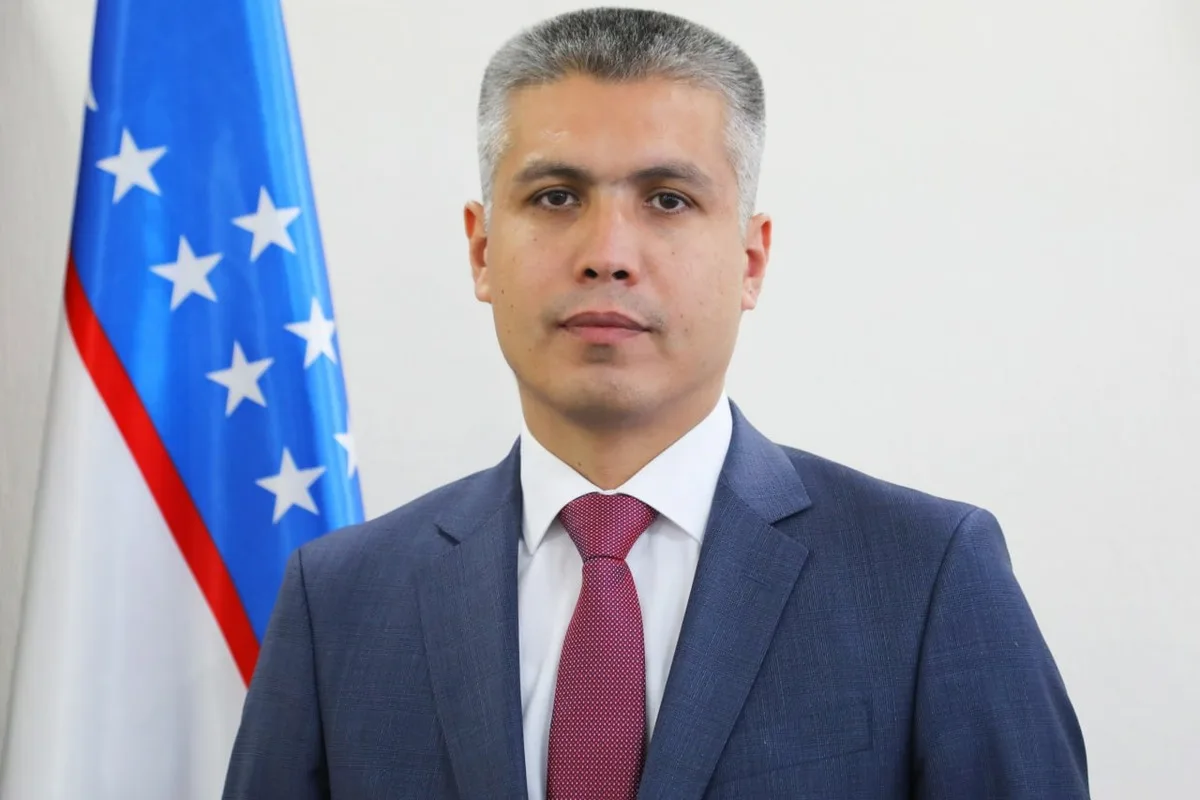
Rahim Rasuljonovich Khakimov
Murodhujaev Gulomjon Sobithujaevich
Madumarov Tolibjon Abdumalikovich
Abdinazarov Sodiqjon Holiqnazarovich
Yuldashev Fakhriddin Mukhtorovich
Pozilov Isokjon Nasriddin o’g’li
Avis des étudiants
Hakimjon